

Nevada Railroad Workers Cancer Lawsuit
Helping Nevada rail workers diagnosed with cancer pursue justice and rightful compensation.


.avif)



Rail yards in Nevada are vital to the state’s economy, humming with activity as workers keep trains running smoothly, moving goods to their destination. But beneath the loud and dirty work lies a hidden threat: exposure to toxic substances, such as diesel exhaust, creosote, benzene, silica dust, pesticides, and solvents.

For many rail yard workers, these hazards aren’t just an irritating part of the job—they’re serious threats that can lead to terminal cancers and lung diseases. If you’re one of these workers and facing a related illness, filing a Nevada railroad cancer lawsuit could bring you much-needed compensation and hold negligent employers accountable.
Contact our experienced railroad lawyers online or by calling (513) 381-2333 to learn more about your legal rights and to discuss your options in filing a Nevada railroad cancer lawsuit.
“Joe Lyon is a true professional in every sense of the word. He has been a pleasure to work with and know. I highly recommend The Lyon Firm!”
– Kaylie T. | Client
How Are Nevada Railroad Workers Exposed to Diesel Exhaust?
Every day, some Nevada rail workers encounter a mix of harmful substances. Below, we break down what they are, how exposure happens, and the risks they pose.
Train Exhaust
Locomotives, the backbone of any rail yard, run on diesel fuel. Their exhaust is a cocktail of gases and tiny particles that workers breathe in, especially near idling engines or in enclosed spaces like repair shops.
These particles lodge deep in the lungs, causing inflammation. The International Agency for Research on Cancer (IARC) labels diesel exhaust a Group 1 carcinogen—proven to cause lung cancer in humans. It’s also linked to chronic respiratory issues like bronchitis.
Railroad Ties
Railroad ties, the wooden supports under tracks, are treated with creosote to prevent rot. This tar-like chemical seeps into gloves or wafts into the air when workers handle ties or work near storage piles. Creosote is another Group 1 carcinogen, tied to skin cancer, lung cancer, and liver damage. Even brief contact can irritate the skin or lungs, and long-term exposure ramps up the health hazards.
Solvents
Solvents and other petroleum products, such as benzene, are silent killers in rail yards. Workers inhale them while refueling trains, cleaning parts, or maintaining equipment. Known for causing leukemia and other blood cancers, benzene is so potent that even low-level exposure over time can wreak havoc on bone marrow. The IARC classifies it as a Group 1 carcinogen.
Track Maintenance
Track maintenance means grinding or crushing ballast rock, kicking up clouds of silica dust. Inhaling these fine particles scars lung tissue, leading to silicosis—a progressive, incurable disease. Over time, silicosis can turn into lung cancer. Workers without proper masks during construction or repair jobs are especially vulnerable.
Also, in maintenance shops, solvents help clean grease off engine parts and tools. These liquids release volatile organic compounds (VOCs) that workers inhale, especially in poorly ventilated spaces. Long-term exposure can damage the liver, kidneys, and nervous system, and some solvents are tied to cancer risks. Skin contact adds another layer of harm.
Pesticides and Herbicides
To keep tracks weed-free, rail companies spray pesticides and herbicides along the lines. Workers applying these chemicals or walking through treated areas can inhale them or absorb them through their skin. Many pesticides are linked to cancers like non-Hodgkin lymphoma and leukemia, as well as neurological damage. The risk climbs with repeated exposure.
These substances don’t just irritate—they destroy healthy cells and raise the risk of developing cancer. Studies, like those from the National Institute for Occupational Safety and Health (NIOSH), show rail workers face higher lung cancer rates than the general public.
Lung cancer tops the list of risks, fueled by diesel exhaust, silica dust, and creosote. Benzene triggers leukemia and blood disorders, while pesticides raise the odds of lymphoma. Solvents can spark liver or kidney cancers. Then there’s silicosis, a lung disease that leaves workers gasping for air and prone to infections.
The scariest part? These diseases often hide for years. A worker might spend decades in a rail yard, retire feeling fine, then get hit with a diagnosis ten years later.
That’s why it’s helpful to partner with a Nevada railroad cancer lawyer who has the resources and experience to connect your work history to your illness and hold the right companies accountable. Even if the exposure happened years ago, there may still be a path to justice and compensation.
What Are Some High-Risk Rail Yard Tasks?
Working around diesel exhaust and other toxic materials:
- Welding on machinery or track components, aluminum or stainless steel
- Maintaining or repairing boilers
- Painting rail cars and removing paint
- Air arcing/plasma cutting
- Metal grinding on manganese and rail
- Burning materials, including toxic fuels
- Handling and cutting creosote-covered ties
- Dumping ballast
- Working in tunnels filled with diesel fumes
- Demolishing old buildings that may contain asbestos
- Using degreasers, adhesives, solvents, and other industrial chemicals
- Plumbing and pipefitting
- Electrical work
- Handling pesticides
Many railroad workers spent years, sometimes decades, doing backbreaking work in Nevada rail yards, only to be diagnosed with cancer long after the job was done.
At The Lyon Firm, we believe no worker should be left alone to carry that kind of burden. You showed up every day, did the hard work, and provided for your family. You deserved better protection then, and you should get accountability now. Reach out to us online or call (513) 381-2333 to learn if you qualify for a Nevada railroad workers cancer lawsuit.
What Cancers Are Linked to Diesel Exposure?
There are numerous occupational illnesses that have strong links to exposure to solvents, silica dust, asbestos, diesel exhaust, benzene, creosote, and welding fumes, including the following medical conditions:
- Lung Cancer
- Bladder Cancer
- Esophageal Cancer
- Nasopharyngeal Cancer
- Stomach Cancer
- Kidney Cancer
- Acute Myeloid Leukemia (AML)
- Myelodysplastic Syndrome (MDS)
- Acute Lymphocytic Leukemia (ALL)
- Chronic Lymphocytic Leukemia (CLL)
- Non-Hodgkin’s Lymphoma
- Multiple Myeloma
- Aplastic Anemia
- COPD (Chronic Obstructive Pulmonary Disease)
- Emphysema
- RADS (Reactive Airways Dysfunction Syndrome)
- Interstitial Lung Disease
- Pulmonary Fibrosis
Do I Qualify for a Nevada Railroad Workers Cancer Lawsuit?
If you spent years working for a railroad in Nevada and were later diagnosed with cancer or a serious illness, you may qualify to file a lawsuit.
You don’t need to have worked in one specific job or location. Whether you were a mechanic, welder, trackman, pipefitter, or did general maintenance work, you may have been exposed to dangerous materials without being warned of the risks.
Even if you retired years ago or worked in a support role, you may still have been exposed to toxic materials on the job.
Family members may also qualify. If a loved one passed away from cancer or another illness tied to their railroad work, you may be able to file a wrongful death claim on their behalf. These cases can help provide answers, accountability, and financial support for surviving spouses and children.
Do I Need to Hire a Nevada Railroad Injury FELA Lawyer?
Unlike most employees in Nevada, railroad workers aren’t covered by the state’s workers’ compensation system. Instead, a specific federal law known as the Federal Employers’ Liability Act (FELA) protects them.
This is a crucial difference because FELA allows you to directly sue your employer for negligence. You don’t have to prove the railroad was entirely to blame for your illness; you only need to show that their actions—or their failure to act—contributed in any way to your injury. This is a much lower burden of proof than many other personal injury claims, and it can result in much higher compensation than workers’ comp.
A successful FELA lawsuit can help you recover a wide range of damages, far beyond what workers’ comp typically offers. This includes not just medical bills and lost wages, but also compensation for your pain, suffering, and emotional distress.
To build a strong FELA case, it is highly advantageous to have an experienced railroad injury lawyer on your side. These cases often require deep investigation, expert testimony, and a clear understanding of the railroad industry. Having the right legal team can make all the difference in getting the compensation and justice you deserve.
For example, a Martindale-Nolo study found that 90% of people who hired a lawyer walked away with a settlement or award, compared to only half who filed a claim on their own.
How a Nevada Railroad Diesel Fume Lawyer Will Gather Evidence for Your Case
Building a strong FELA case requires careful work and a deep understanding of the railroad industry. Our experienced Nevada railroad injury FELA lawyer can help you collect and present this evidence, which often includes:
- Medical Evidence: A doctor’s report or expert medical testimony that clearly links your cancer or other illness to your work on the railroad.
- Proof of Exposure: Detailed records of your job duties, the specific toxic materials you were exposed to, and the length of your exposure.
- Evidence of Negligence: This might be a lack of proper safety equipment, such as respirators or masks, or poor ventilation in a workshop or roundhouse.
- Witness Testimony: Statements from coworkers who can confirm the unsafe conditions you were subjected to.
What Kind of Compensation Is Available in a Nevada Railroad Cancer Lawsuit?
A successful railroad cancer claim can’t undo what happened to you but it can ease the financial and emotional strain that comes with a cancer diagnosis. The compensation is meant to support workers and their families as they deal with medical bills, lost income, and the life changes that cancer brings.
Here are some of the damages that may be available:
- Medical Costs: This includes doctor visits, hospital stays, chemotherapy, medications, and other treatments, both now and in the future.
- Lost Wages: Many workers can’t return to their jobs after a diagnosis. Compensation can help cover missed paychecks and future earning potential.
- Pain and Suffering: This covers the physical pain, emotional distress, and loss of enjoyment in daily life.
- Wrongful Death: For families who’ve lost a loved one to a railroad-related illness, compensation can help with funeral expenses, loss of income, and the deep emotional toll of that loss.
At The Lyon Firm, we fight for the full and fair compensation our clients need to protect their families and move forward. Our team has a strong track record of representing workers harmed by toxic exposure. In one case, we helped the family of a steel mill worker secure over $2.7 million after he developed mesothelioma from years of asbestos exposure, and in another case, we obtained more than $2.3 million for the loved ones of a steelworker who faced similar toxic conditions.
Which Nevada Railroad Workers Are at Risk?
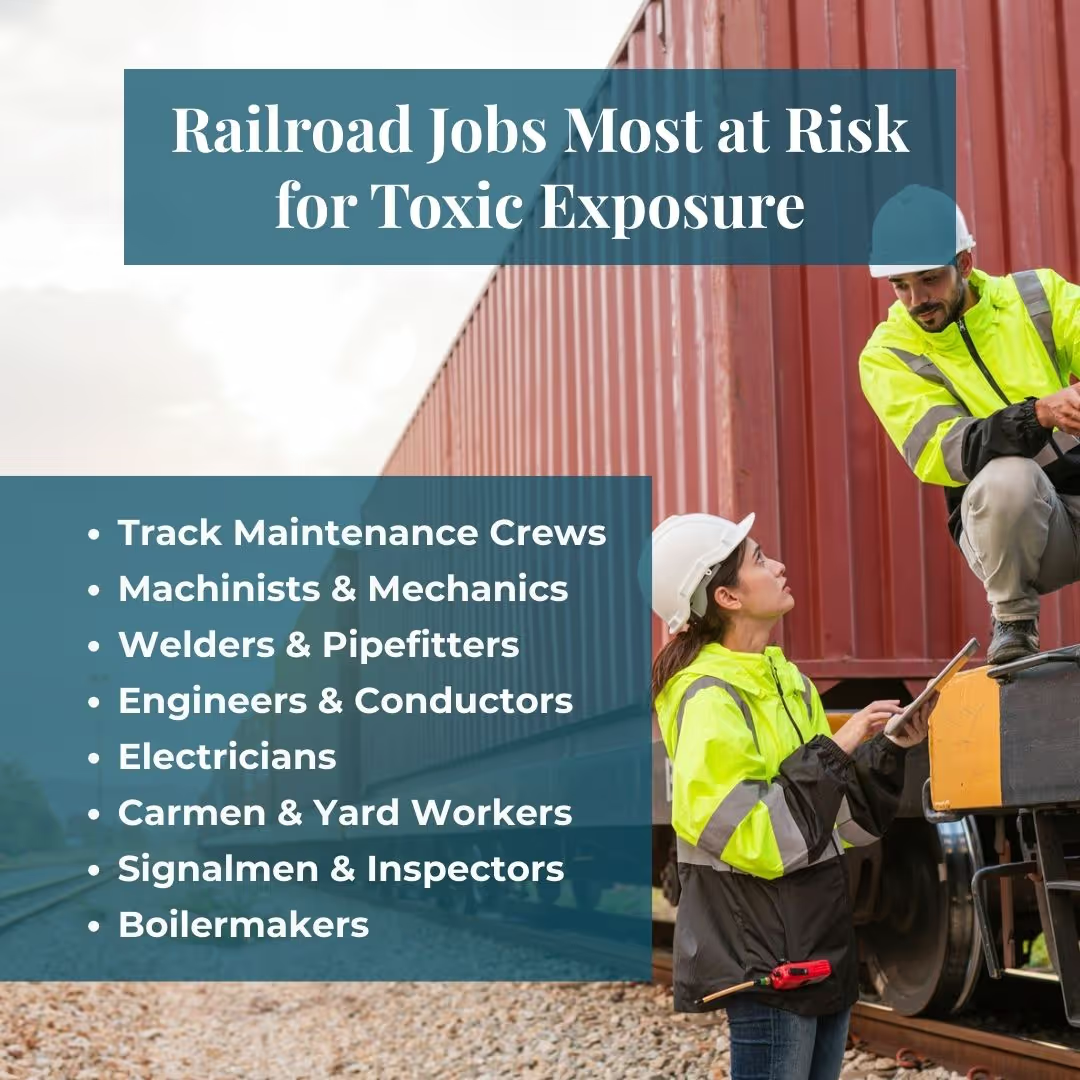
Almost any individual working day after day in a rail yard can be exposed to diesel fuel exhaust and countless other known carcinogens. Many have worked in badly ventilated roundhouses and workshops. The highest risk, however, for those working in Nevada rail yards may be for those working in the following positions:
- Conductors and engineers
- Trackmen, carmen, brakemen
- Signal operators
- Diesel mechanics
- Machinists
- Pipefitters and plumbers
- Electricians
- Welders
- Painters and maintenance crews
Workers at the following rail yards have filed injury claims:
- Elko: Elko Yard (UP)
- Las Vegas: Arden Yard (UP)
- Sparks: Sparks Yard (UP)
- Amtrak
- Winnemucca: Winnemucca Yard (UP)
Why File a Railroad Cancer Lawsuit?
A successful lawsuit can cover medical bills, lost income, and the pain of living with a chronic illness. If the worst happens, families can seek wrongful death benefits.
Rail companies must provide safe workplaces. If they fail to provide workers with proper ventilation, skip protective gear, or ignore safety rules, they’re possibly negligent. Your lawsuit could force them to fix these failures, protecting today’s workers from tomorrow’s illnesses.
Nevada rail yards keep the state moving, but their workers pay a steep price. Diesel exhaust, creosote, benzene, silica dust, pesticides, and solvents aren’t just hazards—they’re threats that can steal your life decades later. A lawsuit won’t erase the damage, but it can ease the burden and push railroads to do better. If you’re sick because of your work, you’ve earned the right to fight back.
Experienced. Compassionate. Consumer Advocates
The Lyon Firm is a Cincinnati, Ohio-based law firm, representing individuals nationwide in class action, product liability, and toxic exposure litigation.

Handling Complex Data Privacy & Cyber Security Cases
Request A Free Consultation Now

.avif)
Why Choose a Nevada Diesel Exhaust Exposure Attorney at The Lyon Firm?
With nearly two decades of experience standing up to some of the nation’s largest employers and manufacturers, The Lyon Firm has built a reputation for digging deep, fighting smart, and never backing down.
We’ve helped families recover millions after workplace exposures, and we approach every case with the same urgency, compassion, and grit, whether that means traveling across the country to meet with a client or going toe-to-toe with a billion-dollar corporation.
Railroad workers built this country with their hands and their health. When the job takes that health away, they deserve answers and a legal team that will fight nonstop to get them.
Contact us today online or call (513) 381-2333 for a 100% case review where we’ll walk you through your options.
Nevada Railroad Cancer FAQ

Railroad safety experts have noted that there are health concerns around exposure to solvents, silica dust, asbestos, welding fumes, creosote, diesel fumes, and the following benzene-containing products:
- Varsol (mineral spirit)
- Liquid Wrench (penetrating solvent)
- Safety-Kleen Parts Washer
- Safety-Kleen Solvent
- Gasket adhesives and glues
- CRC Brake and Carb Cleaners
- Gasoline
- Cutting fluids
- Lubricants
- Paints and paint thinners
Yes, diesel exhaust exposure remains a serious health concern for railroad workers in Nevada and across the country, even with the implementation of newer safety guidelines.
Many trains and yard equipment still rely on diesel engines, and workers often spend long hours in enclosed or poorly ventilated spaces where fumes can build up. Mechanics, operators, and maintenance crews may still be breathing in harmful levels of diesel particulate without realizing it.
Over time, this kind of exposure has been linked to lung cancer, COPD, and other chronic respiratory conditions. While federal agencies like OSHA and the EPA have set safety standards, not every employer follows them closely. In some Nevada rail yards, proper ventilation, protective gear, and air monitoring are still lacking.
The value of a Nevada railroad cancer lawsuit can range widely, often depending on the type of cancer, how long the worker was exposed to toxic substances, and how clearly the illness can be linked to the job. Some cases settle for thousands, while others, especially those involving aggressive cancers and clear employer negligence, can reach well into the millions. Every case is different, and the best way to understand what a claim may be worth is to speak with an experienced Nevada railroad cancer attorney who can evaluate the details of your potential claim.
The time limit for filing a Nevada railroad cancer lawsuit is generally three years under the Federal Employers’ Liability Act (FELA). However, because of the long latency period for many cancers, this three-year clock does not start on the date of your exposure. Instead, the “discovery rule” applies, which means the deadline begins when you knew or should have known that your illness was connected to your railroad job. This is often the date you receive a diagnosis and learn of the link to your work.
Railroad Lung Cancer Lawsuits
Request a Free Consultation
Taking the first step doesn’t have to be complicated. In just a few minutes, you can share the basics of your case, and our team will guide you from there:
- It begins with a few simple questions about your situation.
- From there, a member of our legal team reviews your case.
- Together, we’ll chart the path forward, helping you take the next step toward resolution.
