Defective Stroller Injury Attorney
Parents trust that a stroller will safely transport their child, offering convenience and peace of mind. When that trust is broken—due to design flaws, manufacturing mistakes, or inadequate warnings—the results can be devastating. Stroller defect lawsuits allow injured families to pursue compensation when a product fails and causes harm.
According to a study released in American Pediatrics, around 17,000 children under the age of five visit an emergency room each year due to defective stroller or baby carrier-related injuries.
Many stroller accidents and injuries are simple falls or parental errors, though still many others are due to strollers with design defects, which in turn can lead to plaintiffs filing defective stroller lawsuits against negligent child product companies.
Stroller defects range from unstable legs and laceration and amputation hazards to hinges that disengage and wheels that fall off unexpectedly. In current high-profile defective stroller lawsuits, dozens of plaintiffs allege that the front wheel on their BOB jogging strollers fell off, causing flip over accidents and injuries. Both adults and children have suffered injuries, including bone fractures, face injuries, and head injuries.
The U.S. Consumer Product Safety Commission has been under scrutiny because even after 200 documented consumer complaints of BOB stroller wheels falling off, the company chose not to recall the defective stroller.
Joe Lyon is a consumer safety attorney and product liability lawyer filing defective stroller lawsuits for plaintiffs nationwide.
BOB Stroller Accidents
Several models of BOB strollers are reportedly causing injuries to both parents and children, due to a design that allows for a quick-release lever securing the wheel to disengage. Apparently, less than a half turn of the quick release can prove the difference between “safe and unsafe” clamping force.
However, Britax Child Safety, the maker of BOB strollers refused the CPSC voluntary recall of almost 500,000 strollers, and the company said their product met industry standards for child safety. But front-wheel accidents kept occurring and resulted in numerous defective stroller lawsuits filed against Britax.
Stroller Defect Recalls
Issues with quick-release wheel strollers have led to recalls by other stroller companies, including recalls of bicycles by 18 different brands. Other recalls have included the following:
Here are some recent recalls involving strollers or stroller-related systems, which illustrate how widespread and serious these defects can be:
-
A number of strollers under the “Guava Roam” name were recalled in November 2024 after reports that the brake pedal could fail or disengage. These incidents posed a fall and injury hazard to children riding the stroller.
-
In May 2025, a manufacturer of “Magic ZC” infant strollers received a product safety warning due to an opening between the seat and grab bar that could entrap a child—violating mandatory stroller standards and creating a serious risk of injury or death.
-
While not all recalls concern full-size travel strollers, even stroller-accessory products can be hazardous. For example, a popular stroller toy set was recalled in April 2025 after parts cracked and posed choking hazards; though the toy wasn’t the stroller itself, the defect highlights how components linked to strollers can still cause harm.
- Graco recalled over 4 million models of their Aspen, Breeze, Capri, Cirrus, Glider, Kite, LiteRider, Sierra, Solara, Sterling and TravelMate Model Strollers and Travel Systems strollers in 2014 because the folding hinge on the sides of the stroller can pinch a child’s finger, posing laceration or amputation hazards.
- In 2018, Jané Muum strollers were recalled for violating the federal Stroller and Carriage standard as an infant can pass through the opening between the stroller armrest and the seat bottom, posing entrapment and strangulation hazards.
- In 2016, Pacific Cycle recalled its jogging stroller because of a quick release defect.
- 28,000 Delta All-Terrain Jogging Strollers were recalled because the Stroller Leg Bracket Can Break
- About 1,000 Combi Shuttle Travel System strollers were recalled because the Car Seats Can Disengage From the Stroller Frame. Both products have been deemed safe but should not be used together.
- Britax recalled 700,000 B-Agile and BOB Motion Strollers because the Click & Go Car Seats Can Disengage From the Stroller Frame. The design defect caused 26 recorded injuries due to a faulty attachment system.
- 29,400 Aria Child GB Qbit Lightweight Strollers were recalled for laceration and amputation hazards linked to a Folding Side Hinge. The stroller can randomly fold without warning, causing the child to fall out.
Defective Stroller Lawsuits
Common design defects with strollers may include malfunctioning brakes that can cause strollers to roll away, wheel disengagement, faulty hinges or laceration risks, defective locking mechanisms, folding hazards, inferior materials, unstable design, attachment car seat issues, and insufficient restraints or seat belts.
If your child has been injured due to a faulty stroller or car seat, you should contact a product liability attorney to discuss potential defective stroller lawsuits and rightful compensation for injuries and other damages.
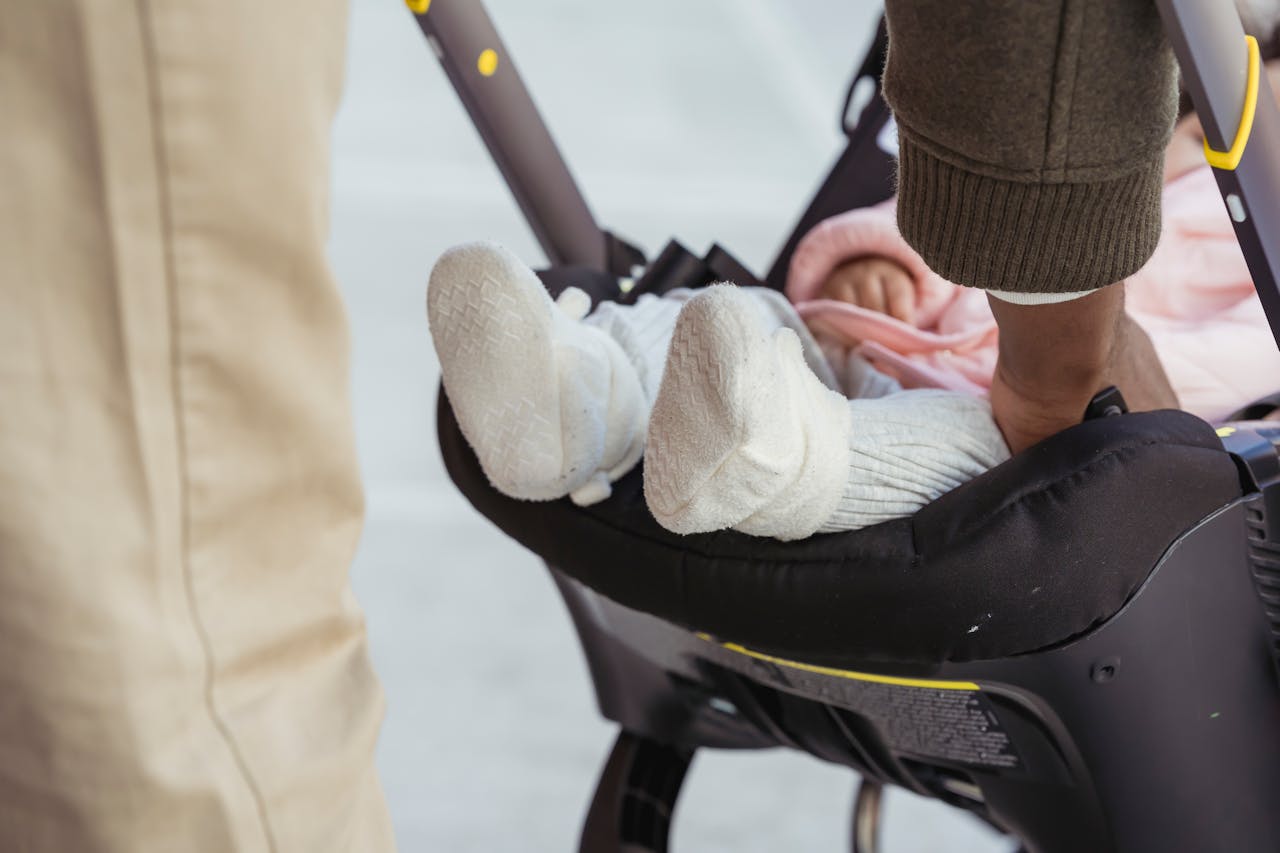
Common Defects in Strollers
Defective strollers may exhibit a variety of problems, including:
-
Brakes that fail or disengage unexpectedly, creating a risk of a child rolling into traffic or falling down a slope.
-
Frames that collapse or crack under normal use, resulting in impact injuries or falls.
-
Restraint systems (harnesses or buckles) that release inadvertently, increasing the risk of ejection from the seat.
-
Openings or gaps where a child’s limb or head can become entrapped, especially between the seat and guard bars.
-
Wheels or locking mechanisms that malfunction, leading to tip-overs or loss of control.
-
Materials or labels that fail to meet regulatory standards—such as lack of proper instructions, missing warnings, or non-compliance with stroller safety standards.
ABOUT THE LYON FIRM
Joseph Lyon has 20 years of experience representing individuals in complex litigation matters. He has represented individuals in every state against many of the largest companies in the world.
The Firm focuses on single-event civil cases and class actions involving corporate neglect & fraud, toxic exposure, product defects & recalls, medical malpractice, and invasion of privacy.
NO COST UNLESS WE WIN
The Firm offers contingency fees, advancing all costs of the litigation, and accepting the full financial risk, allowing our clients full access to the legal system while reducing the financial stress while they focus on their healthcare and financial needs.

Why Hire The Lyon Firm
The Lyon Firm specializes in product-liability litigation, including injuries caused by defective strollers and child-safety gear. Their attorneys understand how to investigate whether a stroller failed to meet safety standards, trace liability through the supply chain, and present strong cases on behalf of injured children and families.
If your child was harmed in a stroller incident, The Lyon Firm can evaluate your situation through a free consultation, help you understand your rights, and guide you through the legal process with no upfront fees. They work to hold negligent manufacturers accountable and secure compensation for your family’s loss.
Legal Implications and Potential Lawsuits
When a stroller causes injury and a defect is suspected, legal claims typically fall into one or more of these categories:
-
Design defect: The stroller was inherently unsafe in its design and better alternatives existed.
-
Manufacturing defect: A specific unit deviated from the intended design and became dangerous.
-
Failure to warn: The manufacturer or distributor did not provide adequate warnings or instructions about known risks.
Victims may seek compensation for medical bills, lost future earnings, physical pain, emotional trauma, and in some cases punitive damages if the manufacturer acted recklessly.
Lawsuits often rely on documentation of the defect, proof the stroller was used as intended, and evidence that the injury wouldn’t have occurred without the malfunction. Recalls or warnings may strengthen a claim by showing the manufacturer knew—or should have known—of the hazard. Timing is critical, as statutes of limitations vary by state and may limit how long after the incident a claim can be filed.
