

Unintended Acceleration | Auto Defects
Personal Injury Lawyer Reviewing Cases for injured plaintiffs Nationwide


.avif)


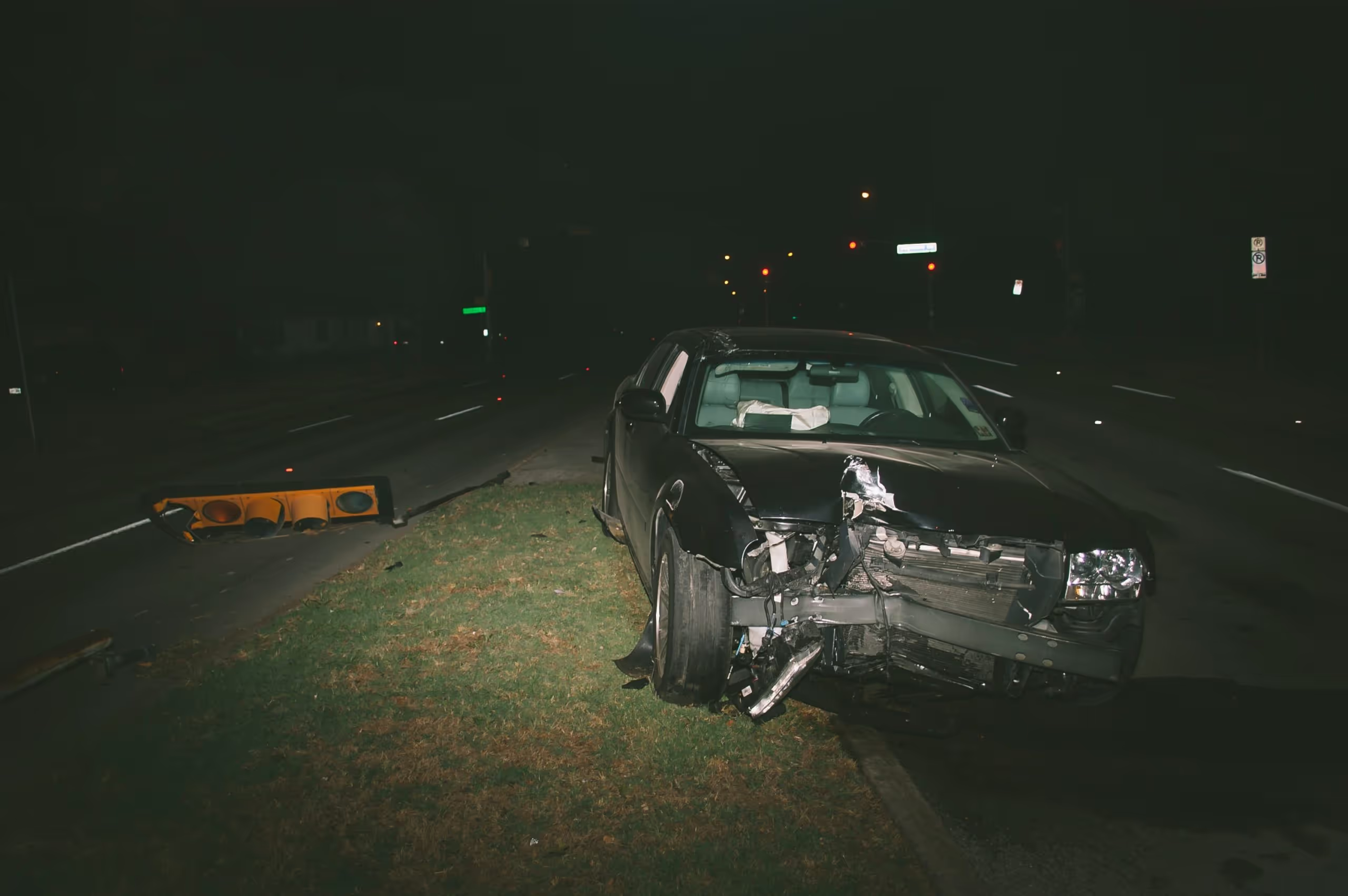
Unintended acceleration incidents have injured thousands of drivers and passengers across the nation, often resulting from hidden mechanical or electronic defects that manufacturers failed to address. These terrifying events leave victims facing serious injuries and mounting medical bills while struggling to understand what went wrong.
What Causes Unintended Acceleration?
Modern vehicles rely on complex electronic throttle control systems that replace traditional mechanical linkages. When these systems malfunction, cars can accelerate dangerously without driver input.
Common causes include faulty throttle position sensors, defective electronic control modules, sticky accelerator pedals, and problematic floor mat designs that trap pedals in depressed positions.
Software glitches within engine control units have also emerged as significant contributors. These digital systems manage throttle response, and programming errors can create scenarios where the vehicle misinterprets signals or fails to respond to brake commands.
Manufacturing defects during assembly, such as improperly installed components or substandard materials, add another layer of risk.
Establishing Manufacturer Liability
Product liability law holds automotive manufacturers responsible when defective vehicles cause harm. Victims pursuing compensation must demonstrate that a design flaw, manufacturing error, or inadequate warning created an unreasonably dangerous condition. Unlike typical negligence cases, these claims focus on the product itself rather than driver behavior.
Manufacturers have legal obligations to design safe vehicles, implement rigorous testing protocols, and issue timely recalls when defects surface. When companies prioritize profits over safety by delaying recalls or concealing known issues, they face heightened liability. Internal documents revealing awareness of problems before accidents occurred can prove particularly damaging during litigation.
Uncontrolled acceleration, also called unexplained acceleration or sudden acceleration, describes a dangerous situation where a vehicle speeds up without any action by the driver.
In recent years, a large number of accidents and resulting injuries and deaths have been attributed to the unintended acceleration of a car. Sudden acceleration accidents may involve the simultaneous failure of a vehicle’s acceleration and brake systems.
While injuries accumulate, and consumer safety experts raise concerns about keeping roadways safe, auto manufacturers have regularly deflected accountability and blamed drivers themselves for accidents. Some car companies have not admitted to any design or mechanical defect, however these terrifying instances continue to occur.
If you were involved in an accident after your car suddenly accelerated for no reason, you may be able to take legal action and file a product liability claim against the manufacturer.
With a personal injury and product liability lawsuit, you can potentially recover full compensation to cover medical bills, future medical care, lost wages, and loss of potential earnings.
Joe Lyon is a highly-rated Catastrophic Injury and product liability lawyer, with years of experience investigating the causes of serious auto accidents, and settling sudden acceleration accident claims nationwide.
In some cases, drivers complain of engines revving up when brakes were applied. Companies recalled many vehicles and examined electronic software.
In other cases, the plastic pad beneath the driver’s side floor mat interfered with the accelerator pedal and may have caused it to become stuck in an accelerated position.
As modern vehicles are made with more software-driven features, the possibility that computer systems conceal defects is a real concern. Auto manufacturers are often focused on innovation as a first priority instead of safety, and do not always test vehicle components properly. Some discovered design and manufacturing defects in uncontrolled acceleration accidents may involve the following:
- Pedal misapplication
- Unresponsive (entrapped) pedals
- Floor mat interference
- Sticky Pedals
- Cruise control malfunction
- Stuck throttle
The Investigation Process
Attorneys work with automotive engineers and electronics specialists who examine vehicle systems to identify specific failure points. These experts download data from event recorders and conduct physical inspections of mechanical components.
Obtaining maintenance records helps establish that the vehicle received proper care and that defects existed independent of owner negligence. Attorneys also research recall histories and complaints filed with safety regulators to identify patterns suggesting widespread problems. This evidence becomes crucial when demonstrating that manufacturers knew or should have known about dangerous defects.
Defective Throttle Recalls
Years ago, Toyota agreed to an auto recall of 4.3 million vehicles to modify their gas pedals and remove unsecured or incompatible driver’s floor mats which allegedly caused unintended acceleration accidents and catastrophic injuries.
A problem in the electronic throttle body used in Ford Motor cars has allegedly caused road accidents and lead to throttle lawsuits. Ford has stated that the Delphi throttle body is prone to failure, which causes the vehicle to stall or to suddenly decelerate without warning.
The Delphi throttle body is operated by electric motors linked to the accelerator pedal. Product Liability lawyers say the Ford throttle issue causes a loss of connectivity between the throttle and the powertrain control, and rapidly cuts the speed of the vehicle. Some vehicles targeted in defective throttle lawsuits include:
- Ford Mustang
- Ford Edge
- Ford F-150
- Jeep Cherokee
- Jeep Wrangler
- Jeep Patriot
- Mercury
- Lincoln
- Lexus
- Toyota
Sudden Acceleration Accidents
Car accidents frequently occur as a result of auto defects, some of which lead to catastrophic injury and product liability lawsuits. It is not unusual to link an automobile accident to a defect related to a vehicle—unintended acceleration and defective throttles are particularly dangerous defects.
To properly investigate a defective throttle or another auto defect, it is prudent to hire an experienced attorney who can work closely with auto engineers and experts to determine the cause of the accident. Defective Throttle Lawsuits typically involve one or more of the following defects:
- Throttle malfunction engages the accelerator pedal while stuck in the floor mat
- Faulty throttle is corrosion-based with rusting or broken throttle linkages.
- Electronic Defects: throttle control systems may be designed improperly or built defective. Failure of electronic components may not be apparent until after a serious auto accident occurs.
Common Throttle Defects
Fuel-injected cars use a throttle body as part of an intake system that controls the amount of air flowing into an engine. The intake and throttle should be a direct function of how far the driver presses the accelerator pedal.
Stepping on the pedal initiates a sensor called a throttle position sensor which is meant to measure zero acceleration to full acceleration. This sensor relays the pedal position to adjust fuel injection and speed. Should this system be faulty, sudden acceleration and stalling could occur and lead to serious car accidents and catastrophic injuries.
Throttle problems can be related to dirt and grime, design defects, manufacturing defects, electrical defects, or vacuum leaks. Throttle Defects can present in the following manners:
- The ‘Check Engine’ Light is activated
- Car is Jerking or Hesitating when accelerating
- Idle Surging
- Stalling Engine
- Difficulty while changing gears.
- Fuel economy of a car drops
Filing Uncontrolled Acceleration Lawsuits
Legal action is necessary after auto defects are discovered because not only do victims need to be compensated for injuries and damages, but manufacturers must be held responsible for their corporate actions. Motorists and victims in Ohio should document their accident and contact an experienced attorney to take appropriate measures.
Several auto companies have been sued in recent years in product liability lawsuits, resulting in large settlements and rightful compensation for accident victims.
In 2014, Toyota Motor settled with the Justice Department for $1.2 billion after the company lied to regulators and the public for years about the sudden acceleration of its vehicles. Toyota’s alleged negligence led to numerous preventable injuries and fatalities.
Toyota admitted that it misled Americans by making untrue statements about the safety problems that caused an unintended acceleration. There have been a number of similar cases in the last 20 years, and auto manufacturers must be held accountable to ensure safety standards are met in the future.
Navigating Complex Litigation
Lawsuits against major automotive corporations involve substantial legal and financial resources. Manufacturers typically deploy experienced defense teams who challenge causation and attempt to shift blame onto drivers. They may argue that pedal misapplication, rather than mechanical failure, caused the acceleration. Overcoming these defenses requires compelling expert testimony and documentary evidence.
Many cases settle before trial, but securing fair compensation demands skilled negotiation. Attorneys must accurately value claims by consulting medical professionals about long-term prognosis and economists regarding financial impacts. When settlement offers fall short, taking cases to trial becomes necessary to hold manufacturers accountable and achieve just outcomes for injured victims.
There may be several factors and individual safety issues linked to sudden acceleration accidents, including defective design and manufacturing defects. Floor mats that stick or catch on gas pedals can lead to deadly road accidents.
Car and motorcycle manufacturers have a duty to ensure their products are safe before they are sold to consumers. Should they fail to properly test vehicles and an accident occurs, victims may contact an accelerator defect lawyer to investigate and file a product liability claim.
The Lyon Firm works with Accident Investigators to determine the root cause of a sudden acceleration accident and identifies who may be held accountable to recover compensation and damages.
Experienced. Compassionate. Consumer Advocates
The Lyon Firm is a Cincinnati, Ohio-based law firm, representing individuals nationwide in class action, product liability, and toxic exposure litigation.

.avif)
Why Choose The Lyon Firm for Your Unintended Acceleration Case
The Lyon Firm brings experience handling complex product liability claims against automotive manufacturers. Our legal team understands the technical aspects of vehicle electronic systems and has established relationships with top-tier expert witnesses who can effectively explain defects to judges and juries. We invest significant resources into investigating each case, obtaining critical evidence that strengthens our clients’ positions.
Our attorneys have successfully represented numerous victims in defective vehicle cases, recovering substantial compensation for injuries and losses. We handle cases on a contingency fee basis, meaning clients pay no upfront costs and fees come only from settlements or verdicts we secure. This arrangement allows injured parties to pursue justice without financial barriers.
From initial consultation through final resolution, The Lyon Firm provides dedicated advocacy, fighting tirelessly to hold negligent manufacturers accountable and help families rebuild after traumatic accidents.
Questions about Auto Defect Injury Cases

Statutes of limitations vary by state but typically range from one to three years from the accident date. Some jurisdictions allow extended periods if the defect was not immediately discoverable. Consulting an attorney promptly protects your rights, as crucial evidence can disappear over time and missing filing deadlines eliminates your ability to pursue compensation.
Recalls often confirm that manufacturers recognized defects existed. The timing of recall announcements compared to when problems first surfaced can demonstrate negligence. If your accident occurred before a recall, it may indicate the company delayed addressing known dangers. Even post-recall accidents can support claims if repairs were inadequate or improperly implemented.
Manufacturers frequently claim driver error caused unintended acceleration. Strong legal representation counters these arguments with expert analysis of vehicle systems, event data recorder information, and witness testimony.
Physical evidence from the scene and your vehicle often disproves allegations of pedal misapplication. Experienced attorneys know how to dismantle these defense tactics effectively.
Most product liability cases settle before trial, as manufacturers wish to avoid public scrutiny and the risk of large jury verdicts. However, settlement timelines vary based on case complexity and the defendant’s willingness to negotiate fairly. Your attorney should prepare every case for trial while pursuing settlement negotiations that serve your best interests.
Recoverable damages include all medical expenses, lost income, future treatment costs, property damage, pain and suffering, and emotional distress. Severe injuries resulting in permanent disability may warrant additional compensation for reduced quality of life and lost earning potential. Punitive damages may apply when evidence reveals particularly egregious corporate conduct. Each case value depends on specific injury severity and circumstances.
Auto Defect Lawsuits
Request a Free Consultation
Taking the first step doesn’t have to be complicated. In just a few minutes, you can share the basics of your case, and our team will guide you from there:
- It begins with a few simple questions about your situation.
- From there, a member of our legal team reviews your case.
- Together, we’ll chart the path forward, helping you take the next step toward resolution.
