

Welders and Mesothelioma Lawsuits
Years of welding. Decades before a diagnosis. We fight for workers harmed by asbestos exposure.


.avif)


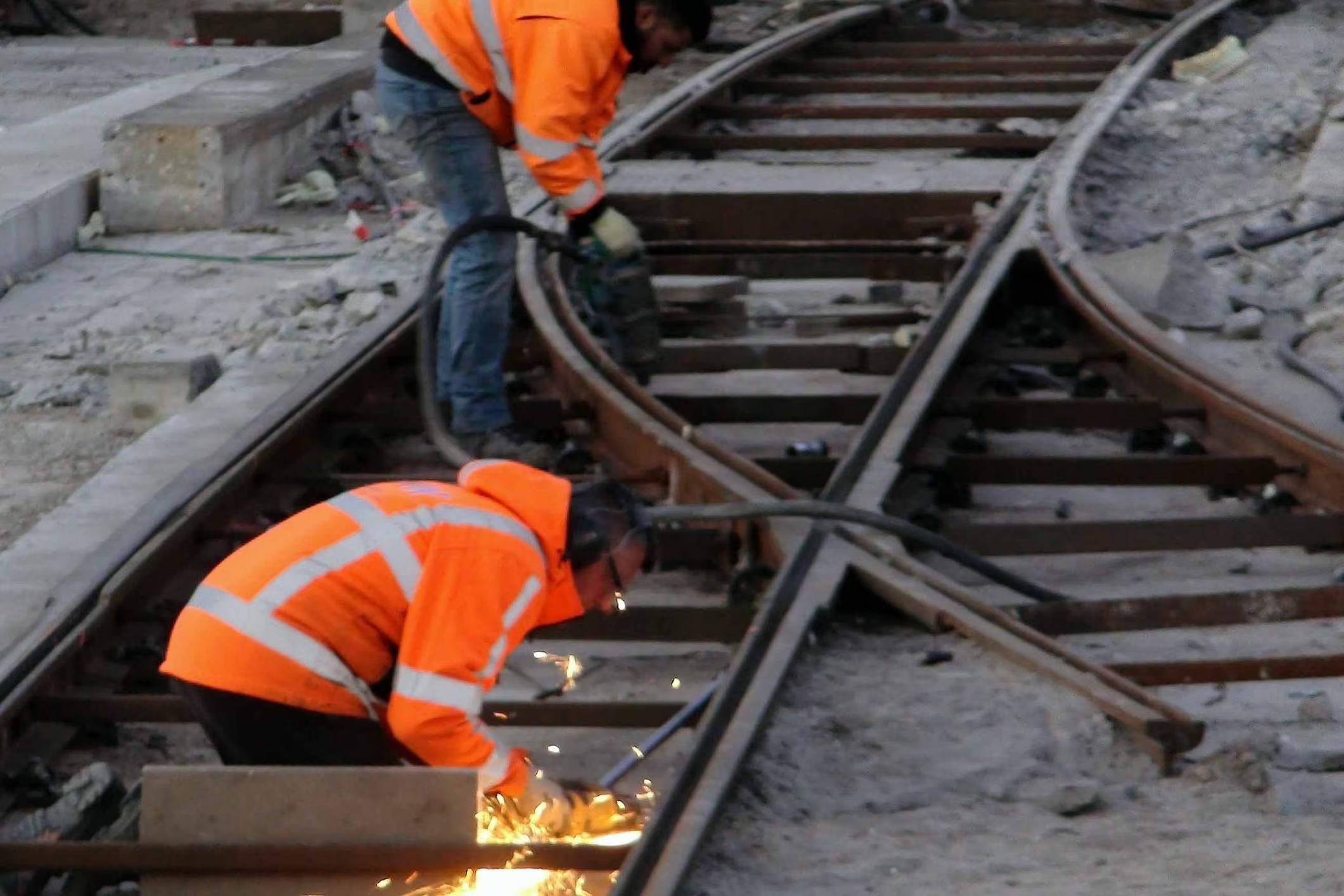
For decades, welders worked around asbestos in shipyards, railroads, steel mills, refineries, power plants, and other industrial settings. Many were never told that insulation, welding blankets, gaskets, boilers, pipes, and other materials around them contained asbestos.
The connection between welders and mesothelioma may not become clear until decades later. A worker diagnosed today may have been exposed while repairing equipment, cutting through older materials, or welding near damaged asbestos insulation years ago.
Even welders who never handled asbestos directly could breathe in fibers released by nearby work. Because those fibers are microscopic, exposure often happened without workers knowing it.
If you worked as a welder and have been diagnosed with mesothelioma, lung cancer, or another asbestos-related illness, you may have legal options. The Lyon Firm represents workers and families nationwide in asbestos exposure claims.
“Welders spent years working around high heat, insulation, and industrial equipment without being told asbestos could put their health at risk. When a diagnosis comes decades later, we help families find out where that exposure happened and who was responsible.”
Talk to an Experienced Mesothelioma Attorney
A mesothelioma diagnosis raises difficult questions about where asbestos exposure occurred and who should be held responsible. The Lyon Firm investigates work histories, identifies asbestos-containing products, and pursues compensation from negligent manufacturers and other responsible parties.
Call (513) 381-2333 today for a free consultation. You pay nothing unless we recover compensation on your behalf.
What Do Welders Do?
Welders play an essential role in building, repairing, and maintaining the infrastructure that keeps industries operating. Their work often involves joining or repairing metal components exposed to extreme temperatures, making them indispensable across manufacturing, transportation, construction, and energy production.
Depending on the industry, welders may fabricate new structures, repair aging equipment, install pipelines, reinforce bridges, or maintain machinery that operates under high pressure or extreme heat. Many also perform cutting, brazing, soldering, and metal finishing, frequently working in confined spaces or around aging industrial equipment.
Common industries employing welders include:
- Shipbuilding and ship repair
- Railroad maintenance and locomotive repair
- Steel and aluminum manufacturing
- Oil refineries and petrochemical facilities
- Power generation plants
- Commercial construction
- Automotive manufacturing
- Aerospace and aviation
- Heavy equipment manufacturing
- Military facilities and naval installations
Historically, these workplaces relied heavily on asbestos-containing insulation and heat-resistant products. Even when welding itself did not involve asbestos, the surrounding environment often did, exposing workers during routine maintenance, repairs, renovations, and equipment replacement.
Industries Where Welders May Have Encountered Asbestos
Welders worked in many industries that relied heavily on asbestos for insulation, fireproofing, and heat protection. Welders and asbestos exposure were especially common in older industrial settings, including:
- Shipyards and naval facilities. Asbestos was used around boilers, pipes, pumps, valves, and other ship components.
- Steel mills and foundries. Welders worked near insulated pipes, furnaces, boilers, and other high-heat equipment.
- Railroad shops. Locomotives and railcars contained asbestos insulation, gaskets, brakes, and mechanical components.
- Oil refineries and chemical plants. Asbestos was common around pipes, boilers, furnaces, pumps, and valves.
- Power plants. Turbines, boilers, steam pipes, generators, and other equipment often contained asbestos materials.
- Construction and demolition sites. Cutting or repairing older structures could disturb asbestos insulation, fireproofing, and building materials.
- Manufacturing facilities. Asbestos was used in machinery, piping, furnaces, insulation, and protective materials.
For welders exposed to asbestos, identifying past employers and job sites can help trace the products and companies connected to their exposure.
How Were Welders Exposed to Asbestos?
For many industrial workers, asbestos exposure was simply considered part of the job, even though few understood the long-term health risks. Welding frequently occurred around materials designed to withstand intense heat.
Rather than encountering asbestos in a single product, welders often worked alongside numerous asbestos-containing materials. As insulation aged or was disturbed during repairs, tiny fibers could become airborne and be inhaled.
Common sources of asbestos exposure included:
- Pipe insulation
- Boiler insulation
- Steam lines
- Industrial furnaces
- Gaskets and packing materials
- Pumps and valves
- Turbines
- Fireproof wall panels
- Welding blankets
- Protective gloves and clothing
- Heat-resistant cement
- Older welding rods and coatings
Repair and maintenance work could disturb asbestos materials. Removing insulation, cutting through old piping, replacing boilers, or welding inside confined mechanical spaces could release asbestos dust into the air. Because asbestos fibers are microscopic, workers frequently inhaled them without realizing exposure had occurred.
The risk extended across numerous industries where asbestos products remained in service for decades, including:
- Auto manufacturing
- Railroad operations
- Shipbuilding
- Steel and aluminum production
- Aviation and aerospace
- Commercial construction
- Power plants
- Oil refineries
- Chemical processing facilities
Many welders believed the greatest hazards came from sparks, burns, or welding fumes. Asbestos presented a different danger because an illness might not appear until decades after a worker left the job.
How Long After Exposure Can Mesothelioma Develop?
Mesothelioma has a long latency period. Someone diagnosed today may need to look back decades to determine when asbestos exposure occurred.
For a former welder, that exposure could trace back to work in a shipyard, refinery, steel mill, power plant, railroad shop, factory, or construction site. It may also involve several employers or job sites over the course of a career.
Tracing an older exposure may require reviewing:
- Employment and Social Security records
- Union records
- Former job sites
- Equipment the welder repaired
- Products used around the work area
- Coworker testimony
- Historical product records
The time that has passed since exposure does not necessarily prevent someone from pursuing a claim. Filing deadlines vary by state and can depend on when the asbestos-related illness was diagnosed or discovered. An attorney can determine the deadline that applies to a specific case.
Mesothelioma in Welders: Diseases Linked to Asbestos Exposure
Asbestos exposure has been linked to several serious illnesses, many of which do not develop until decades after a worker leaves the job.
Among these diseases, mesothelioma in welders remains one of the most devastating. Mesothelioma is an aggressive cancer that develops in the lining surrounding the lungs, abdomen, heart, or testes. The disease is strongly associated with asbestos exposure, making occupational history an important part of diagnosis and legal investigations.
Former welders may also be diagnosed with:
- Pleural mesothelioma, the most common form affecting the lining of the lungs
- Lung cancer, which may develop after years of inhaling asbestos fibers
- Asbestosis, a progressive scarring of lung tissue that can permanently affect breathing
- Pulmonary fibrosis, which causes irreversible damage to lung tissue
- Pleural plaques and pleural thickening, conditions that can indicate previous asbestos exposure
- Esophageal and colorectal cancers, which some studies have associated with occupational asbestos exposure
Early symptoms can resemble other respiratory illnesses. Individuals should speak with a physician if they experience symptoms such as:
- Persistent cough
- Chest pain or tightness
- Shortness of breath
- Unexplained weight loss
- Fatigue
- Difficulty swallowing
- Fluid around the lungs (pleural effusion)
Receiving an asbestos-related diagnosis often raises questions about where the exposure occurred. Because many welders worked for multiple employers throughout their careers, identifying responsible products and manufacturers frequently requires reviewing employment records, job sites, and historical industrial materials.
An experienced asbestos attorney can coordinate with occupational experts to help trace those exposures.
"In a desperate life altering crisis, Joe Lyon quietly entered my life. My husband was losing battle with mesothelioma. Joe came respectfully, professionally, kindly and beneficially towards our family. I felt he was Heaven sent. It has been an honor to know and work with Joe."
— Marlene Beal | Client of The Lyon Firm
Welders' Families and Secondary Asbestos Exposure
The dangers of asbestos exposure did not always end when a work shift was over. Before employers implemented better workplace hygiene practices, workers could unknowingly carry asbestos fibers home on their clothing, boots, gloves, lunch boxes, and personal vehicles.
As a result, spouses and children sometimes experienced secondary asbestos exposure, also called take-home exposure. Shaking out dusty work clothes before washing them or handling contaminated clothing could release asbestos fibers into the home.
Families were especially vulnerable when welders worked in industries such as:
- Shipyards
- Railroads
- Steel mills
- Refineries
- Power plants
- Manufacturing facilities
- Construction projects
Although family members never entered these industrial workplaces themselves, repeated household exposure has been associated with mesothelioma and other asbestos-related illnesses later in life.
Depending on the circumstances and applicable state law, a spouse or other household member who develops mesothelioma after repeated exposure to asbestos brought home from work may also have legal options.
Questions About an Asbestos Diagnosis? We're Ready to Help.
Determining when and where asbestos exposure occurred is often one of the most challenging parts of a mesothelioma case. The Lyon Firm works with occupational medicine specialists, industrial hygienists, and historical product records to identify responsible companies and pursue every available source of compensation.
Call (513) 381-2333 today for a free consultation. There are no attorney fees unless we recover compensation for you.
Are Today's Welders Still at Risk of Asbestos Exposure?
Although asbestos use has declined significantly, it has not disappeared from American workplaces. Millions of older commercial buildings, factories, ships, power plants, and industrial facilities still contain asbestos materials installed decades ago.
For today's tradespeople, the greatest risk often comes from renovation, maintenance, demolition, and repair work involving older structures. Disturbing old insulation, pipe coverings, boilers, floor tiles, roofing materials, or fireproofing products can release asbestos fibers into the air.
Asbestos therefore remains a concern for welders working around aging industrial equipment and older structures, especially during repair, renovation, and demolition.
Modern welders may encounter asbestos while working in:
- Older manufacturing plants
- Power generation facilities
- Oil refineries
- Chemical processing plants
- Commercial buildings undergoing renovation
- Ship repair facilities
- Military installations
- Historic industrial sites
Current OSHA regulations require employers to identify asbestos hazards, provide appropriate protective equipment, and follow required procedures when asbestos-containing materials are present. Workers may still face exposure when asbestos is damaged, improperly handled, or unidentified during maintenance or demolition projects.
Understanding whether exposure occurred can require reviewing the job performed, age of the facility, equipment involved, and products being repaired or removed.
Which Companies Made Materials That Exposed Welders to Asbestos?
Many welders never worked directly for asbestos manufacturers, yet they encountered asbestos-containing products on industrial job sites. For decades, manufacturers incorporated asbestos into materials because it resisted heat, fire, and corrosion.
Those products were installed throughout factories, power plants, shipyards, railroads, refineries, and other industrial facilities where welders routinely worked.
Companies that manufactured or supplied asbestos-containing products commonly found in industrial settings include:
- Johns-Manville
- Garlock Sealing Technologies
- Armstrong World Industries
- Owens Corning
- Pittsburgh Corning
- Babcock & Wilcox
- Foster Wheeler
- Eagle-Picher
- Combustion Engineering
- CertainTeed
These manufacturers produced materials such as:
- Pipe insulation
- Boiler insulation
- Gaskets
- Packing materials
- Cement products
- Fireproof coatings
- Industrial adhesives
- Heat-resistant textiles
- Valve and pump components
Many of these companies later faced asbestos lawsuits involving workers exposed to their products. Several entered bankruptcy and established asbestos trust funds that continue to compensate eligible claimants.
Determining which products were present at a specific job site can require reviewing employment records, union information, historical product catalogs, and testimony from coworkers or industrial experts. An experienced mesothelioma attorney can investigate these details to identify available sources of compensation.
Welders Mesothelioma Claims: Can I File a Lawsuit?
A mesothelioma or other asbestos-related disease diagnosis can support legal claims even when the exposure happened decades earlier. Because these illnesses have long latency periods, the filing deadline is not necessarily measured from the date you worked around asbestos.
A welders mesothelioma lawsuit typically requires an investigation into where the worker encountered asbestos and which companies manufactured, supplied, installed, or used the products involved.
Depending on your circumstances, legal options may include:
- Personal injury lawsuits against responsible manufacturers
- Claims against asbestos bankruptcy trust funds
- Wrongful death lawsuits filed by surviving family members
- Product liability claims involving defective or dangerous industrial materials
- Premises liability claims involving unsafe workplaces
Many workers were employed by multiple companies throughout their careers. That does not prevent a claim. Attorneys routinely investigate decades of employment history to determine where asbestos exposure likely occurred and whether multiple companies share responsibility.
Beginning the investigation promptly can help with locating employment records, identifying witnesses, and preserving information related to the exposure.
Compensation Available Through Welders Asbestos Claims
Workers diagnosed with mesothelioma often face extensive medical treatment, reduced earning capacity, and significant financial uncertainty. Compensation from a successful asbestos claim can address losses associated with the disease and treatment.
Depending on the facts of your case, compensation may include:
- Current and future medical expenses
- Chemotherapy, immunotherapy, surgery, and radiation treatment
- Prescription medications
- Travel expenses for specialized medical care
- Lost wages
- Reduced future earning capacity
- Pain and suffering
- Home healthcare and supportive services
- Wrongful death damages for surviving family members
- Funeral and burial expenses
Some individuals may also qualify to receive compensation through multiple asbestos trust funds if several manufacturers supplied products connected to their exposure.
An experienced attorney can evaluate the available claims and sources of recovery based on the worker's employment and exposure history.
Recent Mesothelioma Settlements and Verdicts
The Lyon Firm has represented workers and families harmed by asbestos exposure nationwide. While every case depends on its own facts and prior results do not guarantee future outcomes, our firm has recovered significant compensation for individuals diagnosed with mesothelioma and other occupational diseases.
Recent results include:
- $3.27 Million for the family of a steel worker who developed pleural mesothelioma after decades of occupational asbestos exposure.
- $3.05 Million for an Iowa manufacturing worker diagnosed with mesothelioma following years of exposure to asbestos-containing industrial products.
- $2.3 Million for a former steel worker whose occupational asbestos exposure resulted in mesothelioma.
Our legal team works with medical, occupational, and industrial experts when investigating asbestos exposure and preparing claims for our clients.
What Is the Average Mesothelioma Settlement?
Many families understandably want to know what their case may be worth. Compensation depends on factors such as the diagnosis, medical expenses, employment history, companies involved, and information connecting asbestos exposure to the illness.
According to a Martindale-Nolo Legal Network survey, plaintiffs with serious occupational exposure cases involving cancer, permanent disability, or wrongful death frequently recover $500,000 or more, although compensation varies based on the specific claim.
An attorney can evaluate factors such as:
- The severity of your diagnosis
- Past and future medical costs
- Lost income and earning capacity
- Number of responsible manufacturers
- Available asbestos trust funds
- Whether the claim involves wrongful death
Many asbestos cases resolve through negotiated settlements, while others proceed to trial when defendants refuse to accept responsibility.
Why Choose The Lyon Firm?
Asbestos litigation involves extensive investigation, medical records, historical product research, and experienced expert witnesses.
The Lyon Firm has spent more than two decades helping workers and families pursue claims against companies responsible for dangerous asbestos products.
Clients choose The Lyon Firm because we provide:
- More than 20 years of toxic exposure litigation experience
- Nationwide representation for asbestos victims
- Personalized attention throughout every stage of the case
- Access to leading medical and industrial experts
- Extensive experience investigating historical asbestos exposure
- Trial-ready representation when settlement offers are inadequate
- No upfront costs or attorney fees unless we recover compensation
Joe Lyon has built a national practice representing individuals harmed by corporate negligence and helping workers and their families pursue compensation after an occupational disease diagnosis.
Experienced. Compassionate. Consumer Advocates
The Lyon Firm is a Cincinnati, Ohio-based law firm, representing individuals nationwide in class action, product liability, and toxic exposure litigation.

.avif)
Speak With a Mesothelioma Attorney Today
If welders and mesothelioma are part of your family's history because you or someone you love has received an asbestos-related diagnosis, you do not have to reconstruct decades of occupational exposure alone.
The Lyon Firm can review your employment history, identify potential asbestos exposure sources, and explain the legal options available to you.
Contact The Lyon Firm today at (513) 381-2333 for a free consultation. There are no attorney fees unless we recover compensation on your behalf.
Frequently Asked Questions

Yes. Mesothelioma often develops decades after exposure, and many states base filing deadlines on when an asbestos-related illness was diagnosed or discovered rather than simply using the date of exposure. An attorney can determine which deadline applies to your claim.
Employment and union records, medical records, coworker testimony, product identification, job-site records, and expert analysis can help reconstruct where and how exposure occurred.
Because the exposure may have happened decades before diagnosis, an attorney may also investigate historical information about the products, equipment, and manufacturers present at a former workplace.
In some cases, yes. Spouses and other household members who developed mesothelioma after repeated exposure to asbestos fibers brought home on contaminated work clothing may have claims against responsible manufacturers or other parties. The available claims depend on where and how the exposure occurred and the law that applies.
Compensation depends on the diagnosis, medical expenses, lost income, exposure history, responsible companies, and available sources of recovery. A case may involve settlements, asbestos trust fund claims, a trial verdict, or a combination of different claims.
Asbestos Verdicts & Settlements
Estate of Steve Thomas v. AK Steel Corporation, et al.
Summary: PHILADELPHIA COUNTY, Pennsylvania – Co-counsel represented the surviving spouse of a steel mill worker who developed mesothelioma after years of asbestos exposure on the job. The case resulted in a settlement exceeding $2.7 million.
Estate of William P. Bush v. AK Steel Corporation, et al.
Summary: MADISON COUNTY, Illinois – Co-counsel represented the family of a steel mill worker who suffered asbestos exposure that later led to mesothelioma. The case resulted in a settlement exceeding $2.3 million.
Asbestos Lawsuits
Request a Free Consultation
Taking the first step doesn’t have to be complicated. In just a few minutes, you can share the basics of your case, and our team will guide you from there:
- It begins with a few simple questions about your situation.
- From there, a member of our legal team reviews your case.
- Together, we’ll chart the path forward, helping you take the next step toward resolution.
