

Lasik Surgery | Medical Malpractice
Medical Malpractice and Hospital Negligence Attorney Represents Injured Plaintiffs Nationwide


.avif)


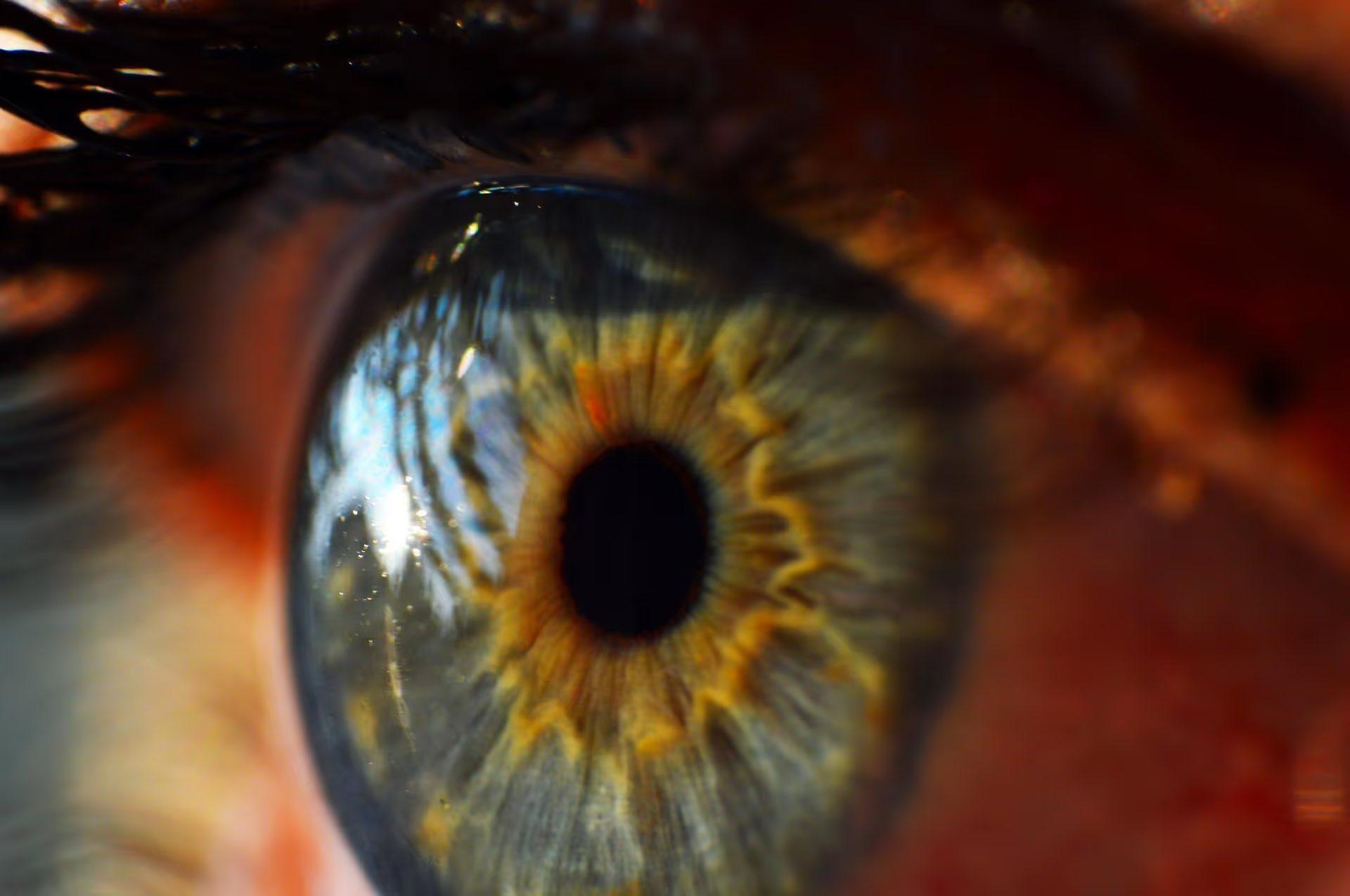
Lasik Malpractice Attorney
When surgeons fail to properly screen patients or manage post-operative complications, injured patients may have grounds to pursue LASIK surgery malpractice lawsuits. The following conditions may be good criteria for filing a claim:
- Endophthalmitis
- Contraindications: Keratoconus and pellucid marginal degeneration
Eye enhancement, vision correction and Lasik surgery have become very common procedures in America, and though the treatments can be helpful and successful, the risks of the operations may not be as well-known and publicized and they should be.
Doctors and surgeons tout the benefits of corrective surgery and Lasik procedures but often fail to properly treat or diagnose eye conditions, resulting in severe permanent eye injuries and Lasik Injury Lawsuits.
LASIK and other types of laser eye surgery (PRK and LASEK) may have high success rates, though the potential serious risks to vision may be understated by surgeons and the industry who stands to profit from the popularity of the procedure. Unnecessary Surgery Lawsuits can be filed and patients can seek compensation.
Lasik—laser-assisted in situ keratomileusis—reshapes the cornea, the clear round dome that covers the front of the eye. Lasik surgeons use an ultraviolet laser to reduce the curvature of the cornea for people who are nearsighted, and to accent it for people who are farsighted.
The procedure, which costs about $4,100 on average, is not covered by most health insurance plans because it is considered a cosmetic procedure. Lasik operations are designed to treat myopia (nearsightedness), hyperopia (farsightedness) and astigmatism. Most patients seek the procedure in order to live without the nuisance of glasses or contacts.
But serious complications associated with Lasik surgery should make consumers question whether or not they should follow through with the procedure. As early as 2014, officials at the U.S. Food and Drug Administration (FDA) warned that safety studies were at best inconclusive, and stated that “disabling symptoms may occur in a significant number of patients.”
The cited study reported that almost half of subjects who were symptom-free before LASIK reported visual symptoms like halos, starbursts, glare, and ghosting after LASIK surgery. Almost 30 percent of patients with no symptoms of dry eyes before LASIK developed dry eye symptoms after LASIK.
Joe Lyon is an experienced personal injury and product liability attorney representing individuals nationwide in defective medical device and Lasik Injury cases.
The Dangers of Lasik Surgery
More patients have had post-op issues than people realize, and up to half of all Lasik patients complain of blurred vision and other vision problems following surgery.
Some claim they are much worse off after surgery and regret the operation. As such, hundreds of unnecessary surgery claims and Lasik negligence lawsuits have been filed following failed surgeries.
Lasik Injuries & Complications
One of the most devastating LASIK complications is endophthalmitis, a rare but aggressive eye infection that can develop when sterile procedures are inadequate or symptoms are ignored after surgery. Endophthalmitis can progress rapidly, causing severe pain, inflammation, and irreversible vision loss. Malpractice claims often arise when surgeons delay diagnosis, dismiss early warning signs, or fail to provide urgent treatment, significantly worsening the patient’s outcome.
Improper patient screening is another leading cause of LASIK malpractice litigation. Keratoconus, a degenerative condition that weakens and thins the cornea, is a known contraindication for LASIK. Even mild or early-stage keratoconus can be dramatically worsened by laser reshaping of the cornea. When surgeons overlook abnormal corneal scans or fail to perform adequate pre-operative testing, patients may experience progressive visual distortion, glare, and long-term corneal instability.
Similarly, pellucid marginal degeneration is a corneal disorder that makes patients poor candidates for LASIK surgery. This condition causes thinning along the lower edge of the cornea, increasing the risk of post-surgical complications. Performing LASIK on a patient with undiagnosed pellucid marginal degeneration can lead to ectasia, chronic visual impairment, and the need for advanced corrective procedures or corneal transplantation. Lawsuits frequently allege that surgeons misread diagnostic data or ignored red flags in order to proceed with elective surgery.
Because LASIK is not medically necessary, eye surgeons are expected to meet a heightened standard of care. Patients must be thoroughly evaluated and fully informed of all material risks and alternatives. When providers prioritize volume or profit over safety, malpractice liability may follow.
Just because an improvement in vision is likely doesn’t mean that consumers should take unnecessary chances with their eye health. Although Lasik vision enhancement surgery may be marketed as safe and virtually risk-free, a number of side effects and complications and Lasik injuries have been reported, including:
- Chronic Dry Eyes—a decrease in tear production can cause eye discomfort and blurred vision. Many patients say the term “Dry Eyes” is a misnomer that does not properly describe the severe eye pain they experience years after surgery.
- Blurred vision
- Eye irritation
- Light sensitivity
- Halos, Glare and starbursts in low-light environments
- Reduced sharpness of vision
- Corneal flap complications—LASIK flap adhering improperly to the eye’s surface, causing optical aberrations and distorted vision. According to the American Journal of Ophthalmology, flap complications occur in up to 5 percent of LASIK procedures.
- Irregular astigmatism—can occur from laser correction surgery during irregular healing. Resulting symptoms may include double vision, and the eye may require revision surgery.
- Epithelial ingrowth—cells from the outer layer of the cornea (epithelium) grow under the flap after LASIK surgery. Discomfort and blurred vision can occur.
- Diffuse lamellar keratitis (DLK)—Inflammation under the LASIK flap that may discourage healing and cause vision loss.
- Keratectasia—bulging of the eye’s surface when too much tissue is removed from the cornea during LASIK.
- Undercorrection & overcorrection—success depends on your eye’s healing response, and perhaps the visual outcome will be less than desired.
- Eye infection
- Neuropathic eye pain
Lasik Surgery Safety
Recent studies suggest Lasik patients may be at increased risk for long-term eye complications, including possibly requiring earlier cataract surgery and developing a serious vision-threatening conditions. Lasik can also interfere with the detection of glaucoma, which can lead to blindness if left untreated.
Ophthalmologists have admitted that Lasik surgery can sever tiny corneal nerves, thins the cornea and makes it weaker, and permanently alters the shape of the eye. Some people may lose contrast sensitivity.
Not everyone is a suitable candidate for LASIK eye surgery. Certain risk factors for Lasik injuries or an undesirable outcome include:
- Thin or irregular corneas
- Large pupils
- High refractive error
- Unstable vision
- Dry eyes
- Advanced age
- Pregnancy
- Active autoimmune disorders
Types of Lasik Malpractice
- Improper Procedure Performed
- Operation on unsuitable candidates
- Misdiagnosis of Eye Condition
- Post-operative Infection
- Wrong Surgical Treatment Plan
- Technician Error
- Unnecessary revision surgeries
Legal Action Following Lasik Injuries
Roughly 9.5 million Americans have had laser eye surgery, yet some patients are never consulted or warned that they could sustain permanent damage following Lasik surgery. Complications are not uncommon, however, and many questions remain about the long-term risks, Lasik injuries and complications.
A lack of information about complications and injury is a problem with many medical devices and procedures. Attorneys have argued that patients undergoing Lasik surgery should be adequately warned about the possibility of developing new visual symptoms after surgery before undergoing the procedure.
Every time you operate and cut into tissue, you damage nerves. That in itself is a serious risk, as the cornea is sensitive to nerve damage. Studies have found that between 20 and 55 percent of Lasik patients have persistent dry eyes.
Experts and product liability attorneys contend that Lasik should be held to a higher safety standard. Even if a small percentage of consumers are at risk for Lasik injuries that still represents thousands of injured patients.
Experienced. Compassionate. Consumer Advocates
The Lyon Firm is a Cincinnati, Ohio-based law firm, representing individuals nationwide in class action, product liability, and toxic exposure litigation.

Handling Complex Data Privacy & Cyber Security Cases
Request A Free Consultation Now

.avif)
Why are these cases important?
LASIK surgery malpractice lawsuits help protect patients from unsafe practices and hold negligent providers accountable. If LASIK surgery caused serious eye injury or vision loss, consulting an experienced medical malpractice attorney can help determine whether you have a valid claim.
Questions about Medical Malpractice

Hospitals, medical staff, nurses and doctors are responsible for providing proper patient care. When management or individuals fail to provide a sufficient level of care, victims may seek legal recourse and file suit against the negligent parties.
Without medical malpractice laws, medical mistakes would go without consequence, patients would be uncompensated for preventable injuries, and medical providers would have less incentive to improve the medical system to prevent future injuries.
LASIK malpractice occurs when a surgeon’s negligence causes preventable harm.
If the infection was caused or worsened by poor sterilization or improper follow-up care, legal action may be possible.
LASIK weakens the cornea, which can accelerate keratoconus progression and lead to severe, permanent vision loss.
Our Firm will help you find the answers. The Firm has the experience, resources and dedication to take on difficult and emotional cases and help our clients obtain the justice for the wrong they have suffered.
The Lyon Firm has over 20 years of experience and success representing individuals and plaintiffs in all fifty states, and in a variety of complex civil litigation matters. Medical malpractice lawsuits can be complex and require industry experts to determine the root cause of an accident or injury. Mr. Lyon has worked with experts nationwide to assist individuals understand why an injury occurred and what can be done to improve their lives in the future. Some cases may go to a jury trial, though many others can be settled out of court.
Resources/Dedication: The Lyon Firm is dedicated to building the strongest cases possible for clients and their critical interests.
Compensation may include medical expenses, corrective procedures, lost wages, pain and suffering, and long-term visual disability.
Medical Malpractice Lawsuits
Request a Free Consultation
Taking the first step doesn’t have to be complicated. In just a few minutes, you can share the basics of your case, and our team will guide you from there:
- It begins with a few simple questions about your situation.
- From there, a member of our legal team reviews your case.
- Together, we’ll chart the path forward, helping you take the next step toward resolution.
