
Robotic Machinery Accidents
Personal Injury Lawyer Reviewing Cases for injured plaintiffs nationwide


.avif)


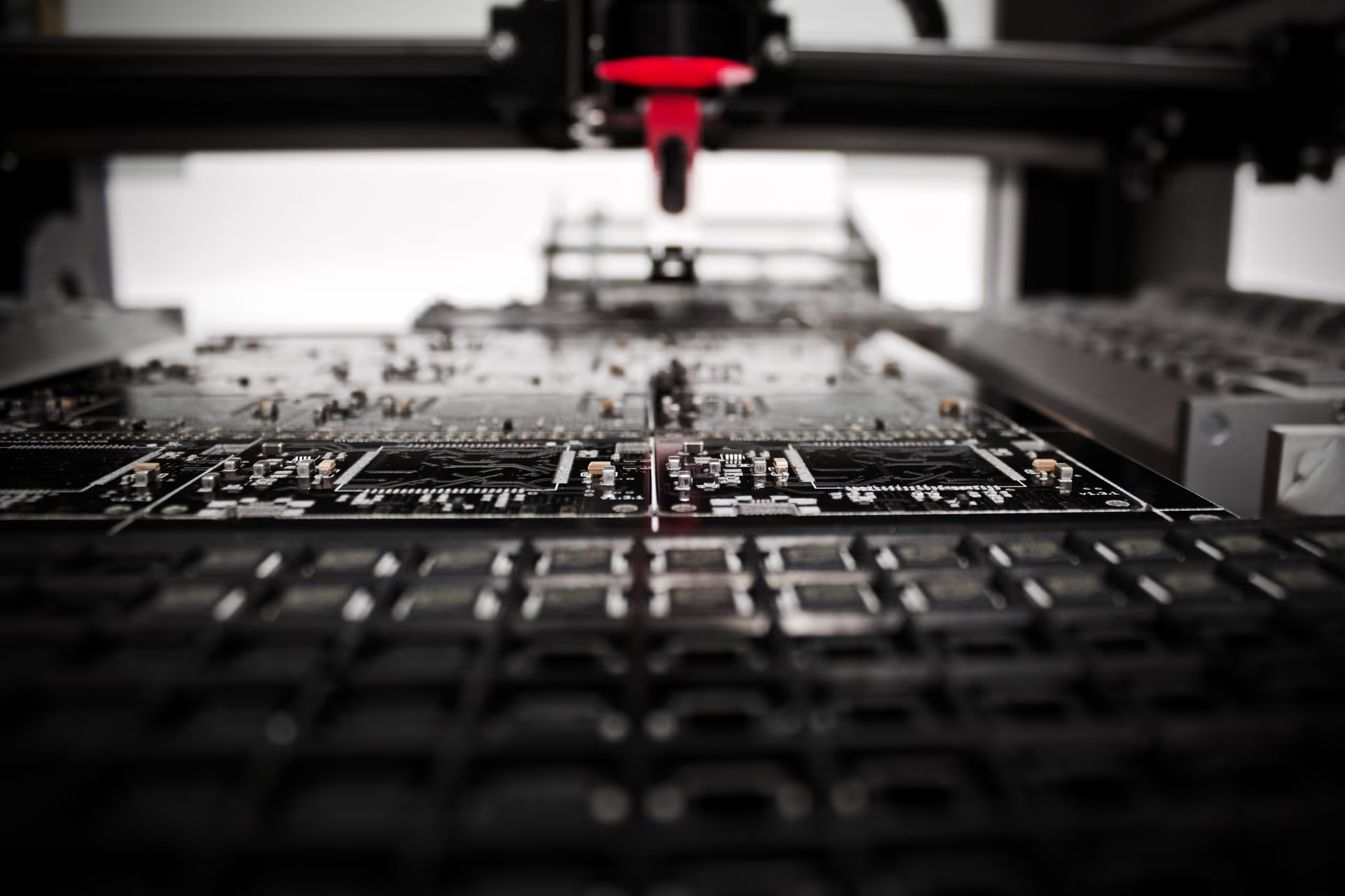
As robotics technology evolves, so do the legal questions surrounding accountability. Determining who is responsible can be challenging, but legal professionals specializing in industrial accident litigation can help victims identify all responsible parties and secure the compensation they deserve.
Victims of robotic or automated machinery accidents should contact an experienced workplace injury attorney who can investigate the cause of the malfunction and pursue compensation.
Robotic Machinery Accidents
The face of manufacturing has changed with robot automation implemented in many industries to improve efficiency and cut costs. However, there are risks and safety hazards in the workplace when new automation programs are introduced, particularly when robots and workers are integrated into the same workplace.
Machines and automated manufacturing equipment can pose a serious safety risk at the workplace, especially when workers are not properly trained and do not understand the machine behavior.
Robots are programmable and most of their actions are dictated by human control, so any robotic injuries may be the result of a lack of training or other management shortfalls.
In short, employees should never be around machinery they don’t understand. Comprehensive training is critical for employees who work alongside machines, robots and other forms of automation.
When machine accidents and workplace injuries occur due to defective robot automation or negligent manufacturing workplace design, employers may be held liable in product liability and manufacturing injury lawsuits.
Joe Lyon is an experienced workplace injury attorney and product liability lawyer reviewing robot automation defects and manufacturing injury lawsuits.
Robotic Machinery & Automation Injury
Nearly every production and manufacturing assembly line in the U.S. now has some form of automation. The Robotic Industries Association estimates that more than 250,000 robots have been installed in American workplaces, many with automated arms that can weld, paint or assemble parts.
Despite the injury risks that may be foreseeable, robotic systems in the workplace are more and more commonplace. Automatic machines may include:
- Industrial robots: automatically controlled, programmable, multipurpose machine, with fixed in place or mobile for use in a variety of industrial automation applications.
- Professional service robots: robot that performs tasks outside of industrial automation, like cleaning, delivery, firefighting or surgery. (Da Vinci Robotic System)
- Collaborative robots: robots designed to interact and work with humans.
Automation Injury & Manufacturing Hazards
According to the Occupation Safety and Health Administration (OSHA), many robot accidents occur during programming, program refinement, maintenance, repair, testing, setup, or adjustment. The safety agency describes the following potential hazards of working with robots:
- Control errors: malfunctions within the control system, software, electromagnetic interference, and radio frequency interference. Such errors can create erratic behavior in a robot.
- Unauthorized access: unauthorized entry into a safeguarded area by someone untrained in the automated hardware can easily cause serious injury.
- Mechanical failures: the faulty or unexpected operation of a machine can be quite dangerous.
- Environmental errors: sudden electrical interference can influence a robot’s performance. Power surges or power loss can lead to manufacturing injury lawsuits. Power sources that are disrupted may lead to malfunctions, and malfunctioning pneumatic or electrical power sources can disrupt electrical signals.
- Improper installation: incorrect installation can result in safety hazards and endanger any worker in the workplace.
- Human error: faulty programming, interfacing, maintenance, or unwanted activation may place workers in danger. Management has a duty to apply safe barriers like fixed guards and warnings. Worker procedure must be implemented and followed.
Most automation injuries occur because workers or management misses or ignores procedure despite training or known safety precautions. It is also common for workers relying on machines to act complacent and inattentive.
Robot Automation & Manufacturing Injury Lawsuits
Training is the single best way to prevent machine injury. Robots are programmable and usually predictable. Employers must stress workplace training and procedure or may risk facing manufacturing injury lawsuits.
Guards should be in place at all times. To minimize the risk of robot injuries and machine incidents, NIOSH offers the following recommendations regarding the design of robotic systems, the training of workers, and their supervision:
Robotic System Design should include physical barriers that incorporate gates equipped with electrical interlocks so that operation of the robot stops when the gate is opened. Employers should provide barriers between robotic equipment and freestanding objects such as posts limiting robot arm movement. Employers should provide adequate clearance distances around all moving components of the robotic system, and adequate illumination in the control and operational areas of the robotic system.
Training should be provided to workers who will be programming or maintaining robotic machinery. Also, refresher courses should take place to discuss new technological developments should be provided so all workers are familiar with the robot and known hazards. Workers should operate machines at reduced speeds consistent with adequate worker response to avoid hazards during programming and be aware of all conceivable pinch points.
Supervisors should know that with time, experienced workers doing automated tasks may become complacent or inattentive to the hazards inherent in complex automated equipment. Close supervision of such operations is imperative.
All too often, employees use machinery they don’t understand or have not been trained to use. These are preventable accidents and worker injuries in almost every case, arising from known hazards:
- Mechanical hazards
- Electrical hazards
- Thermal Burn hazards
- Noise hazards
Examples of Dangerous Automated Equipment
Injuries linked to robotic machinery occur in a range of industrial settings. Some of the most common include:
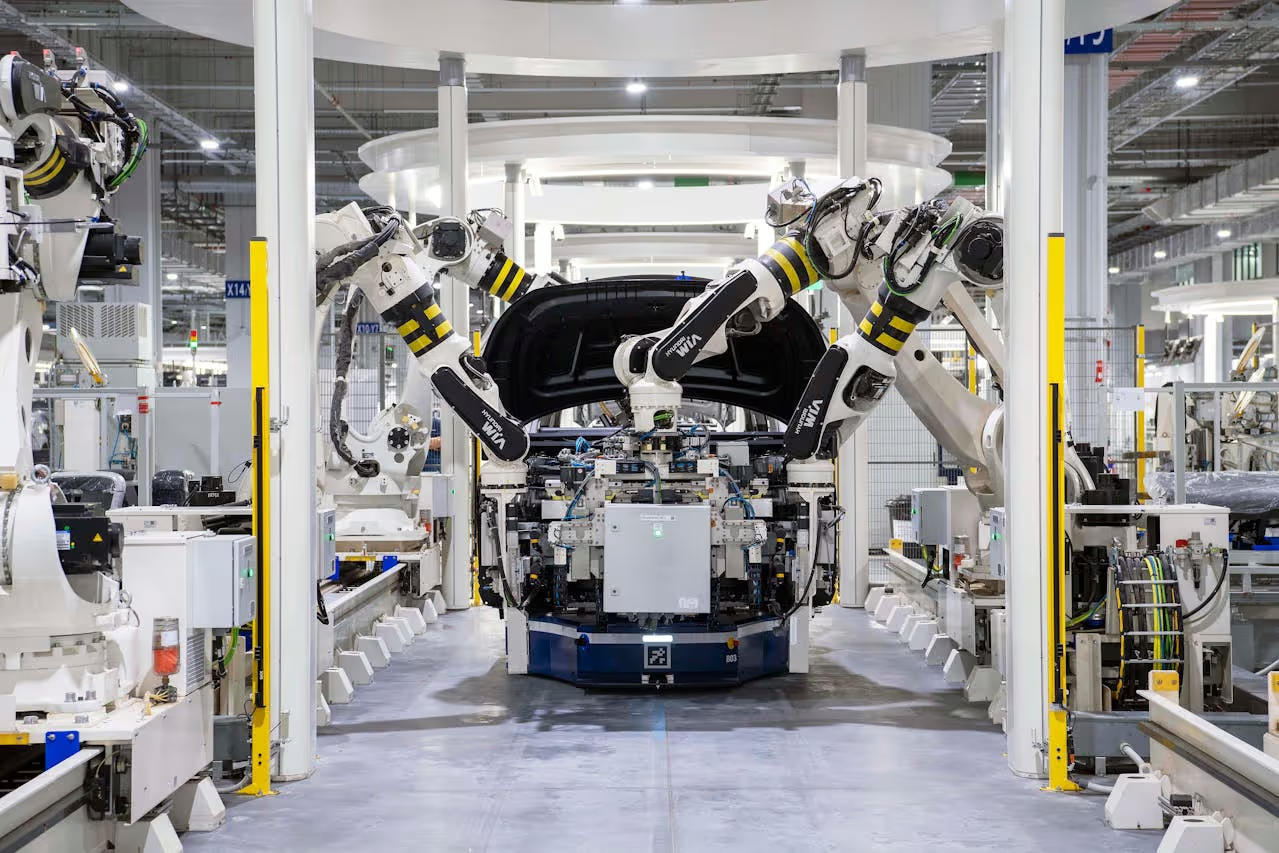
- Automated assembly robots in automobile plants, which perform welding or painting tasks that can cause crush or burn injuries if the robot misfires.
- Conveyor and sorting systems in logistics centers, which can trap or strike workers if sensors malfunction.
- Automated packaging machines in food or consumer goods manufacturing, which can cause lacerations or amputations if guards or cutoff systems fail.
- Autonomous mobile robots (AMRs) used in warehouses and hospitals, which can collide with people or equipment due to defective navigation software.
Experienced. Compassionate. Consumer Advocates
The Lyon Firm is a Cincinnati, Ohio-based law firm, representing individuals nationwide in class action, product liability, and toxic exposure litigation.
Handling Complex Data Privacy & Cyber Security Cases
Request A Free Consultation Now

.avif)
Why Hire The Lyon Firm?
The Lyon Firm represents workers and families nationwide in complex workplace injury and product liability claims. With extensive experience handling cases involving industrial machinery and automation systems, the firm investigates each case thoroughly and identifying negligent employers, defective manufacturers, and unsafe contractors.
The Lyon Firm’s mission is to help victims recover full and fair compensation while holding corporations accountable for unsafe workplace practices.
Industrial Injury Lawsuits
Request a Free Consultation
Taking the first step doesn’t have to be complicated. In just a few minutes, you can share the basics of your case, and our team will guide you from there:
- It begins with a few simple questions about your situation.
- From there, a member of our legal team reviews your case.
- Together, we’ll chart the path forward, helping you take the next step toward resolution.
