

Paraquat Exposure & Parkinson's Disease
Toxic Tort Attorney reviewing paraquat exposure claims for Americans nationwide


.avif)


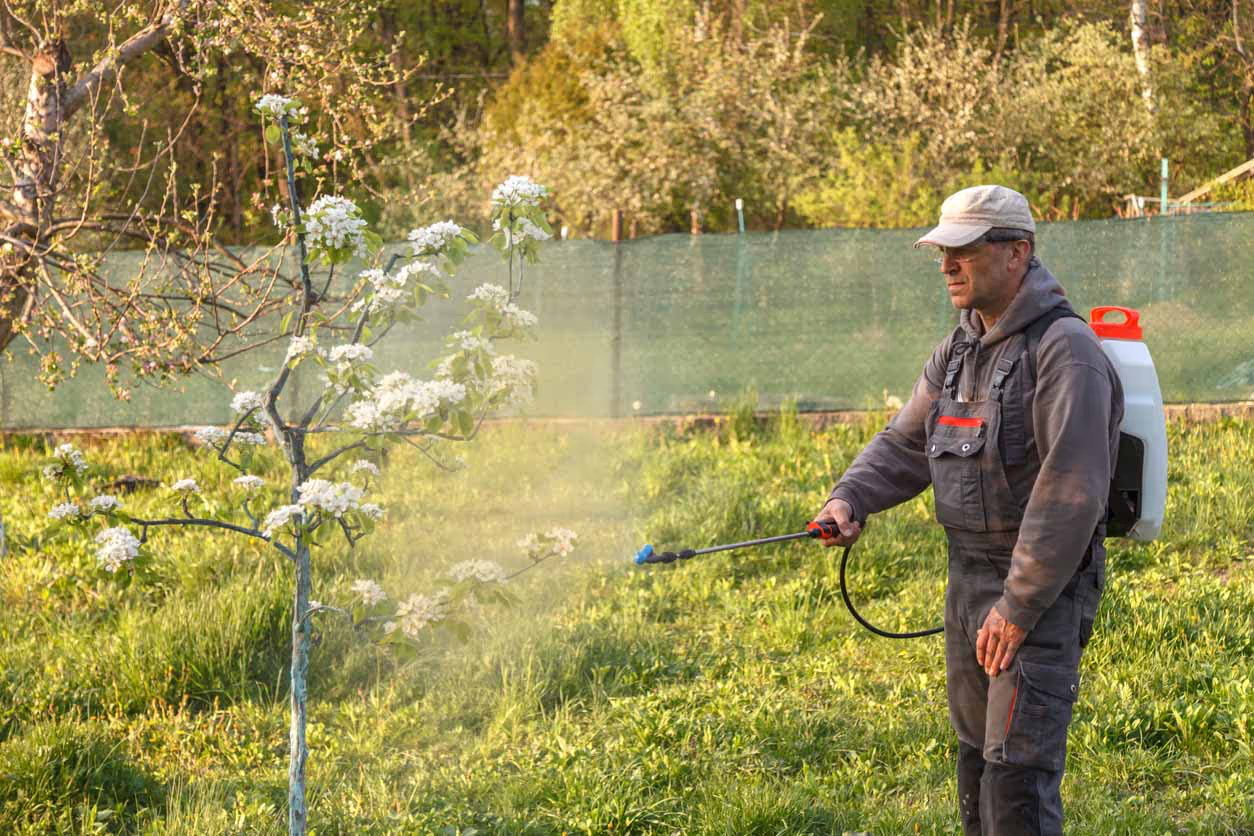
Paraquat Exposure & Parkinson’s Disease
- Investigating Parkinson’s Diagnoses & Paraquat Exposure Claims
- Reviewing Toxic Exposure Cases for farm workers and Americans in rural communities
Researchers have spent years studying the link between Parkinson’s and toxic exposure from paraquat, an herbicide used as a harvest aid and to control weeds and grasses.
Several studies suggest that environmental factors, including farming with paraquat, and the consumption of water on nearby properties, may be closely associated with an increased risk for the development of Parkinson’s disease (PD).
Many plaintiffs diagnosed with Parkinson’s disease are now claiming their condition is directly linked to past paraquat exposure, and have filed product liability and toxic exposure lawsuits.
If you or a loved one are experiencing any adverse medical conditions after exposure to paraquat, you may be entitled to compensation. Contact us at (513) 381-2333 to schedule a consultation to review your claim.
Paraquat Litigation Background
Experts warn that the health risks may not be limited to occupational exposure. Research published in the American Journal of Epidemiology revealed that any exposure to paraquat within 1,600 feet of a home resulted in a heightened Parkinson’s disease risk of 75 percent.
The manufacturers of the chemical (Syngenta and Chevron) have been urged by safety advocates to warn the public of the risk of Parkinson’s disease, but the companies have declined. Such a warning would be akin to an admission of the hazards of their products, and may result in profit decline and possible sales restrictions.
- Paraquat Litigation is now in the early stages, and plaintiffs who have suffered may seek legal advice and join existing lawsuits.
- Environmental Health Perspectives found that exposure to paraquat increased the risk of Parkinson’s disease by up to 250%
- A study by the Parkinson’s Institute showed that the risks of developing Parkinson’s increased 11 times in people who worked with paraquat
- In October 2020, the EPA (Environmental Protection Agency) began reviewing Paraquat and its toxic properties in relation to human contact and use.
The Lyon Firm has worked tirelessly to hold large corporations accountable following toxic exposure cases and has experience settling toxic tort claims nationwide.
Joe Lyon has been actively involved in early Roundup Cancer Lawsuits and is investigating Paraquat Exposure Lawsuits on behalf of farm workers and Americans living near agricultural operations.
The Lyon Firm represents class action plaintiffs in Ohio and nationwide.
What Does Compensation in a Paraquat Parkinson’s Lawsuit Cover?
Those who have been diagnosed with Parkinson’s disease after exposure to paraquat may be eligible to receive financial compensation through a lawsuit. Compensation in a paraquat lawsuit may cover various costs, such as:
- Medical Costs: A financial award from a lawsuit can cover treatments including hospital visits, medications, surgeries, and follow-up therapy.
- Pain and Suffering: Those diagnosed with Parkinson’s disease may experience a changed quality of life. Compensation can help manage the pain and emotional distress resulting from the medical condition.
- Lost Wages: A settlement or verdict award can help compensate you for any lost income or wages you have experienced on account of the disease.
- Future Expenses: A lawsuit can even help cover future costs like loss of future earning capacity as well as ongoing treatments and hospital trips.
The amount of compensation available in a paraquat lawsuit depends on many factors and elements, including the severity of the losses. It’s important to work closely with an experienced paraquat exposure lawyer who can help you obtain the compensation you are entitled to under the law.
Why Are Paraquat Parkinson’s Lawsuits Important?
Farmers in the United States use more than eight million pounds of Paraquat per year, an increase of nearly 200% since 2009. Paraquat is used widely, even considered a Restricted Use Pesticide (RUP). Trained and certified applicators are required to use it, and the European Union, China, and Brazil have all banned the chemical.
Toxic exposure cases help empower employees to fight for their right to be protected, satisfactorily informed, and to stay safe. They also bring awareness to challenges and raise the expectations of companies who are not serving their employees justly.
What Is Paraquat?
Paraquat use is common in agricultural and commercial farm settings. The chemical has been around for decades, first produced for commercial purposes in 1961.
The U.S. Centers for Disease Control and Prevention (CDC) has called paraquat a toxic chemical but in the United States, paraquat is available as a liquid in various strengths.
Because paraquat is highly toxic, particularly if ingested, the pesticide has a blue dye, a sharp odor, and an added safety agent to induce vomiting if ingested.
Where Is Paraquat Used?
Paraquat (1,1′-dimethyl-4,4′-bipyridine), a broad-spectrum herbicide, is used to control pests in soybeans, sorghum, sugar cane, cotton, corn, apple, and other crops.
Though banned in some nations, worldwide it remains one of the more commonly used herbicides. According to Department of Agriculture data, the use of paraquat is up more than fourfold over the past decade.
What Is Parkinson’s Disease?
Parkinson’s disease (PD) is a progressive neurodegenerative condition that is thought to have toxic exposure and genetic susceptibility. Epidemiological studies have investigated the role of pesticides in the development of PD. In more recent years, scientific studies have connected Parkinson’s disease to environmental exposures, like pesticides.
What Are The Symptoms Of Parkinson’s Disease?
Parkinson’s disease causes impaired movement and affects other brain function. Symptoms of Parkinson’s start gradually and increase in severity over time. Symptoms can differ from case to case and may start on one side of the body. Some early signs and symptoms of the disease may include:
- Trembling hands
- Slowed movement
- Stiff muscles
- Impaired posture or balance
- Difficulty with natural movement like blinking or smiling
- Change in speech patterns, like slurring or delayed speech
- Difficulty writing
The initial symptoms can lead to more serious cognitive or memory problems, depression, pain, or chronic fatigue.
What Is Paraquat Exposure or Poisoning? What Are the Symptoms?
Initial symptoms of Paraquat poisoning include:
- Nausea
- Abdominal pain
- Vomiting
- Diarrhea/Bloody Diarrhea
- Confusion
- Muscle Weakness
- Seizures
- Respiratory Failure
- Difficulty Breathing
- Fast heart rate
- Coma
These symptoms may be similar to other toxic exposure and chemical inhalation cases, such as those involving Roundup or Chlorpyrifos products.
You should seek immediate medical attention if you were exposed to paraquat and are experiencing any of these symptoms. Contact a lawyer at (513) 381-2333 to determine your legal rights with regard to financial compensation for injuries.
What Is the Link Between Paraquat and Parkinson’s?
The possible Parkinson’s link has been cited in many studies, and researchers continue to study the consequences of toxic exposure and the potential causes of Parkinson’s disease.
One study headed by the National Institutes of Health looked at the exposure of farmers and other agricultural workers who sprayed paraquat, as well as individuals who lived in the same areas of herbicide use.
One epidemiologist who has studied the connection between paraquat and Parkinson’s disease was quoted as saying, “The data is overwhelming.” Those are the words of Dr. Samuel M. Goldman, a scientist involved with the San Francisco Veterans Affairs health system. “I’m not a farmer, I don’t need to kill weeds,” he said, “but I have to believe there are less dangerous options out there.”
Syngenta, at the moment, denies the Parkinson’s link. Philip Botham, Syngenta’s head of product safety has stated, “We would never market or continue to market any chemical which we genuinely felt posed a health risk or an environmental risk.”
Has Paraquat Been Banned?
Over 40 epidemiological studies have been published on the subject of paraquat toxic exposure, providing important data on the potential risk of Parkinson’s. As a result, many countries have moved to ban the widespread use of the pesticide.
However, the United States still allows industrial farms and other agricultural operations to utilize several products containing potentially dangerous chemicals, some brand names which include the following:
- Gramoxone
- Firestorm
- Helmquat
- Parazone
- Crisquat
- Cyclone
- Dextrone
- Herboxone
- Ortho Weed
- Ortho Plus
- Spot Killer
- Sweep
- Gramixel
- Para-SHOT
- Quick-Quat
In 2020, the EPA proposed new safety measures on the use of paraquat, but fell short of banning the herbicide altogether. The agency said the new measures are meant “to reduce risks associated with paraquat in order to better protect human health and the environment.” The Environmental Protection Agency (EPA) has admitted in the past, “There is a large body of epidemiology data on paraquat dichloride use and Parkinson’s disease.”
In 2017, a lawsuit was filed against Syngenta and Growmark, the manufacturers of paraquat. The claim was filed on behalf of farmers and agricultural workers who allegedly developed Parkinson’s disease after paraquat exposure. Chevron Chemical has also been named as a defendant in paraquat exposure lawsuits.
Paraquat Hazards & Farming Exposure
In 2018, the U.S. National Toxicology Program (NTP) announced a review of paraquat dichloride exposure and Parkinson’s disease. The agency acknowledged past studies that had investigated the link between paraquat exposure and Parkinson’s disease, and the review will attempt to chart evidence of the herbicide’s serious health risks.
A study conducted called the Genetic Modification of the Association of Paraquat and Parkinson’s Disease found that individuals who used Paraquat, and who also had a specific genetic variation, were 11 times more likely to develop Parkinson’s than their peers. The study concluded both genetic factors and environmental factors (toxic exposure) were responsible in tandem for the heightened risk of developing PD.
The Annual Review of Pharmacology and Toxicology published a report of five case-control studies that revealed a greater risk of Parkinson’s disease in individuals who had experienced exposure to paraquat. Paraquat applicators allegedly faced twice the risk of Parkinson’s disease than the general population. The study also noted the genetic susceptibilities of some individuals who suffered a heightened risk of paraquat toxicity.
A study published in Occupation and Risk of Parkinsonism concluded the association of disease risk with pesticides. The study noted that the occupational use of pesticides was associated with an 80 percent increased risk of developing Parkinson’s disease.
Environmental Paraquat Exposure
Previously, the journal Environmental Health Perspectives, in association with the National Institute of Environmental Health Sciences, published results from a study of Parkinson’s disease cases and pesticides. The study concluded that “Parkinson’s disease was strongly associated with” paraquat.
The authors of the study noted the potential for exposure to paraquat reaches beyond occupational exposure risks and agricultural settings, and that many individuals may be exposed to the pesticide in their communities.
Hire a Paraquat Parkinson’s Disease Attorney Today
Parkinson’s disease and other paraquat-related conditions can be serious and life-changing for patients and their families. Those affected by toxic exposure may face permanent disabilities, mounting financial difficulties, and other challenges.
A paraquat lawsuit can help compensate the injured person for the losses caused by their condition.
Why Hire Our Law Firm
At the Lyon Firm, we have many years of experience handling complex injury cases and toxic exposure claims. We make it a point to treat our clients like family and listen to their specific needs and requirements.
Our firm has a proven record of returning case results on behalf of those injured by someone else’s negligence. If you or a loved one need legal advice regarding a paraquat exposure claim, contact us today at (513) 381-2333. We can set up a free consultation to review your options moving forward.

Experienced. Compassionate. Consumer Advocates
The Lyon Firm is a Cincinnati, Ohio-based law firm, representing individuals nationwide in class action, product liability, and toxic exposure litigation.

.avif)
About The Lyon Firm
Joseph Lyon has over 20 years of experience representing individuals in complex litigation matters. He has represented individuals in every state against many of the largest companies in the world. The Firm focuses on single-event civil cases and class actions involving corporate neglect & fraud, toxic exposure, product defects & recalls, medical malpractice, and invasion of privacy.
NO COST UNLESS WE WIN
The Firm offers contingency fees, advancing all costs of the litigation, and accepting the full financial risk, allowing our clients full access to the legal system while reducing the financial stress while they focus on their healthcare and financial needs.
Handling Complex Data Privacy & Cyber Security Cases
Request A Free Consultation Now

Questions about Paraquat Exposure

Both farm workers and rural communities are at risk. The U.S. Environmental Protection Agency classifies paraquat for “restricted use,” which means only licensed applicators can legally use the chemical. But regardless of who initially uses the herbicide, every individual in the vicinity may be at risk of toxic exposure.
As early as 1997, the EPA warned that paraquat exposure was possible during the mixing, loading, and application of the herbicide, as well as during the post-application process. The agency said that despite the herbicide not being registered for residential use, exposure is possible for individuals who live near farms using the chemical.
Many countries have banned the chemical due to its acute pulmonary and cutaneous toxicity, and others have established restrictions.
As of late 2020, more than 40 countries have taken some action to limit the use of the herbicide. Even China, not typically known for progressive environmental regulation, has moved away from paraquat in order to protect the health of its citizens.
The U.S. regulatory arm maintains that paraquat is safe “when used properly,” but each year there is more and more pressure to review the safety of industrial chemicals.
Aside from the risk of developing Parkinson’s disease due to chronic exposure, the herbicide may pose serious health risks without taking the necessary precautions. Paraquat poisoning cases have been recorded in the past, due to ingestion or direct contact with the skin. The extent of toxic poisoning depends on the amount, route, and duration of exposure.
Paraquat will cause a toxic chemical reaction throughout the body, primarily in the lungs, liver, and kidneys.
The Lyon Firm has years of experience litigating sensitive and valuable toxic exposure cases on behalf of plaintiffs. Joe Lyon takes pride in holding companies responsible following consumer injury or workplace toxic exposure. The Lyon Firm focuses on the following practice areas:
ROUNDUP EXPOSURE
A huge wave of lawsuits involving Monsanto’s iconic weedkiller, Roundup, have hit Bayer with massive verdicts, putting pressure on the company to settle thousands of claims.
Roundup’s active ingredient, glyphosate, has been linked to an increased risk of developing leukemia and non-Hodgkin lymphoma. Farmers, groundskeepers, plant nursery workers, and landscapers have filed toxic tort claims, alleging that Roundup exposure led to the development of cancer. You may qualify for a Roundup lawsuit if you have been diagnosed with non-Hodgkin lymphoma or leukemia and have documented use of a weedkiller or pesticide in the past.
BENZENE EXPOSURE
Benzene exposure has been linked to AML cases nationwide. Many workers in the oil and rubber industries have fallen ill after many years of workplace exposure. Workers who have worked with rubber, PVC, vinyl chloride, or other chemicals containing benzene can file a claim if they have developed cancer.
The Lyon Firm is currently reviewing a wide range of toxic exposure claims. If you have been diagnosed with Parkinson’s and have a history of pesticide exposure, contact Joe Lyon at (513) 381-2333 to discuss your case. The Lyon Firm offers free and confidential consultations.
There are at least 200 lawsuits pending in six different federal district courts, filed against Chevron and Syngenta, alleging similar causes of action. One of the first lawsuits was filed in 2017 against Syngenta and Growmark.
Paraquat Parkinson’s class action lawsuits are currently being filed on behalf of plaintiffs. The Lyon Firm accepts cases on a contingency fee basis and offers free case evaluations. A settlement could help you pay for medical costs, and lost wages, and compensate for your pain and suffering. Pursuing a toxic exposure claim can also push chemical manufacturers to fully test their products before releasing them to the public.
Get in touch with us at (513) 381-2333 to schedule a free consultation to discuss your legal needs.
Toxic Exposure Lawsuits
Request a Free Consultation
Taking the first step doesn’t have to be complicated. In just a few minutes, you can share the basics of your case, and our team will guide you from there:
- It begins with a few simple questions about your situation.
- From there, a member of our legal team reviews your case.
- Together, we’ll chart the path forward, helping you take the next step toward resolution.
