

Pressure Cookers | Product Liability
Product Liability Lawyer reviewing exploding cooker cases & burn injury lawsuits for plaintiffs nationwide


.avif)


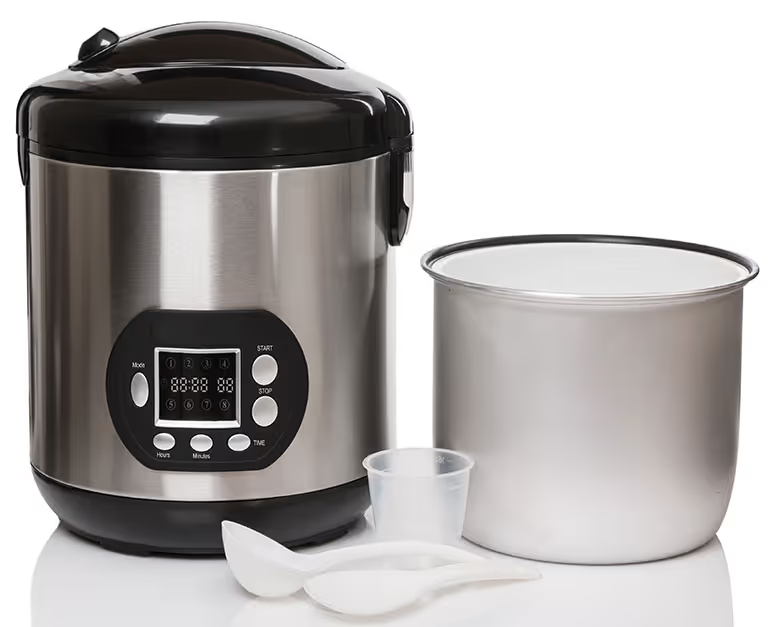
Pressure Cooker Explosion Lawyer: When Kitchen Appliances Cause Severe Burns
If you or a loved one suffered burns from an exploding pressure cooker, you may consider an experienced pressure cooker explosion lawyer who understands these devastating product defect cases.
Dinner preparation shouldn’t require protective gear, yet thousands of home cooks have discovered that trendy appliances like Instant Pot and other pressure cookers can transform into dangerous kitchen hazards.
Call The Lyon Firm now for a free consultation: (513) 381-2333.
How Pressure Cooker Injuries Happen
- Pressure cooker explosion lawsuits typically involve several types of manufacturing and design defects:
- Defective Lid-Locking Mechanisms – Popular pressure cooker models feature faulty lid-locking systems that fail when needed most. Users receive false signals indicating safe opening conditions when dangerous internal pressure still exists. The lid releases, and superheated contents explode outward with volcanic force.
- Malfunctioning Pressure Release Valves – Some designs incorporate pressure release valves that clog, malfunction, or prove inadequate. Pressure builds beyond safe thresholds, seals rupture, and contents escape—frequently through the lid pathway where users stand.
- Float Valve Defects – These critical components should physically prevent lid opening until pressure drops to safe levels. Manufacturing inconsistencies or design inadequacies compromise this safety function, resulting in lids that unlock despite internal conditions guaranteeing explosive decompression.
- Electronic Sensor Failures – Digital models introduce additional failure modes: sensors that misread pressure levels, control boards displaying “safe” indicators while chambers remain pressurized, and software glitches permitting premature lid unlocking.
Common Pressure Cooker Brands Involved in Lawsuits
Defective pressure cooker lawsuits have been filed against numerous manufacturers, including:
- Instant Pot explosion cases
- Power Pressure Cooker XL injuries
- Crock-Pot Express malfunctions
- Cuisinart pressure cooker burns
- Ninja Foodi explosion claims
Some kitchen appliances are inherently more dangerous than others. Because of their design and method of operation, pressure cookers can be some of the most hazardous items in an American household.
Pressure cookers rely on high pressure to cook foods quickly, trapping extremely hot liquid and food. If the appliance happens to break or fail due to defects in materials or design, an accident may occur involving spills and explosions.
Each year, defective pressure cookers are recalled by appliance manufacturers and the U.S. Consumer Product Safety Commission (CPSC). However, by the time the specific defective models are recalled, consumers may have already suffered serious injuries.
In fact, many recalls are not initiated until injuries are reported or lawsuits hold companies accountable for the damages they have caused. Victims of defective products and their attorneys have the right to file claims against any company who sells and distributes dangerous defective kitchen appliances like pressure cookers.
Joe Lyon is a highly-rated recall lawyer and product liability attorney representing plaintiffs nationwide in a wide variety of consumer product liability and Faulty Pressure Cookers.
Pressure Cooker Recalls
The Consumer Product Safety Commission analyzes whether a product poses a “substantial product hazard,” and makes recall decisions based on the three following factors:
- Types of defects—design defects, construction and packaging flaws, and inadequate warnings or instructions may all lead to recalls.
- Volume of defective products—one poor safety report can lead to a recall, but usually recalled products have already caused harm to many consumers.
- Severity of the risk—the safety agency carefully notes the number of injuries reported, the severity of those injuries, and the likelihood of more injuries occurring in the future.

Devastating Injuries From Pressure Cooker Explosions
Types of Burn Injuries We Handle
- Third-Degree Burns requiring skin grafts, multiple surgeries, and months of recovery. Victims often face permanent scarring and disfigurement that reconstructive surgery cannot fully repair.
- Facial Burns and Disfigurement causing both physical damage and severe psychological trauma. According to the American Burn Association, facial burns often require the most extensive treatment and result in lasting emotional distress.
- Hand and Arm Burns that compromise fine motor function permanently, affecting victims’ ability to work and perform daily activities.
- Eye Injuries occur with disturbing frequency. Boiling liquid striking eyes causes vision impairment or blindness, with potential for secondary complications like glaucoma or cataracts.
- Blunt Force Trauma from explosive force itself—users struck by flying lids suffer concussions, facial fractures, and dental damage.
Pressure Cookers Injury Risk
Pressure cookers can cause a number of serious burn injuries, and as a result the Consumer Product Safety Commission (CPSC) has published safety measures to help consumers protect themselves in the kitchen. The following safety tips may reduce the risk of burn injury and encourage safe kitchen practice:
- If the pressure cooker model you own is recalled, do not use it and return it the place in which it was purchased.
- Do not buy a second hand pressure cooker, as it may malfunction, have broken parts or old seals.
- Keep seals and rubber gaskets clean.
- If a seal or gasket looks cracked or broken, replace it or purchase a new cooker.
- Follow the instruction manual and safety instructions.
- Measure liquids precisely. This is important as too much or too little liquid can present safety hazards.
- Do not overfill pressure cookers. Some foods expand when they cook and need extra space.
- Beware of frothy foods. Frothy foods can block steam valves and pressure-release vents. When cooking foods like pasta, split peas, oatmeal, applesauce or cranberries, make sure the quantity is well below the maximum-fill line.
- Release pressure and lid safely. Pressure is released by letting the cooker cool until the pressure drops to a safe range. Consult the instruction manual.
- Stay clear of steam. Open the cooker with the lid facing away from you.
- Use dry pot holders.
- Inspect pressure cookers before use. Check the lid for cracks, and make sure the vent is open and clean.
- Clean pressure cookers after each use.
Why Are Pressure Cookers Dangerous?
Due to their method of cooking contents at extremely high pressurized temperatures, pressure cookers have been known to cause serious pressure cooker injuries when they explode or spill boiling contents.
Most reported pressure cooker explosions are the result of the seal failing or the lid popping off prematurely. Burns are the most common injuries linked to defective pressure cookers. Consumers who are nearby when a device fails may suffer severe burns and scalding pressure cooker injuries across their face and body.
Pressure cooker lids are meant to be designed to create airtight seals with a rubber gasket, but if the seal is faulty and breaks before the device has time to release pressure, it can cause the lid to detach and spill boiling contents. This malfunction can occur even with safety locks if the materials are inferior and the design is defective.
Pressure Cooker Lawsuits
Pressure Cooker Defect Lawsuits have been filed on behalf of injured plaintiffs throughout the United States. Product Liability law holds companies responsible for dangerous consumer products that present a burn hazard or safety risk.
Pressure Cooker defects are common, and companies have a duty to properly test their products before they are sold to the public and pose burn injury risks. The Lyon Firm is proud to target companies who fail to provide safe consumer products, and has experience filing personal injury claims on behalf of burn injury victims nationwide.
Experienced. Compassionate. Consumer Advocates
The Lyon Firm is a Cincinnati, Ohio-based law firm, representing individuals nationwide in class action, product liability, and toxic exposure litigation.

Handling Complex Data Privacy & Cyber Security Cases
Request A Free Consultation Now

.avif)
Compensation Available in Defective Pressure Cooker Cases
As an experienced pressure cooker explosion law firm, we pursue maximum compensation including:
- Medical expenses (past, present, and future)
- Lost income and earning capacity
- Pain and suffering damages
- Disfigurement and scarring compensation
- Emotional distress and psychological trauma
- Loss of enjoyment of life
- Punitive damages when manufacturers acted recklessly
Pressure Cooker Injury FAQ

Two pressure cooker recalls in 2017 highlighted the potential dangers of defective kitchen appliances for consumers. In August, 2017, Aldi stores in Australia initiated a recall of the Crofton Chef’s Collection 6L Pressure Cooker by H&H Asia after reports of six people sustaining serious injuries after the pressure cookers exploded.
The defective cookers sprayed boiling liquids and allegedly burning victims’ faces, eyes, upper bodies, arms and torsos. In June, 2017, Target stores issued a product recall for their Bellini Pressure Cookers, sold between October, 2015 and June, 2017, after an alleged defect with the lid was discovered.
All six people injured by the recalled Aldi pressure cooker mentioned above allegedly suffered either second-degree burns or third-degree burns that covered up to a third of their bodies.
Whether an accident involves defective pressure cookers, crock pots, gas stoves, microwaves, blenders of other appliances, the injuries are typically burn injuries and lacerations. Severe scalding and third degree burns are often serious injuries.
Types of Cooker Defects
- Explosive tendencies
- Improper Venting System
- Faulty seals and gaskets
- Inferior Material Construction
- Lid Defects—spill hazards
- Projectile Hazards
- Scald & Burn Injury Risk
- Fire Hazards
The following factors are considered under Ohio law when determining the risks associated with the design of a product: (1) the magnitude of the risk of injury; (2) ordinary consumer awareness of the risk for injury; (3) the likelihood of causing injury; (4) the violation of a private or public standard; and (5) the consumer’s expectation of the performance of the product and level of danger. Ohio Revised Code 2307.5 (B) Product Defective in Design or Formulation.
The following factors are considered under Ohio law when determining the benefits associated with product design: (1) the utility of the product; (2) availability of an alternative design; (3) the magnitude of risks associated with an alternative design. Ohio Revised Code 2307.5 (c)
Defenses for Defective Design: (1) a pharmaceutical drug or medical device is not defective by design if it contains an adequate warning of an unavoidably unsafe aspect of the pharmaceutical or medical device; (2) the dangerous aspect is inherent to the product, recognizable, and cannot be eliminated without compromising the product’s usefulness; (3) a lack of a feasible alternative design. 2307.75 (d)(e)(f).
A manufacturing defect is based on a defect that occurred during the manufacturing process. Most manufacturing defect cases are based on a products deviation from the intended specification, formula, performance standards, or design model. In such cases, it may be easy to determine the product did not comply with the intended design.
The product may be recalled as a specific lot is identified as being non-compliant and defective. A product may be defective in manufacture or construction, materials and assembly, and a manufacturer or distributor may be subject to strict liability, even though it exercised all possible care. Ohio Revised Code 2307.74.
In determining whether a product is defective due to inadequate warning or instruction, evidence must be presented to prove:
- The manufacturer knew, or in the exercise of reasonable care, should have known about a risk
- A reasonable manufacturer would have provided a warning of the risk
- The manufacturer failed to provide the warning
- The person was injured due to a lack of warning. The same elements apply whether the claim is based on a warning present during the marketing or post-sale warnings.
Defenses to Failure to Warn Claims: (1) the risk was open and obvious or a matter of common knowledge; and (2) in cases of a pharmaceutical drug or medical device, the warning was provided to the prescribing physician (“Learned Intermediary Doctrine”).
Many pharmaceutical companies have been targeted in failure to warn lawsuits for either failing to place warnings on medication guides and packaging or failing to properly test their product before putting it to market.
If the lock, vent, seal, or gasket is defective on your pressure cooker model, the appliance may be very dangerous and pose a burn injury risk.
Defective Products Lawsuits
Request a Free Consultation
Taking the first step doesn’t have to be complicated. In just a few minutes, you can share the basics of your case, and our team will guide you from there:
- It begins with a few simple questions about your situation.
- From there, a member of our legal team reviews your case.
- Together, we’ll chart the path forward, helping you take the next step toward resolution.
