

Auto Recall Attorney
Defective vehicles cause injuries every year. Learn how an auto recall lawyer can help.


.avif)


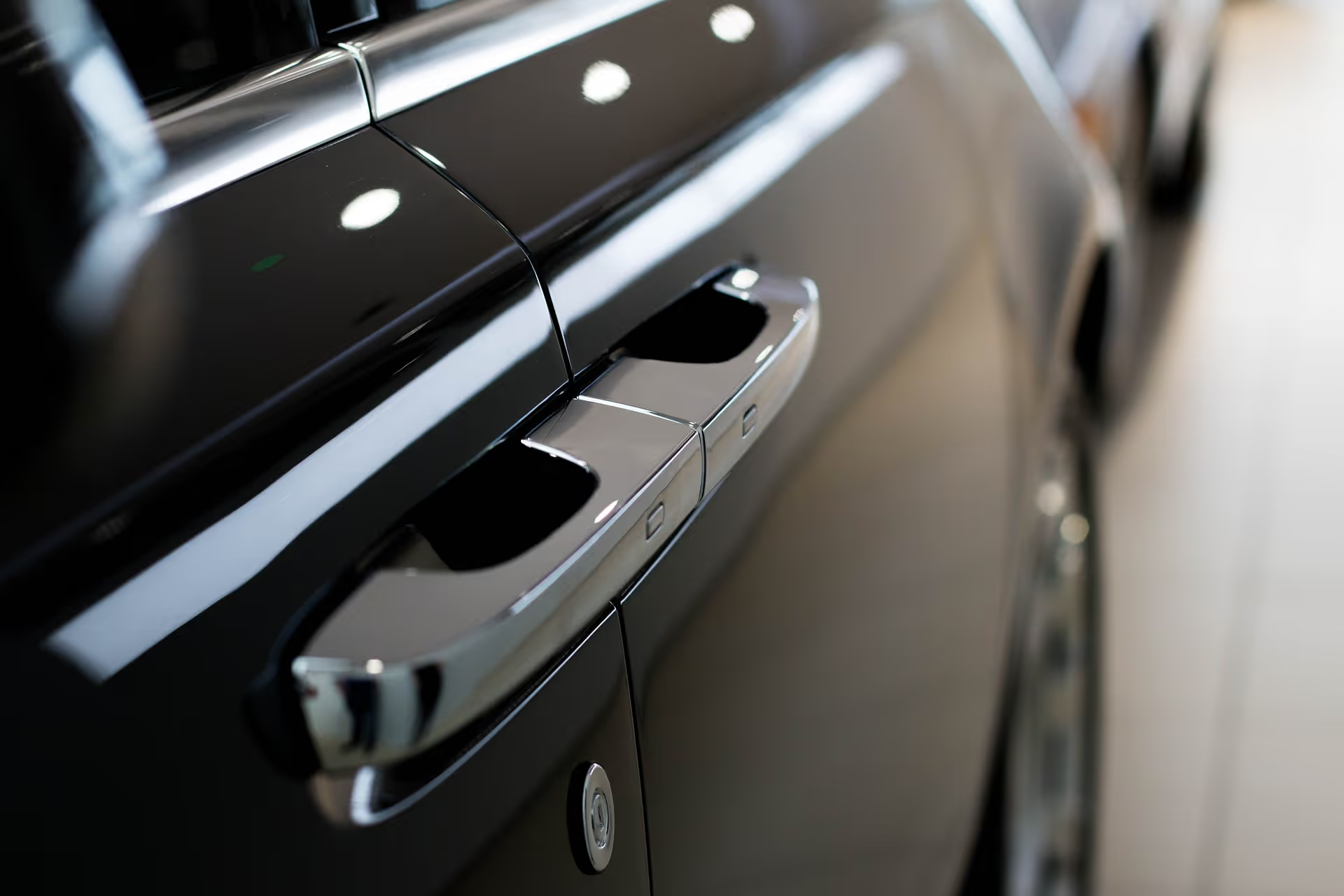
Auto recalls in the United States can involve millions of vehicles because automakers often rely on the same suppliers and interchangeable parts across multiple models and brands. When one component fails, the defect can spread across entire product lines and put countless drivers at risk.
Defective seatbelts, airbags, fuel lines, transmissions, tires, and other parts increase the likelihood of serious accidents, injuries, and deaths. Oversight by the National Highway Traffic Safety Administration (NHTSA) and legal action from product liability attorneys are often the only ways to hold manufacturers accountable when safety problems are ignored.
For those involved in accidents linked to defective vehicles, the aftermath can be devastating. Medical bills pile up quickly, income may be lost, and the physical and emotional toll can last a lifetime.
Joe Lyon is a nationally recognized vehicle recall attorney with extensive experience representing families affected by defective vehicles. He understands the economic and personal impact these cases have on victims and their loved ones.
“I met Joe during what was easily one of the worst times of my life. My husband had been in a serious accident and remained in medical facilities until his death nearly four years later. Joe worked tirelessly on our case and became like family to us. I would highly recommend him to anyone and guarantee he will do everything possible to get results. He is extremely dedicated and hardworking. If it wasn’t for him, I don’t believe our case would have been resolved the way it was.”
— Donna Urchak
If you or someone you love suffered injuries in an accident involving a recalled or defective vehicle, call The Lyon Firm at (513) 381-2333 or reach out online for a free, no-obligation consultation with a vehicle recall lawyer.
Common Issues Affecting Auto Recalls
Restraint System Failures
- Seat belt malfunctions
- Weak or collapsing seat backs
- Airbag defects or non-deployment
- Unsafe child safety seats
- Faulty child seat anchors
Crashworthiness Defects
- Vehicles prone to rollovers
- Roof crush hazards in rollovers
- Door latches that fail in crashes
- Poor side-impact protection
Control and Operation Defects
- Sticking accelerators or throttle problems
- Malfunctioning cruise control
- Keyless ignition systems that don’t shut off properly
- Steering system failures
Driveline and Structural Issues
- Transmission failures
- Suspension breakdowns
- Tire blowouts or tread separation
- Brake system failures
Fuel and Fire Hazards
- Leaking fuel systems
- Gas tank explosions
- Engine or fluid leaks leading to fires
- Electrical shorts causing vehicle fires
Electrical and Software Problems
- Power window malfunctions
- Windshield wipers that stop working
- Automatic braking system failures
- Faulty vehicle software updates
- Backup cameras that go dark
- Headlight or taillight malfunctions
Equipment and Accessory Defects
- Collapsing or unstable car jacks
- Shattering or detached sunroofs
- Faulty trailer hitches or towing equipment
Who Issues Auto Recalls?
Automakers are often hesitant to issue recalls because doing so acknowledges a flaw in their vehicles and can damage their reputation. Still, when a safety defect threatens drivers or passengers, a recall becomes necessary.
Recalls may be initiated directly by a manufacturer once a defect is identified, or they may come after an investigation by the National Highway Traffic Safety Administration (NHTSA). The agency enforces the Federal Motor Vehicle Safety Standards, which cover a range of safety features, including airbags, seatbelts, and windshield defrosting systems. When vehicles fail to meet these standards, the NHTSA can step in to recommend or require a recall.
One of the largest safety actions in U.S. history involved Takata airbags, which were installed in tens of millions of vehicles across several brands. The inflators could explode and send metal fragments into the cabin, leading to injuries and deaths. More recently, Hyundai and Kia recalled over 3 million vehicles for engine fire risks, urging owners to park outside until repairs were made.
Automakers Regularly Issuing Auto Recalls
Every manufacturer in the auto industry has issued recalls for dangerous products at some point in their history. Some auto defects clearly create more road hazards than others, though any defective car or truck may increase the risk of accident and injury. Companies that have been targeted in injury and product liability lawsuits include the following:
- American brands: Ford Motor, General Motors, Dodge, Jeep, Ram, Chevrolet, Cadillac, Lincoln
- Japanese brands: Honda, Toyota, Subaru, Nissan, Mazda
- European brands: BMW, Volkswagen, Audi, Mercedes-Benz, Volvo
- Electric and emerging brands: Tesla, Rivian, Lucid
- Global groups: Fiat Chrysler (now Stellantis), Peugeot, Alfa Romeo, Maserati
How to Check If Your Vehicle Has Been Recalled
The fastest way to see if your car is affected by a recall is by using your Vehicle Identification Number (VIN). This 17-character code is found on the driver’s side dashboard, inside the driver’s side door, or on registration and insurance documents.
Ways to check include:
- NHTSA VIN Lookup Tool: Enter your VIN on the National Highway Traffic Safety Administration’s recall page to view open recalls.
- Manufacturer’s Website: Most automakers, including Ford, Honda, Toyota, and others, maintain VIN-specific recall search tools.
- Authorized Dealerships: Dealers can confirm whether your vehicle is under recall and arrange repairs.
- Official Notices: Manufacturers are required to notify owners, though mailed notices do not always reach second-hand owners or families of older vehicles.
Even with these systems in place, millions of defective vehicles remain on the road each year because drivers are unaware of recalls, or repairs are delayed.
Understanding whether your vehicle is affected and what that means for your safety is not always simple. The Lyon Firm has represented individuals nationwide in cases involving defective vehicles and knows how to explain your potential legal options.
Call (513) 381-2333 or contact us online to schedule a free case review with an auto recall attorney.
Common Injuries in Auto Recall Accidents
Many auto-related injuries tied to defective vehicles are preventable. When a part fails or a design flaw is overlooked, the consequences can be severe. Automakers and suppliers may be held liable when their products cause accidents and injuries.
Common injuries in auto recall accidents include:
- Orthopedic injuries such as broken bones, torn ligaments, or long-term joint problems.
- Burn injuries caused by fuel leaks, engine fires, or electrical shorts.
- Traumatic brain injuries (TBI) resulting from failed airbags, roof crush incidents, or severe collisions.
- Neck and spinal injuries, including whiplash, herniated discs, or paralysis.
- Crush injuries in rollovers or when roofs and door structures collapse.
- Internal organ damage from high-impact crashes or defective restraint systems.
- Severe lacerations and scarring from shattered glass, sharp metal, or malfunctioning airbags.
These injuries often require long-term medical care and can lead to permanent disability, making it critical to hold manufacturers accountable.
“A recall notice should not come after someone has already been injured. People trust their vehicles to be safe, and when that trust is broken, they deserve answers and accountability.”
Joe Lyon, Founding Partner of the Lyon Firm
Auto Recalls: Dangerous Auto Defects
Over the last decade, nearly every major automaker has faced large-scale recalls tied to defects that put drivers and passengers at risk. Some involve millions of vehicles and span multiple model years. Below are examples of dangerous defects that have triggered recalls and lawsuits.
Ford Motor Company
- In 2025, Ford issued major recalls covering:
- 100,000 Ford Rangers (2024–2026) for defective side curtain airbags.
- 312,000 vehicles, including F-150s, Broncos, and Lincoln Navigators, for brake booster defects.
- Nearly 850,000 SUVs and trucks for faulty fuel pumps linked to stalling.
- 700,000 Bronco Sport and Escape SUVs for cracked fuel injectors that increased the risk of engine fires.
- By mid-2025, Ford had already issued more than 100 separate recalls, affecting over 7 million vehicles.
- Previous recalls included over 1 million 2015–2017 F-Series trucks for defective door latches and actuator cables.
Hyundai and Kia
- Hyundai and Kia have faced repeated fire-related recalls. In 2023, both automakers recalled more than 3 million vehicles for brake fluid leaks that could spark engine fires.
- Earlier recalls included 180,000 Hyundai Tucson SUVs (2019–2021) for anti-lock brake circuit defects that caused fires even when parked.
- Kia also recalled over 9,000 Stinger sports cars due to engine fire risks, adding to ongoing problems associated with oil leaks and engine failures.
Tesla
- In 2024–2025, Tesla recalled thousands of Model S, Model X, Model 3, and Model Y vehicles for issues ranging from seat fastener defects and steering system failures to faulty hood latches.
- Earlier recalls included Model S and Model X vehicles for issues with the parking brake and improperly adjusted seatbelts.
BMW
- In 2024, BMW recalled more than 390,000 vehicles in the U.S. for airbag and electrical issues.
- Past recalls included 672,000 3-Series cars for short-circuit fire risks and 1.6 million diesel vehicles worldwide for coolant leaks that could ignite engine fires.
- The BMW i3 electric car was also recalled for a higher risk of neck injury in frontal crashes.
Honda
- Honda continues to be one of the largest automakers affected by Takata airbag inflator recalls, which have stretched into 2024 and impacted millions of vehicles. These airbags can rupture and spray metal fragments, causing severe injuries or death.
- Previous recalls included 1.1 million Honda Accords for fire risks linked to battery electrical shorts, and Honda Odyssey minivans for rear seat latch failures.
Fiat Chrysler (Stellantis)
- In 2025, Stellantis recalled Jeep Wranglers for tire pressure monitoring defects and Dodge Journey SUVs for rearview camera failures.
- Earlier recalls included nearly 4 million vehicles in 2017 for defective roll sensors, faulty oil cooler lines, and airbag wiring issues. Models affected included the Ram pickup, Dodge Charger, Challenger SRT Hellcat, Chrysler 300, Durango, and Jeep Grand Cherokee.
Volkswagen, Porsche, Audi
- These brands have faced multiple recalls tied to fuel leaks and fire risks. A 2017 NHTSA investigation uncovered fuel flange defects linked to supplier Continental Automotive Systems.
What to Do If Your Vehicle Has Been Recalled
If your vehicle is included in a recall, prompt action is important:
- Schedule repairs immediately. Recall repairs must be performed free of charge at authorized dealerships.
- Follow safety instructions. If the notice advises against driving the vehicle, arrange for towing to the dealer rather than risking further use.
- Keep documentation. Save recall notices, repair orders, and correspondence. These records may support a claim if the defect caused an accident.
- Check for multiple recalls. Vehicles can be subject to more than one recall. Continue checking for new recalls even after a repair.
- Call a car recall attorney. If you were injured in an accident linked to the defect, even before the recall was issued, you may still be eligible for compensation.
Repairs alone do not address the impact on those already injured. Legal claims may be the only way to recover for medical expenses, lost income, and wrongful death damages when a defect leads to serious harm.
Manufacturer Liability for Car Recalls and Defects
When a defective vehicle or component causes an accident, the automaker or supplier may be held liable for the damages. Injured parties can pursue compensation for property damage, medical bills, lost wages, and pain and suffering.
Many auto recall cases stem from defective designs rather than mistakes during manufacturing. A vehicle may be considered defectively designed if its original blueprint creates unreasonable safety risks. Courts often apply a “risk–benefit” analysis to determine whether safer and more practical designs were available at the time.
Examples of design-related defects include:
- Faulty braking systems,
- Defective seat belt buckles,
- Automotive software failures, and
- Airbag deployment defects.
Although federal regulations set minimum safety standards for automobiles, compliance does not always shield manufacturers from liability. If a company ignores known hazards or delays a recall, it can still be held accountable under product liability laws.
Automakers must be held to strict safety standards so consumers are protected on the road. Recalls, lawsuits, and regulatory oversight by the National Highway Traffic Safety Administration (NHTSA) all play a role in ensuring dangerous products are removed before more injuries occur.
If you believe a defective vehicle contributed to your accident, consult an experienced auto recall attorney to evaluate your legal options.
Auto Recall Settlements
When a defective vehicle causes an accident, the automaker or component supplier may be responsible for the full range of damages. Compensation can include:
- Property damage, such as a totaled vehicle;
- Past and future medical costs;
- Lost wages and loss of earning potential;
- Pain and suffering;
- Long-term disability or permanent impairment; and
- Wrongful death damages, including funeral expenses and loss of financial support for surviving family members
In many cases, recalls are not announced until after serious injuries or deaths have occurred. Automakers may resist acknowledging problems until lawsuits and regulators force corrective action.
The type of settlement available depends on factors such as the nature of the defect, the severity of the injuries, and how clearly the manufacturer or distributor can be shown to be liable. According to the Martindale-Nolo Study, personal injury victims who hired an attorney received nearly 3 times more compensation than those who proceeded without representation, even after fees.
Experienced. Compassionate. Consumer Advocates
The Lyon Firm is a Cincinnati, Ohio-based law firm, representing individuals nationwide in class action, product liability, and toxic exposure litigation.

Handling Complex Data Privacy & Cyber Security Cases
Request A Free Consultation Now

.avif)
Speak With an Experienced Auto Recall Lawyer Today
The Lyon Firm offers free, no-obligation consultations for individuals and families affected by auto defects and recalls.
Attorney Joseph Lyon has over twenty years of experience litigating complex product liability cases across the nation. He has taken on some of the largest corporations in the world and served in leadership roles in over 100 class actions and 40 Multi-District Litigations (MDLs).
Our team has helped thousands of people across all 50 states pursue justice for injuries caused by unsafe products. We know how to investigate recalls, hold automakers accountable, and fight for the compensation you and your family deserve.
Call (513) 381-2333 or message us online to discuss your case with an experienced vehicle recall attorney.
Questions about Auto Recalls

A car or truck may be defective if it is unreasonably dangerous for its intended use. Legal claims typically fall into four categories:
- Manufacturing or construction defect: The vehicle deviates from its intended design due to errors in materials or assembly. These defects often affect only certain batches or “lots.” Injuries or economic losses tied to the defect are compensable under product liability law.
- Defective design: The original design of the vehicle is inherently unsafe, even if built correctly. Courts often apply a risk–benefit analysis to determine whether safer, practical alternatives existed. Examples include faulty braking systems, defective seat belt buckles, and airbag deployment failures.
- Failure to warn: Automakers must provide adequate warnings and instructions for safe use. If a risk is not disclosed, and the lack of warning contributes to an injury, the manufacturer may be held liable.
- Misrepresentation or breach of warranty: The automobile fails to conform to its written or implied warranties. While warranty claims are common in economic loss cases, they also arise in personal injury cases involving automotive defects.
Each month, manufacturers announce new recalls affecting vehicles across all major brands. Recalls may involve millions of cars and trucks. To check if your vehicle is affected, visit official resources such as the NHTSA recall lookup tool or your manufacturer’s website.
Courts weigh both the risks and benefits of the design. Factors considered include:
- Magnitude and likelihood of injury,
- Consumer awareness of the danger,
- Violation of private or public safety standards, and
- Consumer expectations of performance and safety.
A design may be considered defective if a safer, feasible alternative was available.
A manufacturing defect occurs when something goes wrong during production, causing the vehicle to deviate from its intended design. Common examples include:
- Defective airbags,
- Tire failures,
- Software malfunctions, and
- Faulty transmissions or engines.
These cases often involve strict liability, meaning the manufacturer can be held responsible even if it exercised reasonable care.
A failure-to-warn claim arises when:
- The manufacturer knew or should have known about a risk.
- A reasonable company would have provided a warning.
- No warning was given, and an injury occurred as a result.
Defenses include arguing that the risk was open and obvious or already well known. In some industries, warnings provided to professionals (like physicians in drug cases) may shield the company under the Learned Intermediary Doctrine.
The National Highway Traffic Safety Administration (NHTSA) investigates vehicle safety issues and can pressure automakers to issue recalls. However, manufacturers are ultimately responsible for recalling unsafe cars and equipment once defects are identified.
Yes. If a vehicle defect leads to a fatal crash, surviving family members may be able to file a wrongful death claim. Compensation can include funeral and burial expenses, lost financial support, and the loss of companionship. These cases also hold automakers accountable when preventable defects result in the most tragic outcome.
Product Recall Lawsuits
Request a Free Consultation
Taking the first step doesn’t have to be complicated. In just a few minutes, you can share the basics of your case, and our team will guide you from there:
- It begins with a few simple questions about your situation.
- From there, a member of our legal team reviews your case.
- Together, we’ll chart the path forward, helping you take the next step toward resolution.
