



.avif)


Truck Accident Attorney
Investigating truck driver fatigue accidents
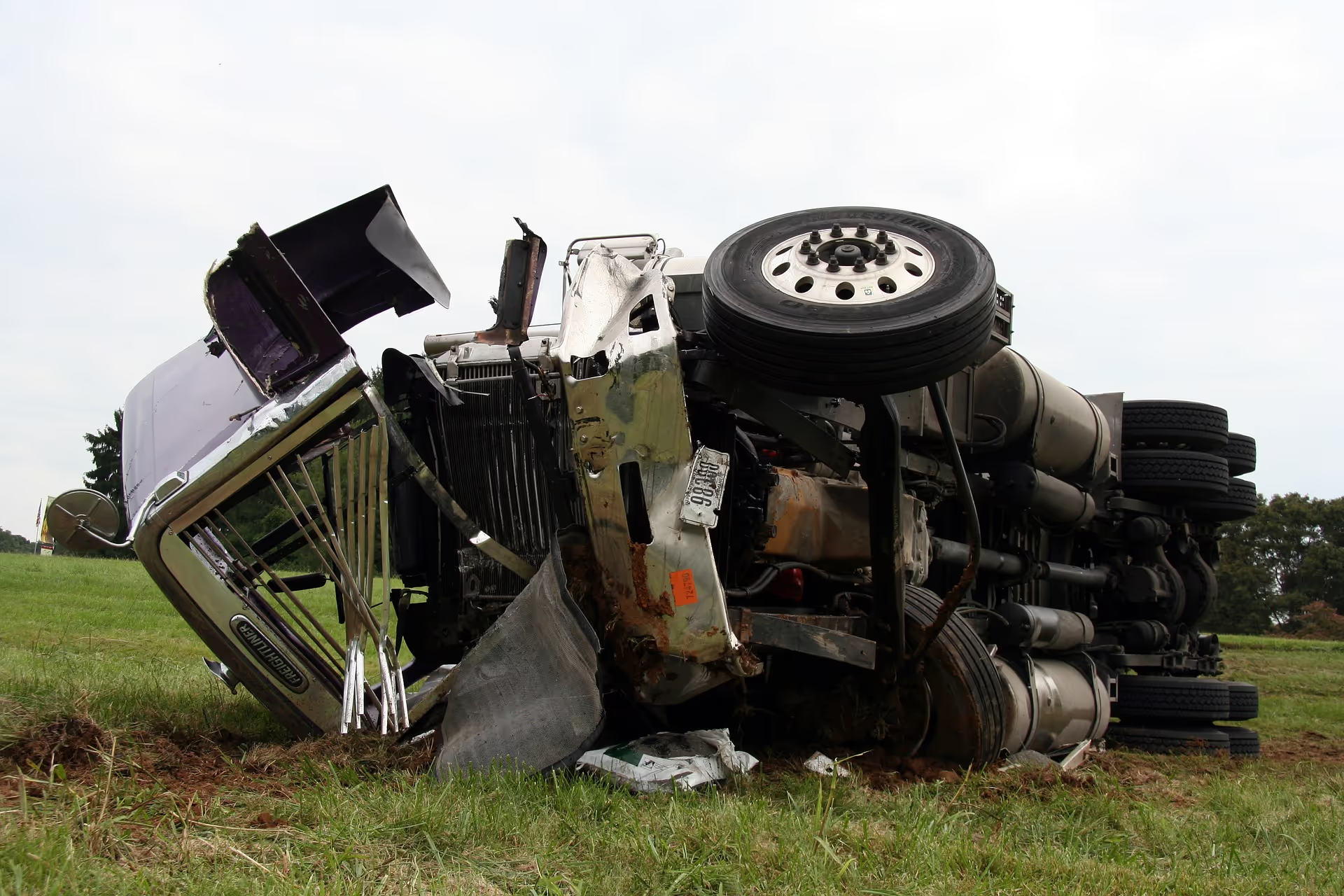
Picture an 80,000-pound semi-truck barreling down the interstate while its operator struggles to keep their eyes open. This terrifying scenario plays out more frequently than most travelers realize. Commercial vehicle operator exhaustion remains among the deadliest hazards on American roadways, transforming routine commutes into scenes of unimaginable tragedy within heartbeats.
Unlike standard passenger vehicle collisions, crashes involving exhausted commercial drivers typically produce catastrophic outcomes. The mathematics prove unforgiving. Massive vehicle weight combined with highway speeds and delayed reaction times from drowsiness create forces that crush smaller vehicles and devastate families. When trucking companies or drivers prioritize schedules over safety, innocent motorists pay the ultimate price.
Each year, drowsy and fatigued truck drivers are responsible for causing dangerous accidents, which lead to severe injuries and road fatalities. Trucking and transportation companies have a duty to ensure the drivers operating semis, tractor trailers, and other large commercial vehicles are sufficiently rested behind the wheel, or they may be held liable for truck accidents and the injuries that result.
Truck Accidents are reportedly on the rise across the country. A national road safety study conducted recently found that heavy trucks and buses are responsible for almost 4,000 road deaths each year. The annual societal cost of driver fatigue and drowsy driving is around $109 billion, not including property damage.
Sleep deprivation and driver fatigue are so serious because lapses of attention behind the wheel are more likely to occur, and lead to crashes. Recent studies sum it up: the less people sleep, the greater the risk of road accidents.
Large commercial trucks—delivery tractor trailers, tow trucks, buses, big-rigs and semi-trucks— are difficult vehicles to control, and a slight amount of inattention or fatigue can cause fatal accidents. Trucking companies and drivers may be negligent in their duties, and can be sued for endangering motorists and passengers on the road.
Joe Lyon is a highly-rated personal injury attorney, experienced in investigating and settling truck and traffic accident claims for plaintiffs nationwide.
Truck Driver Logbooks & Accidents
Logbooks and other trucking company data obtained during the investigation process can be just as important as witness testimony. Experts can thoroughly analyze logbooks for accuracy because it is not uncommon for commercial truck drivers to falsify logbooks for various reasons. If inaccuracies are found in your case, you may use them as evidence of the driver’s negligence.
Drivers are legally required to keep a daily record of when they are off duty, on duty, driving, and sleeping. The logs show when truckers are behind the wheel, which matters because the federal government regulates how much time truckers are allowed to drive in a given day.
Truck drivers are limited to driving 10 hours after eight consecutive hours off. Property-carrying drivers may drive a maximum of 11 hours after 10 hours off duty. Also, drivers must take rest breaks at specified intervals.
A driver who does not follow the regulations is likely to drive when tired and increase the risk of an accident.
.avif)
Why Commercial Driver Exhaustion Creates Deadly Conditions
Operating massive commercial vehicles demands constant alertness, quick decision-making, and precise vehicle control. Exhaustion undermines all these critical abilities simultaneously. Research demonstrates that staying awake for 18 consecutive hours impairs driving performance equivalently to operating under alcohol influence. Many commercial operators push far beyond this threshold.
Federal authorities established hours-of-service regulations specifically addressing this danger. These rules mandate rest periods, limit consecutive driving hours, and require detailed logbook documentation. Unfortunately, economic pressures frequently incentivize violations. Delivery deadlines, productivity bonuses, and competitive pressures tempt drivers and companies to bend or break these lifesaving requirements.
Warning signs of operator exhaustion include vehicles drifting between lanes, erratic speed variations, delayed braking responses, and failure to maintain safe following distances. By the time drowsiness reaches these observable levels, the operator may already be experiencing microsleeps—brief unconscious episodes lasting several seconds where the vehicle travels completely uncontrolled.
Driver Fatigue Truck Accident Injuries
Tens of thousands of drivers and passengers are injured in large commercial truck crashes every year. U.S. truck drivers suffer a disproportionate number of injuries in motor vehicle crashes, and the number of deaths and injuries of innocent motorists in these accidents is five times larger. Common truck accident injuries include:
- Orthopedic Injuries
- Rollover Injuries
- Amputation
- Severe whiplash injuries
- Burn Injuries
- Neck & Spinal Injury
- Traumatic Brain Injuries
Who is at Risk in Driver Fatigue Truck Accidents?
Because commercial trucks are on the roadways 24 hours a day, any vehicle occupant is at risk of an accident when a driver is distracted or falls asleep at the wheel. Night driving carries an additional risk. People who work nights or long, irregular shifts are more likely to get behind the wheel when they are tired. Most crashes or near misses occur between 4:00 to 6:00 a.m. and midnight to 2:00 a.m.
A report released by the AAA Foundation for Traffic Safety suggests with each hour of sleep lost, a risk for a driving accident increases. Drivers who sleep only five or six hours in a 24-hour period are twice as likely to crash as drivers who sleep seven hours or more. Drivers who get only four or five hours of sleep have four times the crash rate, nearly as dangerous as drunken drivers. Fatigue and drowsiness may lead to the following:
- Inability to pay attention to the road
- Noticeable swerving between lanes
- Slower reaction time
- Inability to make good decisions
- Falling asleep at the wheel
- Causing fatal accidents
Additional risks involve commercial drivers or trucks and buses who have worked consecutive long shifts, worked overtime, work night shifts or who have taken medication that causes drowsiness.

Filing Driver Fatigue Lawsuits
The best way to determine the cause of an accident you are involved in is to contact an experienced personal injury attorney to investigate with the assistance of accident experts. If a serious injury has resulted, victims are likely to be compensated for property damages, medical costs, lost past and future earnings, and pain and suffering.
Trucking employers and transport companies are accountable for their drivers and their on-road behavior. If trucking management overworks their drivers or is aware of their drowsy driving and fatigue, they can be liable for contributing to an unsafe working environment and dangerous roadways.
There are more than 15 million commercial trucks transporting over 70 percent of all U.S. goods every year. Commercial trucks—delivery tractor trailers, buses, big-rigs and semi-trucks—are very heavy and difficult vehicles to control. A small amount of inattention or fatigue can result in fatal accidents. If an accident occurs in part because a driver was fatigued, trucking companies and drivers may be liable for damages and sued for endangering other vehicle occupants on the road.
Driver fatigue, or physical or mental exertion that impairs performance, may be due to a lack of sleep, extended work hours, strenuous work or non-work activities, or substance related.
One study published by the Federal Motor Carrier Safety Administration reported that 13 percent of commercial motor vehicle (CMV) drivers were fatigued at the time of their last accident. The Truck Crash Causation Study reported over 12,000 commercial truck crashes over a span of about three years, which resulted in more than 249 deaths and 1,654 injuries.
How to Avoid Truck Driver Fatigue Accidents
- Get Enough Sleep—if a driver fails to get enough sleep, they should not drive while their body is naturally drowsy. Driver drowsiness may impair response time to potential hazards, increasing the chances of being in a crash.
- Be Aware at Night—a study by the Federal Motor Carrier Safety Administration (FMCSA) found that driver alertness was most related to “time-of-day.” Most people are less alert at night, especially after midnight. Drowsiness may be enhanced while on the road for an extended period of time.
- Healthy Diet Helps—skipping meals or eating at irregular times may lead to fatigue. Also, going to bed after a heavy meal can interfere with sleep. When drivers are not well-rested, fatigue may cause slow reaction time, reduced attention, memory lapses, lack of awareness, and reduced judgment ability.
- Nap When Necessary—drivers should take a nap when feeling drowsy or less alert. Naps should last a minimum of 10 minutes, but ideally a nap should be around 45 minutes. Allow about 15 minutes after waking to fully recover before starting to drive. Naps are more effective at restoring energy levels than coffee. Naps that prevent drowsiness are more effective in maintaining a driver’s performance than naps taken when a person is already drowsy.
- Avoid Medication That May Induce Drowsiness—most drowsiness-inducing medications include a warning label indicating that you should not operate vehicles during use. They may include tranquilizers, sleeping pills, allergy medicines and cold medicines. A large percentage of drivers have reported as having “over-the-counter drug use” at the time of an accident.
- Recognize the Signals of Drowsiness—be wary of frequent yawning, heavy eyes, and blurred vision. Research has indicated that being awake for 18 hours is comparable to having a blood alcohol concentration (BAC) of 0.08 percent, which is legally intoxicated.
- Do Not Rely on “Alertness Tricks”—behaviors such as smoking, turning up the radio, drinking coffee, opening the window, and other methods of staying awake are not real treatments for drowsiness.
*It is well known that driver fatigue can result in an increased risk of crashes, which is due to a decrease in performance. It is reasonable to believe that restrictions on hours of service lead to a reduction in the percentage of driver fatigue accidents.
Experienced. Compassionate. Consumer Advocates
The Lyon Firm is a Cincinnati, Ohio-based law firm, representing individuals nationwide in class action, product liability, and toxic exposure litigation.

Handling Complex Data Privacy & Cyber Security Cases
Request A Free Consultation Now

.avif)
Why are these cases important?
Trucking employers and transport companies are accountable for their drivers and their on-road behavior. If trucking management overworks their drivers or is aware of their drowsy driving and fatigue, they can be liable for contributing to an unsafe working environment and dangerous roadways.
Truck Accidents Lawsuits
Request a Free Consultation
Taking the first step doesn’t have to be complicated. In just a few minutes, you can share the basics of your case, and our team will guide you from there:
- It begins with a few simple questions about your situation.
- From there, a member of our legal team reviews your case.
- Together, we’ll chart the path forward, helping you take the next step toward resolution.
