
Santa Barbara Endodontics Data Breach Investigation
October 19, 2026



From realistic deepfake scams to automated ransomware attacks, new AI-driven threats are more advanced than anything seen in previous years. They raise serious legal questions about data privacy and consumer protection. Contact our data privacy attorneys to discuss ongoing threats and clear data security violations.
New tools available that use artificial intelligence have made cyberattacks faster and harder to detect. Criminals now use AI to generate phishing emails that mimic human communication with uncanny accuracy, making it increasingly difficult for even experienced users to recognize scams.
Deepfake technology compounds the problem, enabling fraudsters to produce realistic video and audio impersonations of executives or even family members to manipulate victims into transferring funds or revealing sensitive information.
Ransomware has also become more advanced through AI. Platforms offering ransomware-as-a-service use machine learning to scan for system vulnerabilities and customize ransom demands to maximize payout.
Security reports in 2026 already point to a sharp rise in AI-driven intrusions targeting corporations, many of which involve sensitive consumer or patient data.
Companies that fail to safeguard consumer or patient information can still be held liable in data breach lawsuits, particularly under privacy laws such as HIPAA in healthcare and state-level statutes. Victims of deepfake fraud or impersonation may also pursue legal claims under privacy invasion or misappropriation of likeness laws.
Regulators are scrambling to change with the times. Agencies like the FTC are investigating whether companies properly disclose cyber risks to consumers and investors, while the SEC has warned corporations about failing to adequately address cybersecurity vulnerabilities.
New lawsuits are also targeting data brokers, whose massive datasets are often exploited in AI-powered attacks. By selling or failing to anonymize sensitive data, these brokers have become critical players in the cybersecurity liability debate.
Deepfake scams add another layer of risk to our privacy, as victims may find their likeness or voice misused in fraudulent or defamatory contexts.
Businesses face equally severe consequences. Ransomware can bring operations to a standstill, leading to multimillion-dollar losses in downtime and extortion payments. Even when systems are restored, companies often suffer irreparable damage to consumer trust and reputation.
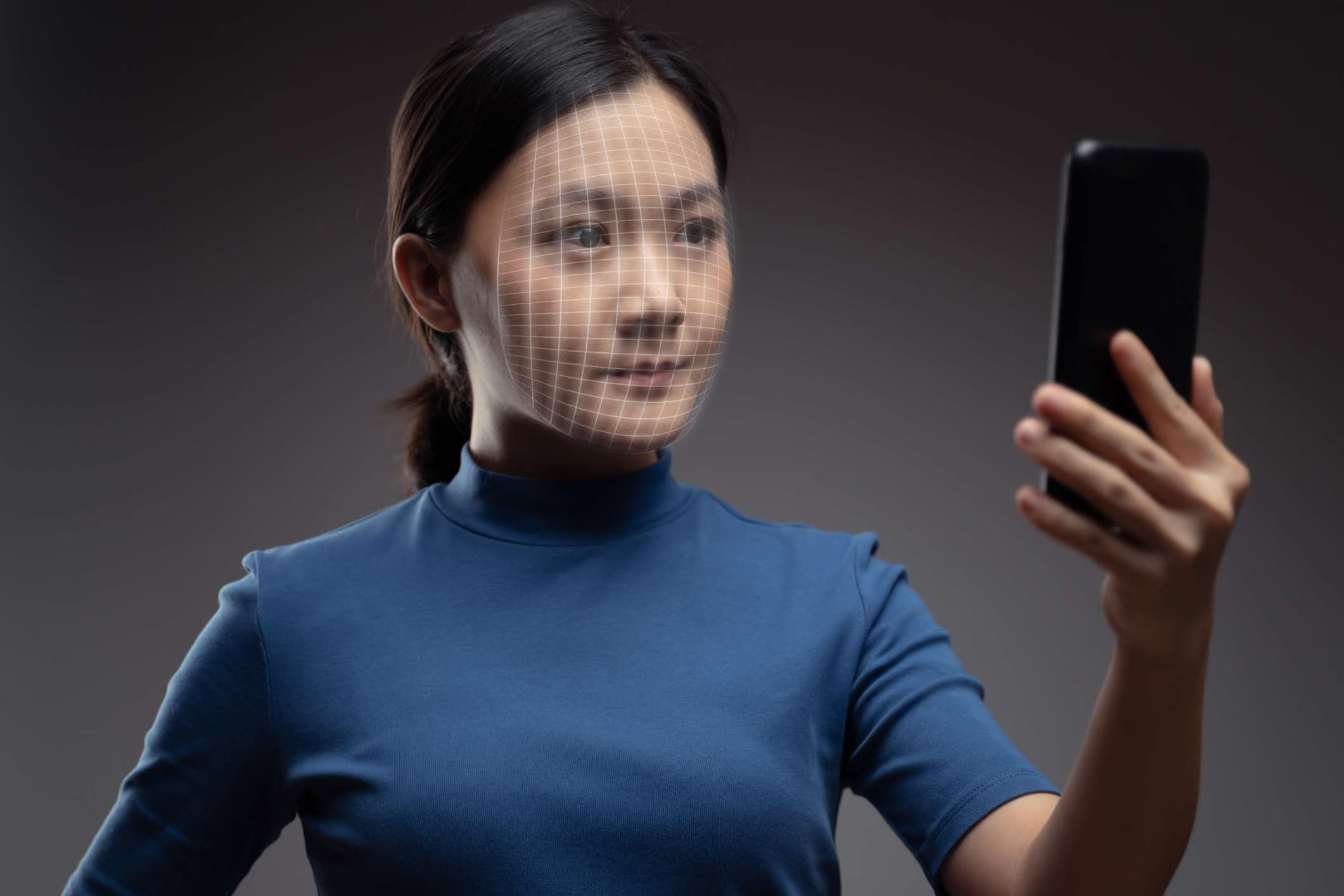
Businesses are adopting zero-trust architecture, which assumes that every connection must be verified and limits access to sensitive data. Cybersecurity training remains essential, as even with AI-enhanced phishing, human awareness can still prevent many attacks.
Victims of AI-driven cyberattacks should seek guidance from experienced data privacy lawyers. The attorneys at The Lyon Firm can determine whether a company’s negligence contributed to the breach and whether compensation may be available through class action litigation.
Hiring a data privacy lawyer like Joe Lyon can help victims exercise their rights and pursue compensation.
Our data privacy lawyers are experienced in data breach and privacy cases. We can investigate how a breach occurred and file lawsuits to recover damages.
In some cases, victims may also join existing class actions against corporations or data brokers accused of mishandling sensitive data. By pursuing legal remedies, victims not only protect themselves but also hold companies accountable.
The Lyon Firm is a Cincinnati, Ohio-based law firm, representing individuals nationwide in class action, product liability, and toxic exposure litigation.

Taking the first step doesn’t have to be complicated. In just a few minutes, you can share the basics of your case, and our team will guide you from there:

