

R.E. Ginna Nuclear Power Plant Asbestos Claims
Former R.E. Ginna Nuclear Power Plant workers may have legal options after a diagnosis.


.avif)


.avif)
Mesothelioma and Lung Cancer Claims for Former Ginna Workers
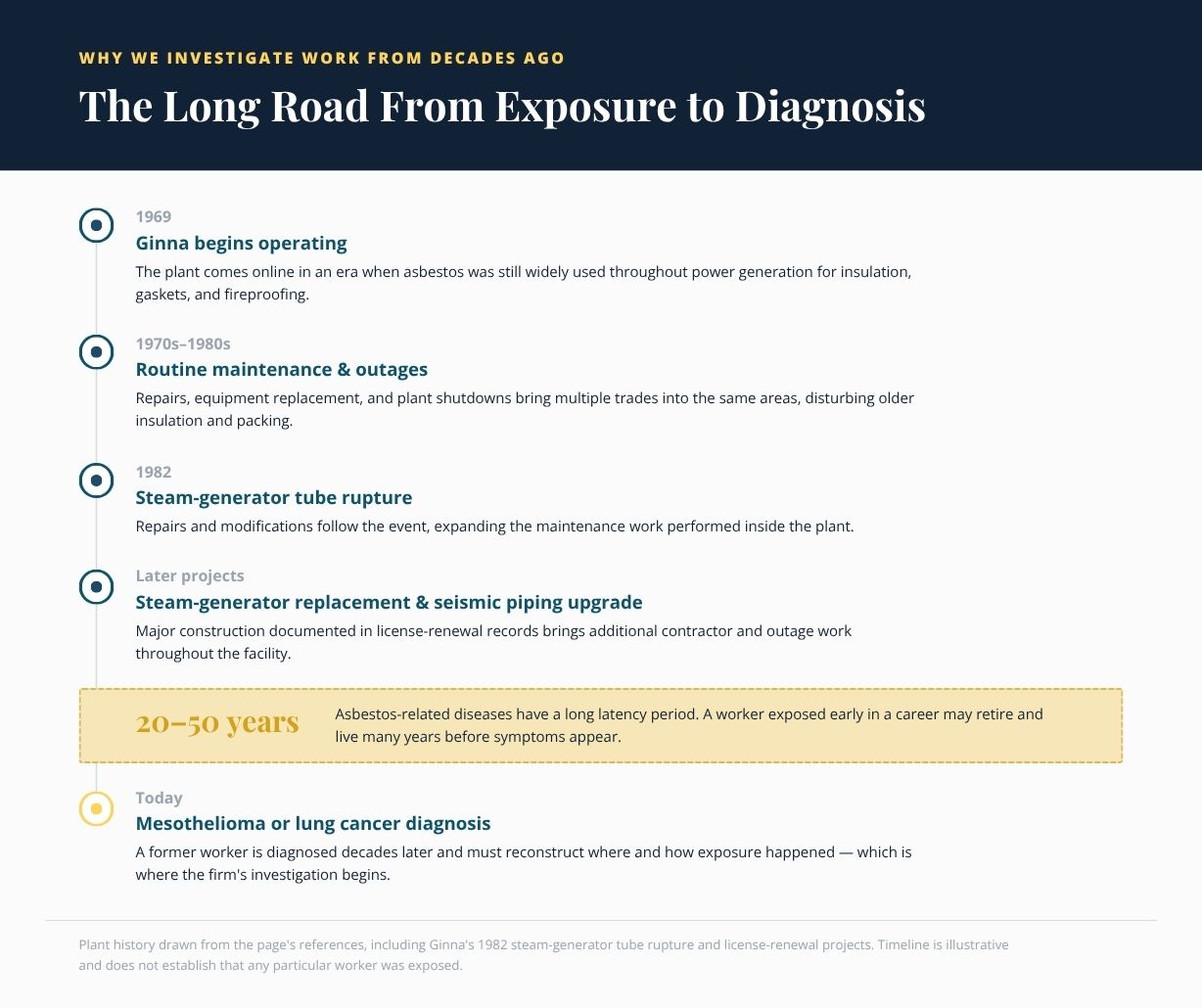
The R.E. Ginna Nuclear Power Plant began operating in 1969, during an era when asbestos was still widely used throughout power generation and other heavy industries. Ginna's Westinghouse pressurized-water reactor relies on an extensive steam system and equipment that must withstand high temperatures, making insulation an essential part of plant operations.
For the men and women who spent years maintaining that equipment, the work could bring them into contact with older insulation, gaskets, packing, fireproofing, and other asbestos-containing materials.
Pipefitters, electricians, mechanics, insulators, welders, and maintenance contractors could also be exposed when someone working nearby removed or disturbed these materials.
Today, R.E. Ginna Nuclear Power Plant asbestos claims may involve workers whose exposure happened decades before they developed mesothelioma, lung cancer, asbestosis, or another asbestos-related disease.
If you worked at Ginna and have been diagnosed with an asbestos-related illness, The Lyon Firm can investigate where and how you may have been exposed. Call (513) 381-2333 or contact The Lyon Firm for a free, confidential case review.
"In a desperate life altering crisis, Joe Lyon quietly entered my life. My husband was losing battle with mesothelioma. Joe came respectfully, professionally, kindly and beneficially towards our family. I felt he was Heaven sent. It has been an honor to know and work with Joe."
— Marlene Beal | Client of The Lyon Firm
Where Could Asbestos Have Been Found at Ginna?
For a former Ginna worker trying to determine where exposure happened, the job title alone may tell only part of the story. Where you worked inside the plant, the equipment you maintained, and the work taking place around you can all become important.
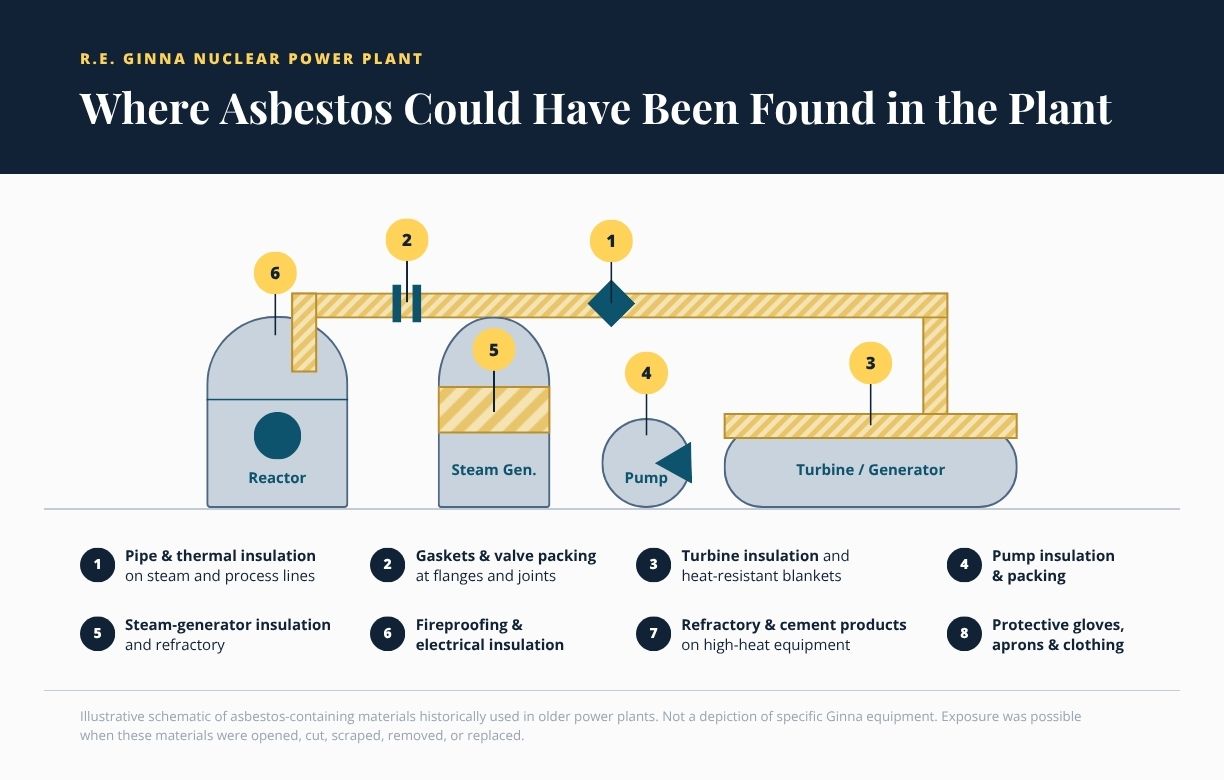
Ginna is a pressurized-water reactor. Heat generated by the reactor ultimately produces steam that drives the turbine-generator, requiring interconnected systems of piping, pumps, valves, steam-generating equipment, and other components.
Historically, equipment operating at high temperatures was commonly insulated to control heat and protect workers and surrounding systems.
Potential asbestos-containing materials in older power plants included:
- Pipe and thermal insulation
- Gaskets and valve packing
- Turbine insulation
- Pump insulation and packing
- Electrical insulation
- Fireproofing materials
- Heat-resistant blankets
- Refractory and cement products
- Protective gloves, aprons, and clothing
Exposure was possible when these materials had to be opened, cut, scraped, removed, or replaced.
A mechanic replacing a gasket could disturb old material around a flange. A pipefitter might remove insulation to reach a section of pipe. Electricians and operators could work in the same area while an insulation crew performed repairs. Cleanup workers could encounter dust left behind after the job was finished.
That is why reconstructing a Ginna worker's exposure history requires looking beyond whether the worker personally "worked with asbestos."
Why Maintenance Work Matters in a Ginna Asbestos Claim
Ginna has operated for more than five decades, and maintaining a nuclear generating station requires repeated inspection, repair, replacement, and modification of plant equipment.
Ginna's long operating history also meant generations of workers performed repairs, upgrades, and equipment replacements throughout the facility.
Older insulation and other asbestos-containing components could remain intact during normal plant operations. Maintenance could disturb those materials as workers gained access to pipes, pumps, valves, turbines, and other equipment.
Some workers may remember handling insulation themselves. Others may remember something more ordinary: insulation crews working beside them, dusty repair areas, old pipe covering being removed, gaskets being scraped from equipment, or cleanup following a maintenance job.
Those details can become important years later when investigating R.E. Ginna Nuclear Power Plant mesothelioma claims. A worker who never considered asbestos part of the job may have encountered it repeatedly while repairs, equipment replacements, and other maintenance took place nearby.
Maintenance Activities and Plant Shutdowns
For many former Ginna workers, the most important question may be what happened when equipment was opened for inspection, repair, or replacement.
Maintenance can require workers to remove insulation to reach piping, valves, pumps, and other components. Old gaskets may need to be scraped away. Pipe covering may be cut or pulled back. Insulated equipment may need to be disassembled before repairs can begin.
If those older materials contained asbestos, disturbing them could release fibers into the surrounding work area.
Plant shutdowns could bring several trades into the same area at once. A pipefitter might open a system while an electrician, mechanic, welder, laborer, or plant operator worked nearby. Contractors brought in for specialized maintenance could also work alongside permanent plant employees.
Ginna's own history illustrates how extensive this work could become. The plant underwent repairs and modifications following a steam-generator tube rupture in 1982. Major construction projects documented in Ginna's license-renewal records also included steam-generator replacement and a seismic piping upgrade.
These events do not establish that a particular worker was exposed to asbestos. They do show why an investigation into a former employee's work history needs to consider more than routine plant operations.
Maintenance assignments, outages, equipment replacement, contractor work, and major plant projects can help establish where a worker was and what materials may have been disturbed nearby.
You May Have Been Exposed Without Handling Asbestos
Some former power plant workers remember installing or removing insulation. Others may have no memory of ever touching asbestos. Direct contact was only one way exposure could occur.
Airborne fibers could travel through a work area after another employee cut insulation, removed a gasket, repaired a valve, or cleaned up debris. A worker who spent years around maintenance activity could therefore have repeated exposure without asbestos appearing anywhere in the person's formal job description.
This is one reason occupational asbestos cases frequently require reconstructing what was happening around the worker. Job classifications, maintenance records, coworker accounts, contractor information, equipment records, and asbestos product identification can help fill in details that may be difficult to remember decades later.
Asbestos-Related Illnesses Among Former Power Plant Workers
Asbestos-related diseases can take decades to develop. A worker exposed early in a career may retire and live for many years before experiencing symptoms or receiving a diagnosis.
Diseases associated with asbestos exposure include:
- Mesothelioma: An aggressive cancer that most commonly develops in the lining surrounding the lungs. Asbestos exposure is the primary cause of malignant mesothelioma.
- Lung cancer: Occupational asbestos exposure increases the risk of lung cancer. The risk is substantially greater among workers who also have a history of smoking.
- Asbestosis: Permanent scarring of lung tissue caused by inhaled asbestos fibers. The condition can progressively interfere with breathing.
- Pleural disease: Asbestos exposure can cause pleural plaques, thickening, or fluid around the lungs. These conditions can also provide evidence of a person's previous exposure.
Symptoms such as persistent shortness of breath, chest pain, chronic coughing, unexplained weight loss, or unusual fatigue warrant medical attention. Former industrial workers should tell their physicians about their complete occupational history, including jobs held decades earlier.
Worked at Ginna and later developed mesothelioma or another asbestos-related illness? The Lyon Firm can investigate your work history and potential sources of exposure. Contact us at (513) 381-2333 for a free, confidential case review.
Building a Ginna Asbestos Exposure History
Someone diagnosed with mesothelioma today may be trying to remember work performed 30, 40, or even 50 years ago. They may remember their department and coworkers but have no idea which insulation manufacturer supplied a particular pipe covering or who made the gasket they replaced during an outage.
That does not necessarily end the investigation.
An asbestos attorney can look beyond a worker's memory and search for other evidence of what products were present and which companies supplied them. Depending on the case, that investigation may include:
- Employment and union records
- Job descriptions and work assignments
- Maintenance and outage records
- Contractor records
- Coworker testimony
- Equipment and product information
- Historical asbestos product records
- Medical records documenting the diagnosis
Decades after the work occurred, records and testimony can help answer questions a former employee cannot answer from memory alone. For R.E. Ginna Nuclear Power Plant asbestos claims, that evidence may help identify the products involved, where exposure occurred, and which companies may bear responsibility.
Compensation Available After Asbestos Exposure
A mesothelioma or asbestos-related lung cancer diagnosis can bring significant medical expenses, lost income, and financial concerns for a family. Depending on how and where exposure occurred, compensation may be available from more than one source.
Potential sources can include:
- Claims against manufacturers and suppliers of asbestos-containing products
- Asbestos bankruptcy trust funds established by companies that used or manufactured asbestos products
- Settlements reached with responsible companies
- Jury awards when a case proceeds to trial
- Wrongful death claims when a worker has died from an asbestos-related disease
Determining which options apply requires identifying the products and companies connected to the worker's exposure. In some cases, several companies may have supplied asbestos-containing materials used at the same facility over different periods.
A Ginna Nuclear Power Plant asbestos lawyer can investigate those potential sources and determine which claims remain available based on the worker's exposure history and diagnosis.
How Can The Lyon Firm Help?
A former Ginna employee may remember working around insulated pipes, repairing equipment during an outage, or seeing crews remove old materials. Remembering the manufacturer printed on a gasket or the brand of insulation used decades ago is far less likely.
The Lyon Firm investigates those missing pieces.
Joe Lyon has more than 20 years of experience handling complex litigation, including asbestos and mesothelioma cases. The firm works with medical and industry experts and can investigate employment histories, asbestos products, former manufacturers, and other evidence needed to identify potentially responsible companies.
The firm can also determine whether asbestos trust funds may apply and coordinate claims when several sources of compensation are available.
Working with a Ginna Nuclear Power Plant mesothelioma attorney gives former workers and their families someone to handle that investigation while they focus on treatment and the decisions that follow a serious diagnosis.
“When someone comes to us decades after the exposure occurred, we don't expect them to know the name of every product they worked around. That's part of our job: going back through the history and finding the evidence that can help explain what happened.”
— Joseph Lyon, Attorney | The Lyon Firm
Experienced. Compassionate. Consumer Advocates
The Lyon Firm is a Cincinnati, Ohio-based law firm, representing individuals nationwide in class action, product liability, and toxic exposure litigation.

.avif)
Talk to The Lyon Firm About Your Ginna Work History
You may remember the years you worked at Ginna without knowing which products contained asbestos or which companies supplied them. You do not have to piece that history together yourself.
The Lyon Firm has represented workers and families in complex asbestos litigation and has the resources to investigate occupational exposure that happened decades ago.
If you or a loved one worked at the R.E. Ginna Nuclear Power Plant and later developed mesothelioma, lung cancer, or another asbestos-related disease, call (513) 381-2333 or contact The Lyon Firm online for a free, confidential case review.
Questions About Ginna Nuclear Power Plant Asbestos Exposure

Mesothelioma typically develops decades after asbestos exposure. This long latency period means someone exposed earlier in a career may not experience symptoms until long after leaving the power industry.
You do not need to arrive at an attorney's office with a list of asbestos products or manufacturers. Your work history, job duties, coworkers, equipment you worked around, and maintenance projects you remember can provide starting points for an investigation.
Historical records and information about asbestos products used in the power industry may help identify additional sources of exposure.
Potentially. Workers could inhale airborne fibers released when other employees or contractors cut, removed, repaired, or cleaned up asbestos-containing materials nearby.
Your specific work location, job duties, and proximity to maintenance or insulation work can help determine whether occupational exposure may have occurred.
Depending on the circumstances and applicable filing deadlines, surviving family members may be able to pursue a wrongful death claim after a worker dies from mesothelioma or another asbestos-related disease.
Because deadlines apply to asbestos claims, families should speak with an attorney promptly about the options available in their situation.
There is no standard value for an asbestos case. Potential compensation depends on factors such as the diagnosis, exposure history, responsible companies, available trust funds, medical expenses, lost income, and other losses.
The Lyon Firm can evaluate these factors after learning more about the worker's employment and medical history.
Asbestos Verdicts & Settlements
Estate of Steve Thomas v. AK Steel Corporation, et al.
Summary: PHILADELPHIA COUNTY, Pennsylvania – Co-counsel represented the surviving spouse of a steel mill worker who developed mesothelioma after years of asbestos exposure on the job. The case resulted in a settlement exceeding $2.7 million.
Estate of William P. Bush v. AK Steel Corporation, et al.
Summary: MADISON COUNTY, Illinois – Co-counsel represented the family of a steel mill worker who suffered asbestos exposure that later led to mesothelioma. The case resulted in a settlement exceeding $2.3 million.
Asbestos Lawsuits
Request a Free Consultation
Taking the first step doesn’t have to be complicated. In just a few minutes, you can share the basics of your case, and our team will guide you from there:
- It begins with a few simple questions about your situation.
- From there, a member of our legal team reviews your case.
- Together, we’ll chart the path forward, helping you take the next step toward resolution.
