

General Motors Asbestos Trust Fund
Exposed to Asbestos While Working on GM Vehicles? The Lyon Firm Fights for Your Justice.


.avif)


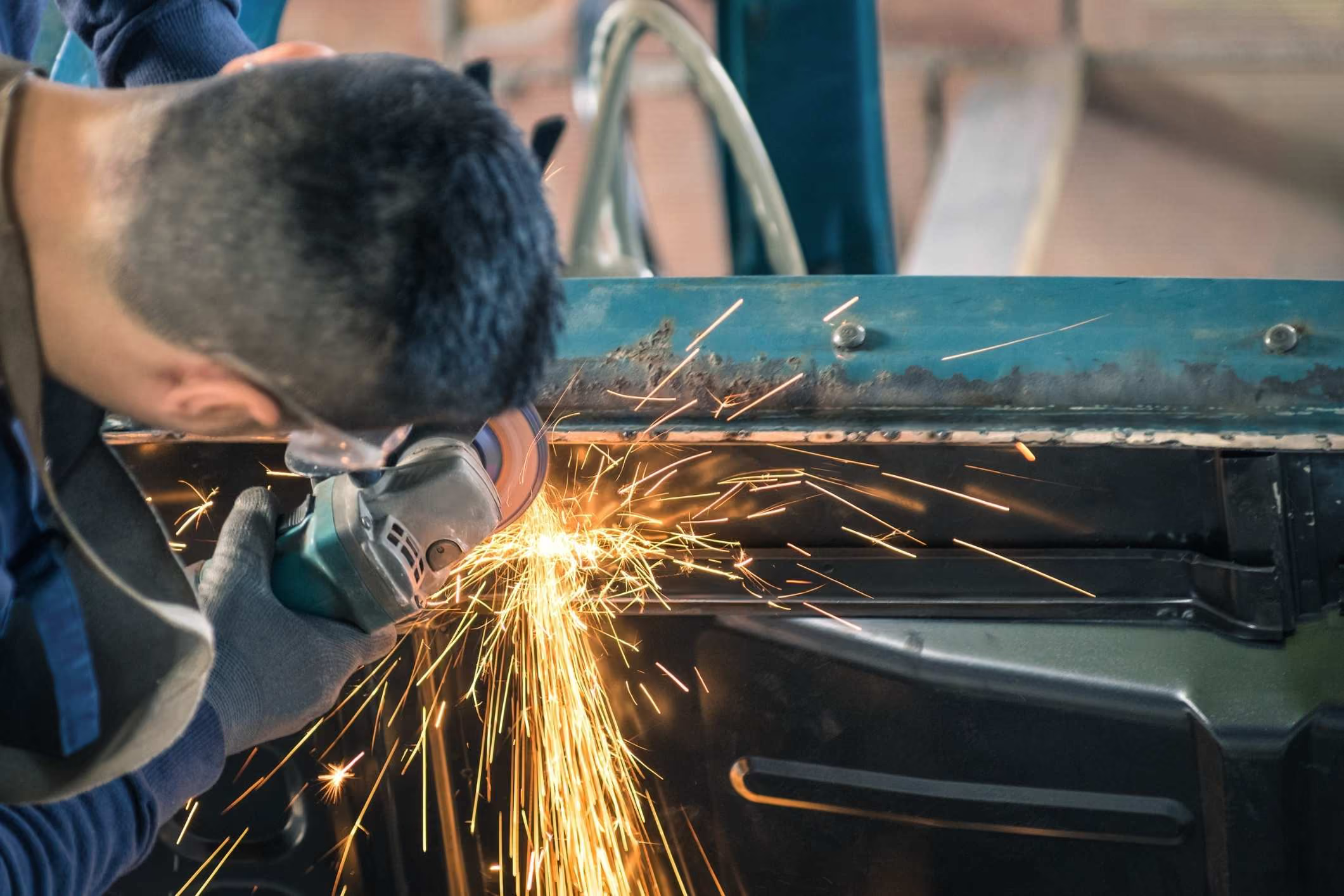
For decades, General Motors workers built, repaired, and maintained vehicles and automotive equipment that could contain asbestos. Mechanics outside GM plants could also encounter asbestos while servicing older GM vehicles, including work involving brakes, clutches, gaskets, and other components.
Those exposures may have happened 30, 40, or 50 years before a diagnosis of mesothelioma, lung cancer, asbestosis, or another asbestos-related disease. For people whose exposure is connected to the former General Motors Corporation, the General Motors asbestos trust may provide a source of compensation.
The trust was created following the bankruptcy of the former General Motors Corporation, later known as Motors Liquidation Company. Its purpose is to resolve qualifying asbestos personal injury claims associated with liabilities of the former company.
The Lyon Firm represents workers and families in asbestos, mesothelioma, and other toxic exposure cases nationwide. If you worked for General Motors, repaired GM vehicles, or believe asbestos was brought into your home from a GM workplace, contact The Lyon Firm at (513) 381-2333 for a free consultation.
“Someone diagnosed with mesothelioma today may be looking back at automotive work they performed 30, 40, or 50 years ago. We have to reconstruct that history, identify the asbestos products and companies involved, and determine which sources of compensation may still be available.”
What Is the General Motors Asbestos Trust?
General Motors Corporation filed for Chapter 11 bankruptcy protection in 2009. During the bankruptcy, substantially all of the company's assets were sold, and the former General Motors Corporation became Motors Liquidation Company.
The bankruptcy plan established the MLC Asbestos PI Trust to address asbestos personal injury claims against the former company. The trust is responsible for processing, evaluating, and paying qualifying claims according to its Trust Distribution Procedures.
That history is important if your exposure happened decades ago. The General Motors that exists today is not the same legal entity as the former General Motors Corporation responsible for liabilities addressed through the bankruptcy trust.
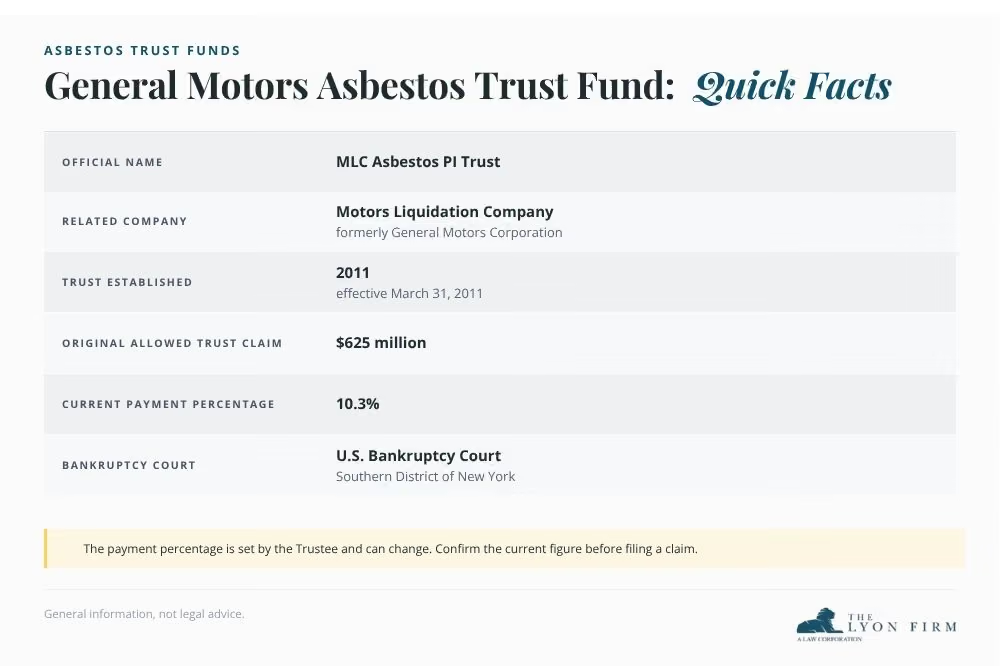
The trust's December 2025 notice reduced the applicable payment percentage to 10.3% during the required consent process. The percentage is used when calculating payments on approved claims and may be reconsidered under the trust's procedures.
General Motors' Connection to Asbestos
Asbestos was widely used throughout the automotive industry because it could withstand heat, friction, and fire. Those properties made it useful in vehicles as well as the industrial equipment used to manufacture them.
For GM workers, exposure was not limited to one part or one job. Someone assembling vehicles could work near components that contained asbestos. Maintenance crews could encounter asbestos insulation, gaskets, or packing while repairing plant equipment. Mechanics working away from GM facilities could breathe dust generated while servicing older GM vehicles.
The danger arose when asbestos-containing material was disturbed and microscopic fibers became airborne. Cutting, grinding, sanding, scraping, drilling, removing, or replacing old materials could release fibers into the worker's breathing area.
Workers nearby could also be exposed. Someone did not have to personally remove an asbestos product to inhale fibers released by a coworker's repair or maintenance work.
Which General Motors Products and Materials Contained Asbestos?
Automotive manufacturers historically used asbestos in components that needed to tolerate high temperatures and friction. GM workers and mechanics may have encountered asbestos-containing materials in vehicles, replacement components, manufacturing operations, and plant equipment.
Potential sources included:
- Brake linings and other brake components: Braking creates significant heat and friction, making asbestos useful in older friction materials.
- Clutch facings: Clutch systems also generated heat and historically incorporated asbestos-containing friction materials.
- Gaskets: Asbestos could be incorporated into gaskets used around engines, exhaust systems, and other equipment where heat resistance was necessary.
- Transmission components: Automotive transmission work could involve older friction materials and gaskets.
- Engine components: Repair and rebuilding work could disturb asbestos-containing gaskets and related materials.
- Pipe and equipment insulation: GM manufacturing facilities contained industrial systems that required insulation around high-temperature equipment.
- Boilers and heating equipment: Older boilers and related piping could contain asbestos insulation, gaskets, and other heat-resistant materials.
- Pumps and valves: Asbestos-containing gaskets and packing were historically used in industrial pumps, valves, and connected piping.
- Heat-resistant materials: Manufacturing areas could contain asbestos products intended to insulate equipment or reduce fire risk.
The presence of an older GM vehicle or piece of equipment does not by itself establish asbestos exposure. Identifying the components involved, the work performed, and the period when the work occurred helps determine whether asbestos-containing materials may have been present.
Which GM Brands Could Be Connected to Automotive Asbestos Exposure?
A retired mechanic may remember working on Chevrolets every day but never describe that work as "General Motors exposure." Looking at the individual vehicle brands can provide a clearer picture of someone's automotive work history.
GM brands associated with historical automotive work include:
- Chevrolet
- Buick
- Cadillac
- Pontiac
- Oldsmobile
- GMC
Someone may have performed brake jobs on Chevrolet passenger cars, replaced clutches in GMC trucks, or repaired engines in Oldsmobile or Pontiac vehicles over many years.
The brand is a starting point. An asbestos investigation may go further into the vehicle models, model years, components, replacement parts, manufacturers, suppliers, and type of repair work performed.
That information becomes especially useful when the mechanic worked in several garages or serviced vehicles from multiple manufacturers throughout a career.
How Were GM Workers Exposed to Asbestos?
Inside a large automotive manufacturing facility, asbestos exposure could occur during production, maintenance, repairs, renovations, and equipment replacement.
A maintenance worker might remove an old gasket from machinery. A pipefitter could disturb insulation around steam or process piping. A millwright repairing industrial equipment could work with asbestos-containing gaskets or packing. Other employees in the same area could breathe fibers released during that work.
Potential exposure activities included:
- Repairing boilers and industrial machinery
- Removing old pipe or equipment insulation
- Replacing pumps and valves
- Cutting or scraping gaskets
- Repairing heating systems
- Working around insulated pipes
- Maintaining production equipment
- Cleaning areas where asbestos-containing materials had been disturbed
- Working beside contractors performing insulation or equipment work
Plant renovations could also disturb asbestos-containing building materials installed years earlier.
The specific exposure history for a former GM employee may therefore involve both automotive components and the industrial environment where the vehicles were manufactured.
How Were Auto Mechanics Exposed While Working on GM Vehicles?
Mechanics faced a different type of exposure. Their work brought them directly into contact with components that wore down through heat and friction.
Brake work is one example. As brake components wore down, dust could accumulate inside the assembly. Opening or cleaning that area could disturb the dust. Grinding or sanding replacement friction materials could create additional airborne particles.
Mechanics could also encounter asbestos while:
- Removing old clutch components
- Replacing engine or exhaust gaskets
- Scraping gasket material from metal surfaces
- Rebuilding engines
- Servicing transmissions
- Cleaning automotive parts
- Using compressed air or other methods that disturbed accumulated dust
- Working beside another mechanic performing brake or clutch repairs
A mechanic did not need to work at a GM dealership. Independent garages, service stations, fleet maintenance facilities, dealerships, and home repair work could all involve older GM vehicles.
Which General Motors Jobs Had a Higher Risk of Asbestos Exposure?
Workers whose jobs involved automotive components, maintenance, machinery, insulation, or industrial equipment had frequent opportunities to encounter materials historically made with asbestos.
Occupations associated with potential exposure include:
- Auto mechanics
- Brake and clutch mechanics
- Assembly-line workers
- Maintenance workers
- Millwrights
- Machinists
- Pipefitters
- Boilermakers
- Electricians
- Welders
- Insulators
- Equipment repair workers
- Parts and service employees
- Plant laborers
- Contractors working inside GM facilities
Your job title does not tell the entire exposure history. A production employee may have worked next to a maintenance crew. An electrician may have entered mechanical areas containing insulated pipes. A laborer may have cleaned up after repairs that disturbed asbestos-containing materials.
Understanding what you actually did, where you worked, and which trades worked around you may provide more useful information than the title printed on an old employment record.
Who Can File a Claim?
The MLC Asbestos PI Trust requires a claimant to establish a qualifying disease and exposure to asbestos-containing products for which Motors Liquidation Company bears responsibility.
Potential claimants may include:
- Former General Motors employees diagnosed with an asbestos-related disease
- Automotive mechanics exposed while servicing GM vehicles
- Workers who handled qualifying asbestos-containing automotive components
- Contractors exposed while working at GM facilities
- Family or household members who experienced secondary asbestos exposure
- Representatives pursuing claims after an asbestos-related death
Medical records may establish the diagnosis. The exposure side of the claim may require employment records, job histories, product information, coworker statements, facility records, vehicle information, or other historical evidence.
You may also have worked around products connected to other companies. Someone who spent 30 years as an automotive mechanic, for example, probably did not encounter products from only one manufacturer. The General Motors asbestos trust may be one potential source of compensation within a larger exposure history.
Worked for GM or Serviced GM Vehicles?
You do not need to know the name of every asbestos product you encountered before calling us. Tell us where you worked, which GM vehicles or equipment you handled, and what type of work you performed.
The Lyon Firm investigates employment records, automotive products, work sites, and other historical evidence to determine which asbestos trusts or other claims may apply.
Call (513) 381-2333 or contact The Lyon Firm online for a free consultation.
Can Family Members Be Exposed to Asbestos Brought Home From GM Work?
Asbestos fibers released at a manufacturing plant or repair shop could settle on clothing, work shoes, hair, tools, and other belongings.
Before the risks of take-home asbestos were widely understood, workers could leave a plant or garage in the same clothes they had worn throughout the day. Those clothes might then be handled or washed at home.
A spouse could encounter asbestos while shaking out or laundering dusty uniforms. Children and other family members could come into contact with fibers carried into the home.
A family member diagnosed with mesothelioma may never have personally worked at a GM facility or automotive garage. Their exposure investigation may instead lead back to years of contact with someone who did.
How Do You File a GM Asbestos Trust Claim?
The MLC Asbestos PI Trust maintains proof-of-claim forms, filing instructions, Trust Distribution Procedures, and other documents governing its claims process.
Filing a claim requires more than stating that you once worked for General Motors or repaired GM vehicles. The trust evaluates medical and exposure evidence under its established requirements.
The process generally involves:
- Documenting the asbestos-related disease. Medical evidence may include pathology reports, imaging, physician reports, treatment records, or other documentation supporting the diagnosis.
- Reconstructing your work history. This may include GM employment, automotive repair work, facilities, job duties, dates of employment, departments, vehicles, and equipment.
- Identifying asbestos exposure. The investigation looks at the products, components, equipment, or work conditions connected to the exposure.
- Gathering supporting records. Social Security records, union records, employment documents, coworker statements, service information, product records, invoices, and other historical evidence may help support the claim.
- Reviewing the trust's criteria. The medical diagnosis and exposure history must meet the requirements established in the Trust Distribution Procedures.
- Submitting the proof of claim. The completed claim and supporting documentation are submitted to the trust's claims administrator.
- Responding to the trust's review. The claims administrator may request additional information or documentation before resolving the claim.
The trust's procedures also provide mechanisms for addressing certain disputed claims. The appropriate route through the claims process will be tied to the evidence and circumstances involved.
What If You Don't Have Your Old GM Employment Records?
You may have retired decades ago. The GM plant where you worked may have changed, closed, or been reorganized. The garage where you repaired cars may no longer exist. Old pay stubs, work orders, and personnel records may be long gone.
That does not necessarily end the investigation.
Other sources may help reconstruct your work history, including:
- Social Security employment records
- Union membership and work records
- Former coworker statements
- Personnel or pension information
- Historical plant records
- Vehicle service records
- Job descriptions
- Equipment and product information
- Invoices and purchasing records
- Testimony or evidence developed in previous asbestos cases
Your own memory can also provide important leads. You may remember a department, supervisor, production line, particular vehicle, type of repair, or piece of machinery even when you do not remember the manufacturer of the asbestos-containing product.
What Diseases Are Linked to Automotive Asbestos Exposure?
Asbestos fibers can remain in the body for decades before an illness develops. This long latency period is why former GM employees and retired mechanics may receive an asbestos-related diagnosis long after leaving automotive work.
Diseases associated with asbestos exposure include:
- Mesothelioma: A rare cancer that most commonly develops in the lining surrounding the lungs. Asbestos exposure is the primary cause of malignant mesothelioma.
- Lung cancer: Asbestos exposure increases the risk of lung cancer. The combination of smoking and asbestos exposure further increases that risk.
- Asbestosis: A chronic lung disease caused by asbestos fibers that scar lung tissue and interfere with breathing.
- Pleural disease: Asbestos can cause pleural plaques, thickening, and other changes to the tissue surrounding the lungs.
A diagnosis today may still be connected to plant or automotive work performed in the 1960s, 1970s, 1980s, or another period decades earlier.
Can You File a General Motors Asbestos Lawsuit?
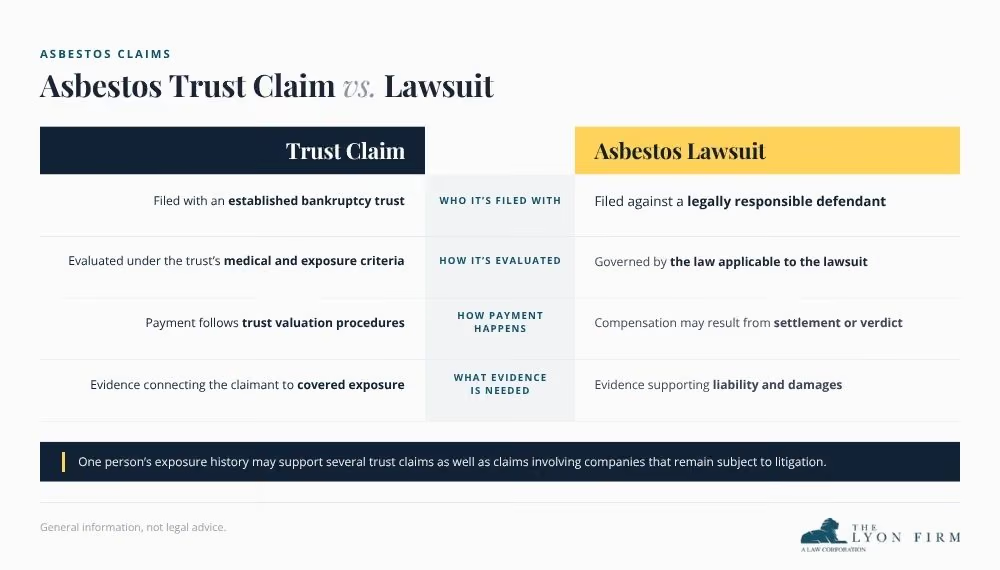
A General Motors asbestos lawsuit is different from submitting a claim to the MLC Asbestos PI Trust. The bankruptcy of the former General Motors Corporation changed how covered asbestos liabilities associated with the old company are handled.
The trust was established to resolve asbestos personal injury claims for which Motors Liquidation Company bears responsibility. Other companies connected to your exposure may still be subject to separate claims.
For example, a mechanic working on GM vehicles may have encountered replacement brakes, clutches, gaskets, insulation, or other products manufactured by separate companies. A GM plant employee may have worked around industrial equipment or insulation supplied by another manufacturer.
That means an investigation should identify the full exposure history rather than stopping once a connection to GM is found.
What Compensation May Be Available for GM Asbestos Exposure?
Compensation may come from several sources when an exposure history involves different companies and asbestos products.
For qualifying claims tied to the former General Motors Corporation, the MLC Asbestos PI Trust evaluates claims under its Trust Distribution Procedures. Approved claims are subject to the payment percentage in effect under those procedures.
The trust announced in December 2025 that the applicable payment percentage had been reduced to 10.3% during the required consent process.
The payment percentage does not mean every approved claimant receives the same amount. Claim valuation involves the disease category, medical evidence, exposure evidence, applicable review process, and other requirements established by the trust.
Other asbestos claims may seek compensation for losses including:
- Medical expenses: Testing, surgery, chemotherapy, immunotherapy, radiation, medications, hospital care, and other treatment.
- Lost income: Wages lost because illness or treatment prevents you from working.
- Reduced earning capacity: Future income affected by an asbestos-related disease.
- Pain and suffering: Physical pain and other legally compensable effects of the illness.
- Loss of consortium: Certain losses experienced by a spouse because of the effect of the disease on the marital relationship.
- Wrongful death damages: Compensation that may be available to eligible family members or an estate following an asbestos-related death.
- Funeral and burial expenses: Certain expenses associated with a death may be recoverable.
Trust compensation and lawsuit damages follow different processes.
What Evidence Helps Support a GM Asbestos Claim?
Asbestos cases often require evidence from decades ago. You may know that you spent years repairing GM vehicles or working in a particular plant without knowing which records still exist.
Evidence used to investigate General Motors asbestos claims may include:
- Employment and Social Security records
- Union records
- Job descriptions
- GM plant and department information
- Vehicle makes, models, and model years
- Automotive component information
- Service and maintenance records
- Coworker testimony
- Historical product information
- Manufacturer and supplier records
- Invoices and purchasing records
- Medical records documenting the diagnosis
- Statements from family members regarding take-home exposure
For a mechanic, product identification may involve determining which brakes, clutches, gaskets, or replacement parts were commonly used on the vehicles serviced during a particular period.
For a plant worker, the investigation may focus on machinery, production areas, maintenance operations, insulation, contractors, and products historically used at the facility.
What Does an Asbestos and Mesothelioma Lawyer Do for a GM Case?
A mesothelioma diagnosis may lead back to a job you left decades ago. You may remember rebuilding engines, replacing brakes, maintaining machinery, or working on a particular production line without remembering every product you encountered.
The Lyon Firm investigates:
- Where and when you worked
- Your job duties and work areas
- GM plants, dealerships, garages, and other workplaces
- Vehicles and components you handled
- Asbestos products associated with your work
- Manufacturers and suppliers connected to those products
- Former coworkers who may have information
- Medical records documenting your diagnosis
- Bankruptcy trusts that may apply
- Other companies that may be legally responsible
This work can extend beyond the records you personally have. Historical product information, previous asbestos litigation, corporate records, coworker testimony, and other evidence may help reconstruct exposure that happened decades ago.
The investigation also looks at the entire work history. A mechanic who spent years servicing GM vehicles may also have repaired vehicles from other manufacturers or worked with replacement components made by several companies. A plant employee may have encountered products supplied by manufacturers other than GM.
Identifying those exposures can reveal additional bankruptcy trusts or companies that should be evaluated.
How Long Do You Have to File an Asbestos Claim?
Asbestos cases raise unusual timing issues because the illness may not be diagnosed until decades after the exposure occurred.
The filing deadline for a lawsuit may be affected by where the exposure occurred, which state's law applies, when the disease was diagnosed or discovered, whether the injured person has died, and the type of claim being pursued.
Asbestos bankruptcy trusts also operate under their own claim procedures and requirements.
For families dealing with mesothelioma or another serious asbestos disease, waiting can create a different problem as well: evidence gets older. Former coworkers may become harder to locate, employment records may be lost, and memories of products and work sites may fade.
If you or a family member has recently been diagnosed, reviewing the potential claims early gives the investigation more time to identify the work sites, products, companies, and trusts involved.
Why Hire The Lyon Firm for a GM Asbestos Claim?
Joe Lyon represents workers and families in asbestos, mesothelioma, and toxic exposure cases nationwide. For former GM employees and automotive workers, that means investigating the actual work behind the exposure rather than stopping with the name of the employer or vehicle manufacturer.
If you worked at a GM plant, we may need to know which department you worked in, what machinery was nearby, which trades performed maintenance in your area, and what asbestos-containing products were used at the facility.
If you were an auto mechanic, the questions may involve the GM brands you serviced, the types of repairs you performed, the years you worked, and the brakes, clutches, gaskets, and other components you handled.
The Lyon Firm also evaluates whether General Motors asbestos was only one part of your exposure. Identifying additional products, manufacturers, and bankruptcy trusts may reveal other claims that should be pursued alongside the GM trust claim.
You do not need to reconstruct all of that history before you contact us. That investigation is part of the work we do.
Experienced. Compassionate. Consumer Advocates
The Lyon Firm is a Cincinnati, Ohio-based law firm, representing individuals nationwide in class action, product liability, and toxic exposure litigation.

.avif)
Talk to The Lyon Firm About Your General Motors Asbestos Exposure
You may remember years of brake jobs, clutch replacements, assembly work, plant maintenance, or other automotive work without knowing which products contained asbestos. You may also be looking at a mesothelioma diagnosis and wondering how a job you held decades ago could still matter today.
The Lyon Firm investigates old employment records, GM facilities, automotive products, asbestos trusts, manufacturers, suppliers, and other companies that may be connected to your exposure.
Call The Lyon Firm at (513) 381-2333 or contact us online for a free consultation about your potential asbestos claim.
General Motors Asbestos Trust FAQs

The MLC Asbestos PI Trust continues to maintain claim forms, filing instructions, Trust Distribution Procedures, and other materials for asbestos personal injury claims.
In December 2025, the trust announced that the applicable payment percentage had been reduced to 10.3% during the required consent process. Claimants must still satisfy the trust's medical, exposure, and other applicable requirements.
Potentially. Direct employment with General Motors is not the only way someone could have encountered asbestos associated with GM automotive work.
An investigation may look at the GM vehicles you serviced, when you performed the work, which components you handled, and whether the evidence connects your asbestos exposure to products covered by the trust or to other responsible companies.
Those brands may be relevant when reconstructing your automotive work history.
You may remember performing brake or clutch work on Chevrolet or GMC vehicles without ever thinking of those repairs as General Motors work. The investigation can use the brand, vehicle information, time period, repair work, and component information to identify possible asbestos exposures.
You do not need to arrive at your first consultation with decades-old pay stubs or personnel records.
Social Security records, union information, coworker testimony, pension records, historical plant information, job descriptions, and other sources may help reconstruct where and when you worked.
No. Someone diagnosed decades after exposure may remember the work without remembering the product name.
Employment records, coworker testimony, vehicle information, invoices, plant records, historical product documents, and evidence developed in previous asbestos cases may help identify products associated with your work.
Potentially. Workers could carry asbestos fibers home on clothing, shoes, hair, and tools. Family members who repeatedly handled contaminated work clothes or encountered fibers in the home could have experienced secondary exposure.
A potential claim requires an investigation of the worker's exposure, the household member's contact with the worker or contaminated items, the diagnosis, and the companies involved.
Potentially. A worker may have encountered asbestos products associated with several companies during one job or over an entire career.
A mechanic, for example, could work on GM vehicles while handling replacement parts manufactured by other companies. A plant employee could encounter asbestos insulation, pumps, valves, gaskets, or other equipment supplied by outside manufacturers.
Identifying those different exposures is important because more than one bankruptcy trust or defendant may be involved.
Asbestos Verdicts & Settlements
Estate of Steve Thomas v. AK Steel Corporation, et al.
Summary: PHILADELPHIA COUNTY, Pennsylvania – Co-counsel represented the surviving spouse of a steel mill worker who developed mesothelioma after years of asbestos exposure on the job. The case resulted in a settlement exceeding $2.7 million.
Estate of William P. Bush v. AK Steel Corporation, et al.
Summary: MADISON COUNTY, Illinois – Co-counsel represented the family of a steel mill worker who suffered asbestos exposure that later led to mesothelioma. The case resulted in a settlement exceeding $2.3 million.
Asbestos Lawsuits
Request a Free Consultation
Taking the first step doesn’t have to be complicated. In just a few minutes, you can share the basics of your case, and our team will guide you from there:
- It begins with a few simple questions about your situation.
- From there, a member of our legal team reviews your case.
- Together, we’ll chart the path forward, helping you take the next step toward resolution.
