
Clorox Faces Class Action Over Recalled Mistolin and Lestoil Cleaners
October 6, 2026



The FTC took another shot at deceptive auto-renewal subscription practices, but on July 14, 2025, the United States Court of Appeals for the Eighth Circuit struck down the Federal Trade Commission’s (FTC) new “click-to-cancel” rule.
This ruling may leave more consumers vulnerable to existing subscription traps.
If you believe you’ve been misled by deceptive auto-renewal practices ,you may consider contacting an experienced attorney to discuss your legal options. Our lawyers have the resources and experience to build a strong case on your behalf and to hold any negligent company accountable for ARL violations.
Click-to-cancel laws mandate that companies offering online subscriptions must provide a simple and straightforward way for consumers to cancel electronically. Instead of requiring long, difficult phone calls with customer service, businesses must offer a cancellation process that mirrors the ease of signing up.
The Federal Trade Commission (FTC) has long considered unfair cancellation practices to be unlawful. In 2023, the FTC proposed updates to its Negative Option Rule to strengthen requirements for online subscriptions, ensuring that consumers can cancel with one click or a similarly simple method.
States such as California and New York have already passed laws requiring clear, accessible cancellation options for subscription-based services.
The FTC’s latest “click-to-cancel” rule meant to eliminate unfair subscription practices by mandating express affirmative consent from consumers and simplifying cancellation processes. But the court found that the FTC bypassed required steps under Section 22 of the FTC Act, including a preliminary regulatory analysis. The judges acknowledged the need to rein in deceptive marketing but deemed the FTC’s process deficient, vacating the rule entirely.
The agency retains authority to penalize unfair business practices under existing laws, which urge businesses to maintain clear disclosures and easy cancellation options.
California’s Automatic Renewal Law redefines “automatic renewals” to include free trials that convert to paid subscriptions, a common trap for unsuspecting consumers.
Businesses operating in California must now secure “express affirmative consent” before charging, and retaining proof for three years or one year post-termination, whichever is longer.
The law also bans misleading practices and mandates annual renewal reminders and 7-30 day notices for fee changes. All reminders and notices must be delivered via the consumer’s preferred channel.
Discounts or retention offers are allowed, but only with a prominent “click to cancel” option displayed alongside.
If you’ve been deceived into a subscription due to hidden renewals or unclear terms, you might have legal grounds to challenge the company and recoup financial losses that may have accumulated for months or years.
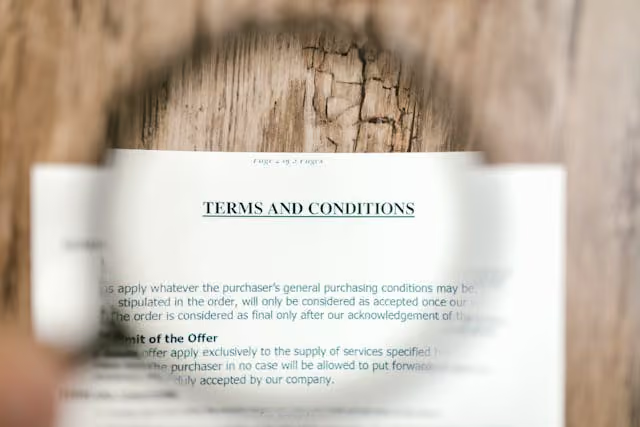
We believe strongly that consumers should have clear instructions on how to cancel a subscription. There have been several notable auto-renewal deceptive marketing lawsuits, including:
taking on corporations that rely on unlawful subscription traps, our firm fights to return money to consumers and to reform predatory business practices. Call now for afree and confidential consultation.
The Lyon Firm is a Cincinnati, Ohio-based law firm, representing individuals nationwide in class action, product liability, and toxic exposure litigation.

Taking the first step doesn’t have to be complicated. In just a few minutes, you can share the basics of your case, and our team will guide you from there: